

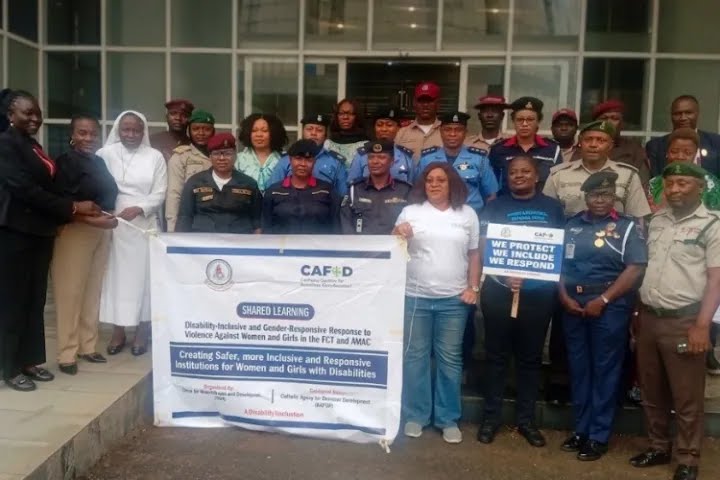
ABUJA — A Nigerian Catholic religious leader, Sr. Francisca Ngozi Uti, has called for greater inclusion of women and persons with disabilities in Nigeria’s decision-making processes, economic activities and community life, warning that exclusion denies people the opportunity to live with dignity and contribute meaningfully to society.
Sr. Uti, Executive Director of the Centre for Women Studies and Intervention (CWSI), made the call during an interview with ACI Africa on September 8, 2026, on the sidelines of a one-day shared-learning event focused on disability-inclusive and gender-responsive responses to violence against women and girls.
‘Inclusion Is About Dignity’
According to Sr. Uti, the campaign for inclusion is deeply rooted in the Christian belief that every human being is created in the image and likeness of God and therefore deserves dignity, respect and the opportunity to participate fully in society.
She said CWSI has consistently advocated for women’s participation in leadership and decision-making, particularly in communities where cultural and traditional practices have historically silenced women.
“We have been advocating for the inclusion of women, just like we are talking about the inclusion of people living with disabilities. We’ve been advocating for the inclusion of women in decision-making. To include women, hear their voices,” she said.
She added that traditional attitudes that expect women to be “seen, not heard” have contributed significantly to their exclusion from community leadership.
Disability Exclusion Must End
Sr. Uti drew a parallel between the marginalisation of women and the discrimination faced by persons with disabilities, noting that both groups have often been judged based on harmful social assumptions rather than their abilities and potential.
She recalled that some families in the past isolated children with disabilities instead of giving them opportunities to learn, develop their talents and participate fully in society.
“We are trying to say, no, these people can do a lot. They have intelligence, and they can see,” she said.
For her, disability inclusion must go beyond public awareness campaigns. It must translate into concrete action, including removing the physical and institutional barriers that prevent persons with disabilities from accessing public spaces, services and programmes.
‘Accessibility Is Very Key’
The Catholic Sister emphasised the importance of accessibility, particularly in public infrastructure and services.
“It means that you have to make provision for access. Accessibility is very key and important,” she said.
She also highlighted the need to challenge harmful misconceptions surrounding people with albinism, stressing that they, too, deserve respect, dignity and equal participation in society.
According to her, CWSI’s disability-inclusive programmes also seek to equip law enforcement personnel with the knowledge and skills required to respond appropriately to the needs and rights of persons with disabilities.
From Advocacy to Economic Empowerment
CWSI, an initiative of the Handmaids of the Holy Child Jesus (HHCJ), has also moved beyond advocacy by supporting women and persons with disabilities through vocational training and livelihood programmes.
With support from the Catholic Agency for Overseas Development (CAFOD), the organisation has provided equipment and start-up support to beneficiaries who completed vocational training, helping them transform acquired skills into sustainable sources of income.
Sr. Uti said such interventions demonstrate that relatively small investments can have significant economic impact when resources are directed to the people who need them most.
Using the example of a woman who sells akara, she explained that providing modest capital to increase the quantity of beans, oil and other materials she uses could significantly increase her turnover and improve her livelihood.
‘Where Is the Money?’
However, Sr. Uti expressed concern over the management of government-funded empowerment programmes, questioning whether resources allocated to vulnerable groups are actually reaching their intended beneficiaries.
“We know the realities of our day. So we cannot be belabouring the fact that government should provide this; government should take care of them. Because money is allocated for this project. But where is the money?” she asked.
She criticised the diversion or partial implementation of funds meant for empowerment initiatives and called for greater accountability to ensure that public resources achieve their intended purpose.
Inclusion Must Become a Reality
The message from Sr. Uti is clear: inclusion cannot remain a slogan.
For women, persons with disabilities and other marginalised groups to participate fully in Nigerian society, barriers must be removed, voices must be heard, public infrastructure must be accessible, economic opportunities must be created and resources meant for vulnerable people must be properly accounted for.
A truly inclusive Nigeria, she suggests, is one where every person has the opportunity to contribute, earn a livelihood, participate in decision-making and live with dignity.


