

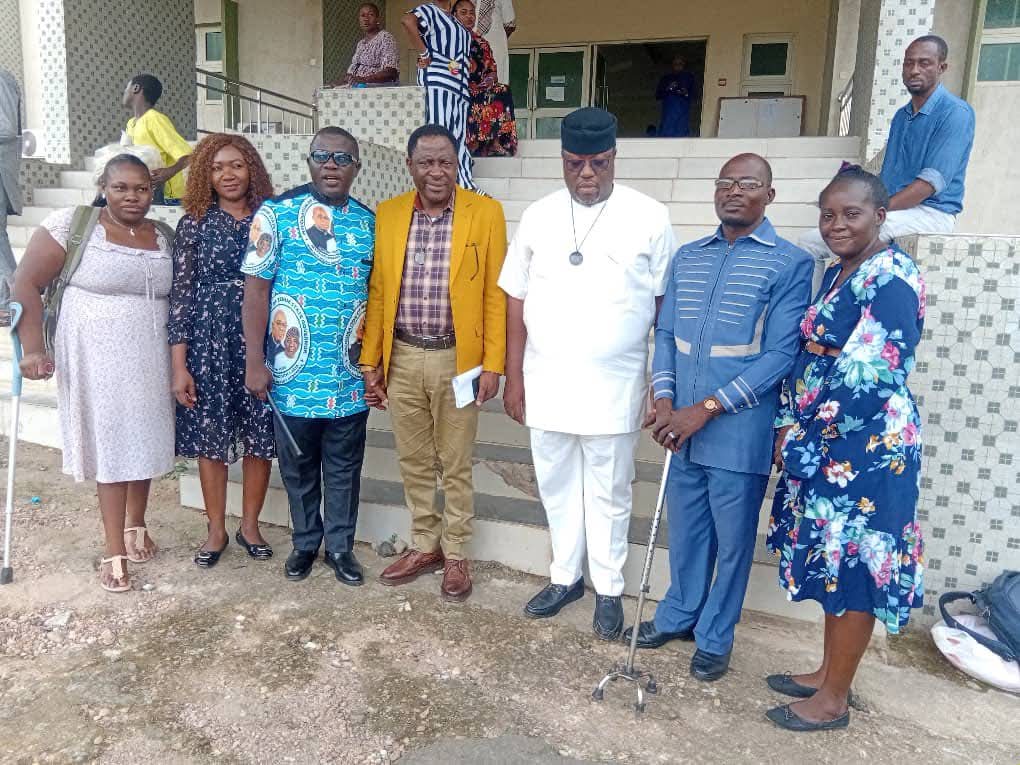
— A New Dawn for Disability Inclusion in Benue State as Hope Alive For Possibilities Initiative Leads Community-Led Push for Legislative Justice
Makurdi, Nigeria — August 1, 2025
In a historic move that underscores a bold step toward inclusive governance, the Benue State House of Assembly has officially passed the Benue State Disability Rights Bill, signaling a major legislative breakthrough for persons with disabilities (PWDs) in the state. The passage, which occurred during plenary on Friday, August 1st, 2025, marks a long-anticipated moment of triumph for disability rights advocates, civil society, and the disability community—particularly the Hope Alive For Possibilities Initiative (HAPI), whose persistent and strategic advocacy made this victory possible.
For years, persons with disabilities in Benue have endured systemic exclusion, infrastructural neglect, and policy invisibility. But today, the tides have turned. With this bill, the rights, dignity, and participation of PWDs are not just ideals—they are becoming enforceable law.
A Victory Years in the Making
The disability bill, which outlines rights-based frameworks for accessibility, inclusion, anti-discrimination measures, and equal opportunity in education, employment, and public life, was introduced to the House as an Executive Bill. This move, hailed by observers as a demonstration of high-level political commitment, came after the Benue State Executive Council, under the leadership of the Executive Governor, approved the draft and forwarded it for legislative action.
“This is not just a legal document—it is a blueprint for inclusive development,” said a visibly elated representative of HAPI moments after the final reading. “It affirms what we’ve been saying for years: persons with disabilities are not charity cases—they are citizens with rights.”
HAPI: Driving the Change from Grassroots to Government
At the heart of this legislative win is Hope Alive For Possibilities Initiative (HAPI)—a disability-led organization that has worked tirelessly to ensure that the voices of persons with disabilities were not only heard but prioritized in policymaking.
From grassroots mobilization, technical consultations, and community engagements, to continuous legislative tracking from the first to the third reading, HAPI has been at the frontline, serving as both watchdog and partner in this transformative journey. The organization’s approach—anchored in participatory advocacy—ensured that the lived realities of PWDs shaped the content, tone, and urgency of the bill.
“This is not just a legislative victory,” HAPI said in a statement. “It is a community-led, disability-driven, and justice-centered transformation. From the first consultation to this moment of passage, we stood firm because the future of inclusion depends on what we do today.”
Legislative and Executive Synergy: A Model for Inclusive Governance
Observers have also commended the Benue State House of Assembly, particularly the Speaker and all Honourable Members, for demonstrating remarkable responsiveness and political will by prioritizing and passing the bill.
Their collaboration with the Executive Arm, who initiated the bill, sets a powerful example of what is possible when institutions align to advance human rights, equality, and inclusive development.
“We cannot overstate the importance of this partnership,” said a legal analyst following the proceedings. “It shows that when political leadership and civic actors work hand-in-hand, real change is not only possible—it’s inevitable.”
OPDs and Community Voices: The Unsung Heroes
The story of this victory would be incomplete without recognizing the tireless efforts of Organizations of Persons with Disabilities (OPDs) across Benue State. Their lived experiences, policy expertise, and grassroots organizing were critical in building pressure, shaping public discourse, and legitimizing the urgent need for this legislation.
From town halls to statehouse roundtables, OPDs ensured that this bill was not just a political tool, but a reflection of real community needs.
Strategic Support from the Disability Rights Fund
HAPI also extended heartfelt gratitude to the Disability Rights Fund (DRF), whose strategic financial and technical support helped to sustain advocacy activities throughout the legislative process.
“This milestone is also DRF’s victory,” HAPI noted. “Through their support, we were able to maintain consistent engagement with policymakers, convene stakeholders, and hold space for the voices that matter most—those of the disability community.”
DRF’s overarching mission of “a disability-led future for a just world” found real-time expression in today’s triumph in Benue.
The Road Ahead: Executive Assent and Implementation
While the passage of the bill is a watershed moment, stakeholders are now urging the Governor to expedite his assent, thereby enabling the immediate operationalization of the law. Additionally, they call on relevant Ministries, Departments, and Agencies (MDAs) to begin planning for full implementation, including budgeting, public sensitization, and regulatory enforcement.
“This victory must not end on paper,” HAPI emphasized. “We must now translate it into action—into ramps, accessible education, inclusive employment, and equal participation in governance.”
A Win for All, Led by the Disability Community
As Benue State joins the growing list of states taking concrete legislative steps to uphold the rights of PWDs, today’s development proves a vital point: Change is not only possible—it is happening, led by the people it affects the most.
“This moment belongs to us all,” HAPI declared. “But most especially, it belongs to every person with a disability who never stopped believing in their right to be seen, heard, and respected. Today, their belief has been vindicated by law.”


