

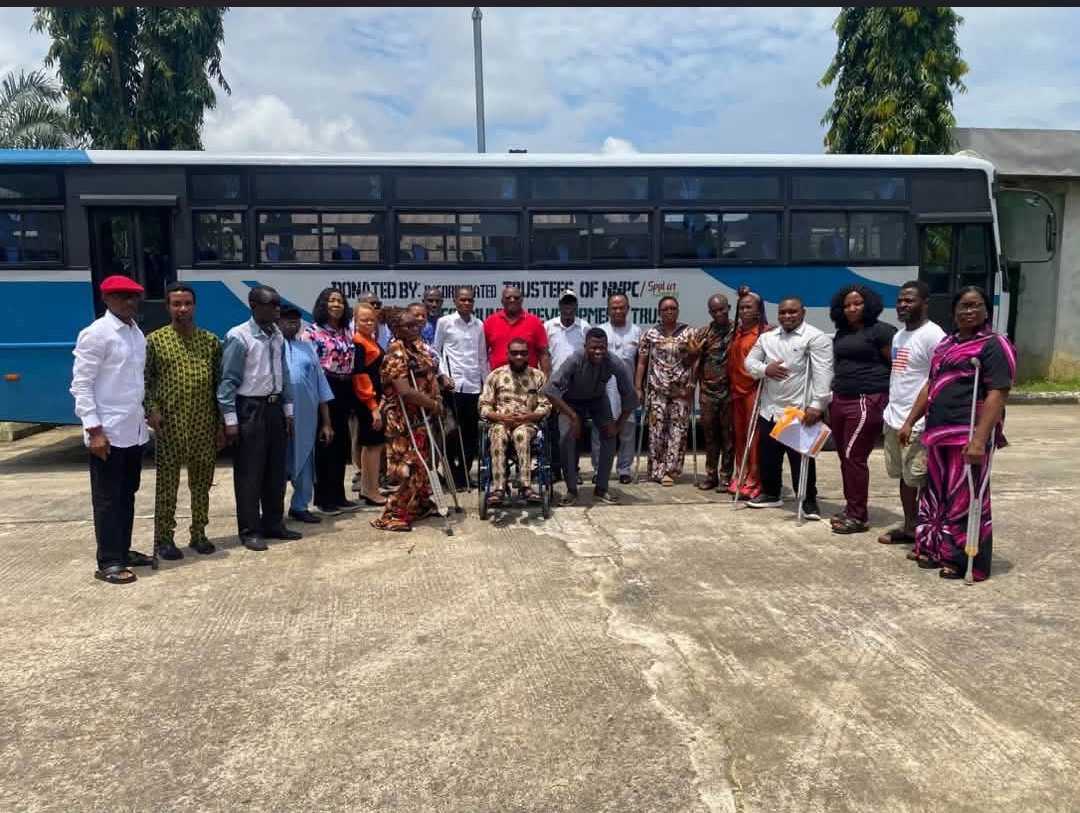
The engagement focused on strengthening disability inclusion in host community development, with calls for equitable access to scholarships, economic empowerment, accessible infrastructure, and representation in decision-making.
The Ibeno Host Community Development Trust (HCDT) has reaffirmed the importance of including Persons with Disabilities (PWDs) in community development initiatives following an advocacy visit by the Centre for Citizens with Disabilities (CCD) advocacy team on 14 October 2026.
The advocacy engagement, supported by the Ford Foundation and undertaken in collaboration with the Joint National Association of Persons with Disabilities (JONAPWD), Akwa Ibom State Chapter, sought to promote disability-inclusive implementation of the Petroleum Industry Act (PIA) 2021, particularly in the delivery of development benefits to host communities.
During the meeting, the CCD advocacy team emphasised that persons with disabilities must not be left behind in the distribution of opportunities and benefits arising from host community development projects.
The team called on the HCDT to ensure the meaningful participation and representation of PWDs in community decision-making processes, equitable access to scholarship opportunities, inclusion in skills acquisition and economic empowerment programmes, and the provision of accessible infrastructure.
The advocacy team further stressed that disability inclusion should be deliberately integrated into community development planning rather than treated as an afterthought or an act of charity.
Responding to the concerns raised, the Chairman of Ibeno HCDT, Mr. Samuel Ekpenyong Thomas, acknowledged the importance of disability inclusion and highlighted some existing and planned interventions aimed at supporting persons with disabilities.
He disclosed that the Trust had provided scholarship support to eligible students with disabilities and undertaken previous empowerment interventions. He also indicated plans to introduce targeted support for persons with disabilities with special talents.
The HCDT Chairman further encouraged persons with disabilities to establish cooperative societies, noting that collective organisation could strengthen their access to economic opportunities and development interventions.
The engagement provided an opportunity for constructive dialogue between the HCDT leadership and disability stakeholders, while opening avenues for stronger collaboration towards addressing barriers that prevent persons with disabilities from benefiting fully from community development initiatives.
Beyond Beneficiaries: PWDs Must Be Part of Decision-Making
The engagement reinforced a fundamental principle of disability inclusion: persons with disabilities should not merely be considered recipients of development interventions but must also have a voice in determining the priorities, design, implementation, and monitoring of programmes that affect their lives.
For host community development to be genuinely inclusive, accessibility, equal opportunities, representation, and accountability must become integral components of project planning and implementation.
The Centre for Citizens with Disabilities (CCD) reiterated its commitment to advancing the rights of persons with disabilities and ensuring that they are not excluded from the opportunities and benefits of host community development.
As the implementation of the Petroleum Industry Act continues to shape development in oil-producing communities, disability stakeholders are calling for stronger institutional commitments to ensure that no person is left behind, and no community development initiative leaves persons with disabilities out.


