

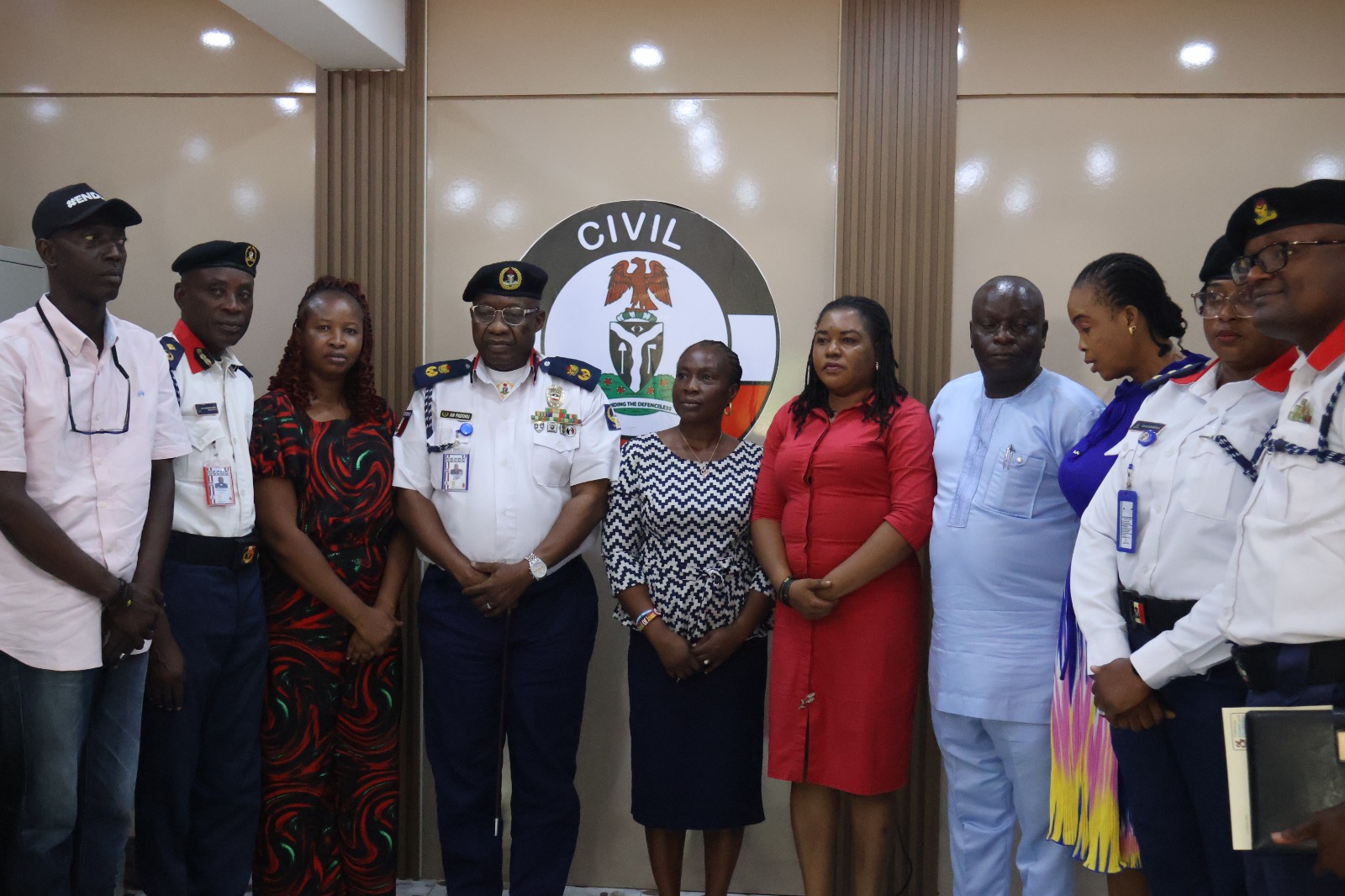
New structures to strengthen access to security services, protect the civic rights of persons with disabilities and promote inclusive policing and security service delivery.
The Centre for Citizens with Disabilities (CCD) has recorded a significant advocacy milestone following the approval and establishment of Disability Desk Units across the State, Area and Divisional Commands of the Nigeria Security and Civil Defence Corps (NSCDC) in Oyo State.
The development, which comes after months of sustained advocacy and engagement by CCD, is expected to strengthen access to security services, improve protection for persons with disabilities (PWDs), and promote their equal participation in civic activities without discrimination.
The State Commandant of the NSCDC in Oyo State, Commandant Augustine Padonu, approved the establishment of the Disability Desk Units on Tuesday, October 27, 2026, according to confirmation provided to CCD by the Deputy Commandant of Corps (DCC), Olasedidu Ademola.
The approval followed a series of engagements initiated by CCD on March 17, 2026, when the organisation paid an advocacy visit to the NSCDC Oyo State Command to push for stronger disability inclusion within the security sector.
During the meeting, CCD highlighted the challenges persons with disabilities encounter when accessing security services, reporting human rights violations and exercising their fundamental and civic rights. The organisation called for dedicated institutional structures that would make security services more accessible, responsive and inclusive.
To sustain the advocacy, CCD subsequently sent follow-up correspondence to the Command on April 28 and October 16, 2026, reiterating the need for dedicated Disability Desk Units across the Command’s operational structures.
A Major Step Towards Disability-Inclusive Security Services
For many persons with disabilities, accessing security institutions and reporting incidents of abuse, discrimination or rights violations can be difficult due to physical, communication, attitudinal and institutional barriers.
These challenges often discourage victims and witnesses with disabilities from seeking assistance, reporting incidents or engaging security agencies.
The establishment of Disability Desk Units is expected to provide identifiable channels through which persons with disabilities can report security concerns, seek protection, access relevant assistance and communicate with security authorities.
The initiative is particularly important for women and girls with disabilities, persons with intellectual and psychosocial disabilities, and others who may experience multiple layers of discrimination when seeking protection and justice.
Beyond facilitating complaints, the new structures could improve the capacity of security personnel to understand and respond appropriately to the specific needs of persons with disabilities.
Protecting the Civic Rights of Persons with Disabilities
CCD also considers the development an important step towards protecting the civic space rights of persons with disabilities.
Persons with disabilities have the same rights as everyone else to freedom of expression, peaceful assembly, association, political participation and engagement in public affairs.
However, they often encounter exclusion and discrimination during peaceful protests, public demonstrations, community meetings, political activities and other legitimate civic engagements.
The absence of disability-sensitive procedures within security institutions can further expose persons with disabilities to intimidation, inadequate protection and exclusion from these activities.
With the establishment of the Disability Desk Units, CCD hopes that the NSCDC will strengthen disability-sensitive security operations, promote reasonable accommodation, improve accessible communication and ensure that persons with disabilities are treated with dignity and respect.
The initiative also offers an opportunity to deepen collaboration between security agencies and Organisations of Persons with Disabilities (OPDs), while building trust, accountability and stronger institutional relationships.
CCD Identifies Six Priorities for Effective Implementation
While commending the NSCDC Oyo State Command for responding positively to its advocacy, CCD has emphasised that establishing the units must translate into practical and measurable improvements in service delivery.
The organisation has identified six key areas requiring attention:
- Capacity Building: Continuous disability rights and inclusion training for officers assigned to the units and other relevant NSCDC personnel.
- Accessible Reporting Channels: Provision of accessible complaint and reporting mechanisms, including appropriate communication support for persons with different types of disabilities.
- Effective Coordination: Strong collaboration among the State, Area and Divisional Disability Desk Units to ensure timely referrals, follow-ups and resolution of complaints.
- Partnership with OPDs: Regular engagement with organisations of persons with disabilities to identify security concerns and improve service delivery.
- Public Awareness: Publicising the existence, functions and contact details of the Disability Desk Units so that persons with disabilities know how to access them.
- Monitoring and Accountability: Establishing mechanisms to monitor performance, document complaints, track responses and assess the impact of the units.
CCD further encouraged the NSCDC to integrate disability inclusion into its institutional policies, operational guidelines and staff training programmes to ensure the sustainability of the initiative.
CCD and NSCDC Set for Further Collaboration
As part of the next steps, the Deputy Commandant informed CCD that an officer designated to coordinate the Disability Desk Unit at the State Command level would contact the organisation for further engagement.
The designated officer is also reaching out to other officers assigned to coordinate the units across the Area and Divisional Commands.
CCD has welcomed the proposed engagement and expressed readiness to support the NSCDC through disability rights awareness, capacity development, accessible reporting systems, institutional accountability and monitoring of the units’ performance.
The organisation also called on other security agencies across Nigeria to replicate the initiative by establishing dedicated disability structures within their operational frameworks.
A Victory for Sustained Disability Advocacy
The establishment of the Disability Desk Units in Oyo State demonstrates how sustained advocacy, constructive engagement and institutional collaboration can translate into concrete changes within public institutions.
It is also a reminder that disability inclusion must go beyond policy statements and public commitments to the creation of practical structures that guarantee equal access, protection and participation.
CCD commended the State Commandant, Commandant Augustine Padonu, Deputy Commandant Olasedidu Ademola and the entire NSCDC Oyo State Command for responding positively to its advocacy.
The organisation expressed optimism that the initiative would become a functional model for disability-inclusive security service delivery and contribute to building a security sector that is accessible, accountable, responsive and respectful of the rights of all Nigerians, irrespective of disability.


