

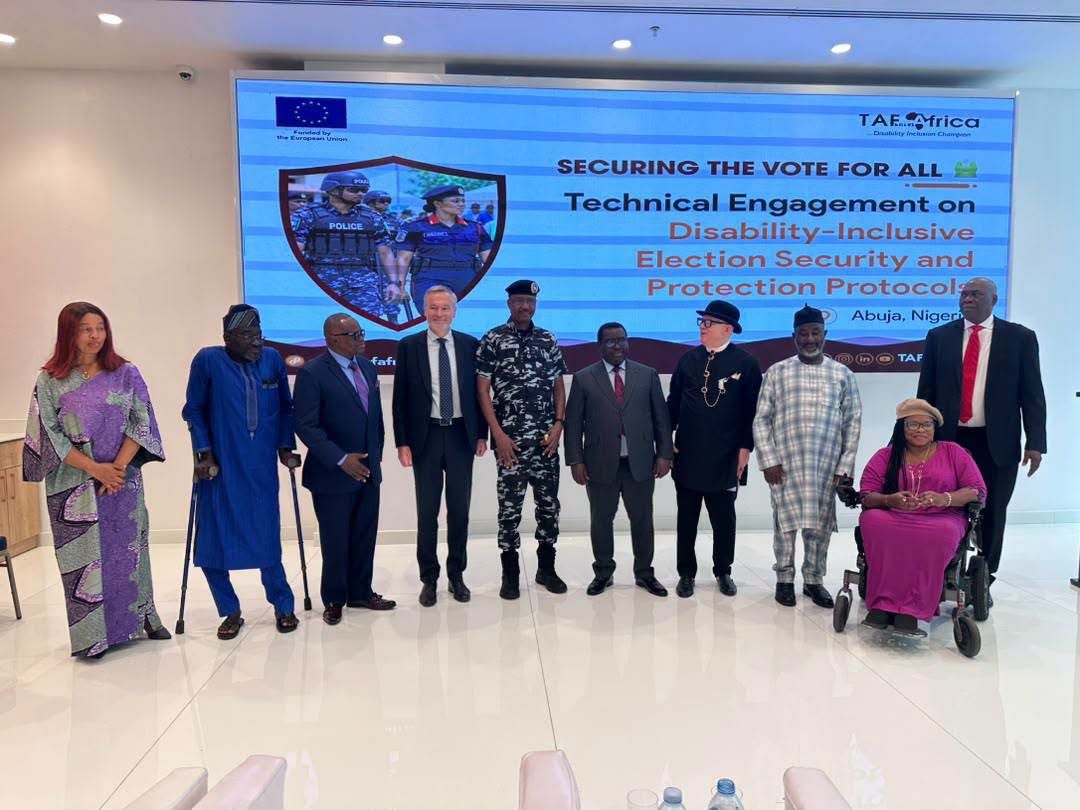
Amupitan warns that intimidation, insecurity and inaccessible polling units could undermine electoral inclusion as EU urges police to strengthen disability-inclusive election security.
ABUJA — The Chairman of the Independent National Electoral Commission (INEC), Professor Joash Amupitan, has called for stronger security measures to protect persons with disabilities (PWDs) during the 2027 general elections, warning that intimidation, insecurity and inaccessible polling units could deny eligible Nigerians their fundamental right to vote.
Amupitan made the call on Friday in Abuja at an engagement organised by TAF Africa for officers of the Nigeria Police Force (NPF), where stakeholders emphasised the need for disability-inclusive security arrangements to ensure safe, accessible and credible elections.
According to the INEC chairman, the credibility of any election depends not only on the conduct of the electoral process but also on whether every eligible citizen can participate freely, safely and without discrimination.
“An election cannot be considered inclusive if persons with disabilities or other vulnerability groups face intimidation, insecurity, or other barriers to exercising their rights,” he said.
INEC Chairman Demands Disability-Sensitive Security Operations
Amupitan stressed that protecting voters with disabilities must be a priority throughout the electoral cycle, from voter registration and political campaigns to rallies, polling activities and the post-election period.
He urged security personnel to respond promptly to incidents involving voters with disabilities and ensure that electoral violence, harassment and discriminatory treatment do not prevent them from participating in the democratic process.
The INEC chairman also called for specialised training to help police officers recognise different disabilities and communicate effectively with voters who may require additional support.
He noted that voters with hearing impairments might need visual communication, while those with visual impairments could require verbal guidance to navigate electoral environments safely.
Amupitan further highlighted the importance of implementing INEC’s electoral regulations, which provide for priority access, appropriate assistance and assistive voting materials for persons with disabilities.
However, he cautioned that assistance must not compromise voters’ privacy, independence or freedom of choice, stressing that support should empower voters rather than interfere with their decisions.
“Every eligible citizen has a right to vote. That right must be accessible to every Nigerian citizen, regardless of disability or displacement,” he said.
He also charged police officers to maintain professionalism, neutrality and impartiality while protecting voters, preventing electoral violence and safeguarding the integrity of the electoral process.
EU Calls for Disability Inclusion in Election Security Plans
Also speaking at the engagement, Gautier Mignot, Head of the European Union Delegation to Nigeria, urged the Nigeria Police Force to integrate disability-inclusive guidelines into its election security operations ahead of the 2027 general elections.
Mignot emphasised the need to train police officers to protect voters with disabilities against intimidation, violence and discriminatory treatment during electoral activities.
He observed that persons with disabilities continue to encounter significant barriers to exercising their political rights, including inaccessible electoral information, unsafe polling environments and inadequate security responses.
According to him, preparations for the 2027 elections must go beyond general security arrangements to address the specific risks and support needs of voters with disabilities.
“Preparation for the 2027 general election should ensure that disability inclusion is reflected in relevant security plans, personnel training, operational briefings and emergency response arrangements,” the ambassador said.
Disability Inclusion Must Go Beyond Election Day
The calls by INEC and the European Union underscore the importance of making electoral participation safe and accessible for persons with disabilities, who may face additional barriers when security arrangements and polling environments fail to account for their needs.
For disability rights advocates, the challenge is to translate these commitments into practical action, including accessible polling locations, trained security personnel, timely responses to threats and effective protection against voter intimidation.
As political activities gather momentum ahead of the 2027 general elections, the effectiveness of these measures will be critical to ensuring that disability does not become a barrier to democratic participation.
Ultimately, an inclusive election must guarantee more than the opportunity to cast a ballot. It must ensure that every eligible voter, regardless of disability, can register, campaign, access polling units and vote independently or with appropriate assistance in an atmosphere of safety, dignity and freedom.


