

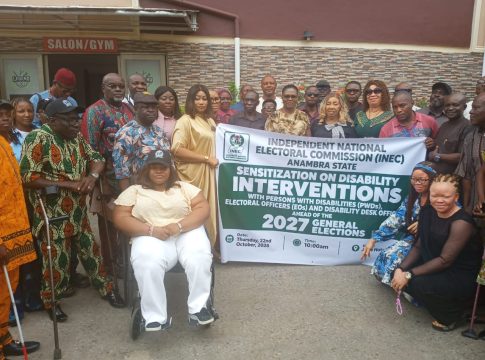
Anambra REC Elizabeth Agwu assures voters with disabilities of inclusive elections, while JONAPWD pledges nationwide awareness efforts to ensure no eligible voter is left behind.
AWKA — The Independent National Electoral Commission (INEC) has intensified efforts to eliminate barriers to electoral participation for persons with disabilities (PWDs) ahead of Nigeria’s 2027 general elections, unveiling measures including assistive voting materials, dedicated queues and targeted voter education.
The initiative is aimed at ensuring that eligible Nigerians with disabilities can exercise their constitutional right to vote without discrimination, intimidation or unnecessary obstacles.
The Resident Electoral Commissioner (REC) in Anambra State, Dr Elizabeth Agwu, gave the assurance during a sensitisation programme in Awka involving persons with disabilities, electoral officers from the state’s 21 local government areas and disability desk officers.
Agwu reaffirmed INEC’s commitment to conducting free, fair, transparent, inclusive and credible elections, urging persons with disabilities to remain confident in the electoral process ahead of the 2027 polls.
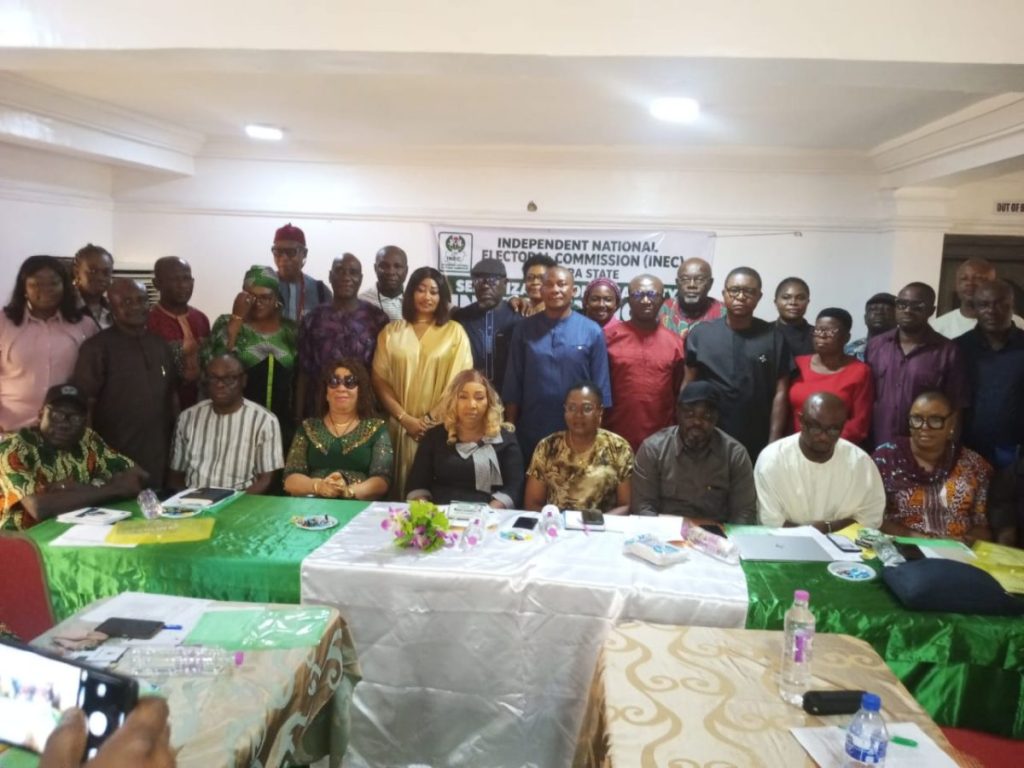
INEC Moves to Strengthen Electoral Confidence
The REC said the sensitisation programme was designed to educate participants on the electoral process, strengthen their understanding of voting procedures and build confidence in the commission’s capacity to deliver credible elections.
According to her, the engagement was also intended to encourage persons with disabilities to believe in their ability to participate fully in Nigeria’s democracy.
“We are all here today to sensitise members of PWDs, electoral officers and disability desk officers on the importance of the election and to build their confidence ahead of the polls.
“We want them to keep believing in themselves, believing in the Commission’s capacity in conducting a transparent election and believing in the sustainability of Nigeria democracy,” she said.
Agwu urged electoral stakeholders to work together towards a successful election, describing the 2027 general election as a collective responsibility that requires cooperation and unity.
“I urge you all to work happily with me to conduct a free, fair and credible 2027 general election in Anambra State.
“The 2027 general election is our collective responsibility, so we must work cooperatively and in unity to make it a success,” she added.
The REC also commended persons with disabilities for their consistent participation in INEC’s engagements and their contributions to improving electoral inclusion.
Assistive Devices to Make Voting Easier
The facilitator, Mr Bukar Maikwada, Assistant Director in charge of Youth at INEC headquarters in Abuja, disclosed that the commission had provided assistive voting materials to support persons with disabilities during elections.
The materials include three-ballot guides, magnifying glasses and EC30PWD posters, designed to improve access to voting and help voters with disabilities participate more effectively.
Maikwada said the provisions reflected INEC’s commitment to ensuring that persons with disabilities were not excluded from the electoral process.
“INEC is an inclusive commission, that is why it always makes provision for persons with disabilities, to enable them cast their votes with ease during elections,” he said.
Separate Queues for PWDs, Elderly Voters
In a move expected to reduce waiting times and improve access to polling units, Maikwada announced that persons with disabilities and elderly voters would have separate queues on election day.
He explained that the arrangement would allow eligible voters in these groups to receive attention promptly when they arrive at polling stations.
“On election day, we are going to have separate queues for the PWDs and the elderly, so that as soon as they come, they will be attended to immediately,” he said.
The measure is part of INEC’s efforts to address practical barriers that can discourage persons with disabilities from participating in elections.
JONAPWD Commends INEC, Pledges Wider Sensitisation
The Anambra State Chairman of the Joint National Association of Persons with Disabilities (JONAPWD), Comrade Ugochukwu Okeke, commended INEC for involving the disability community in its preparations for the 2027 general elections.
Okeke said the engagement was important in ensuring that persons with disabilities understood the electoral process and could exercise their constitutional rights without unnecessary challenges.
He pledged that JONAPWD would extend the sensitisation exercise to its members across the state to improve their awareness of voting procedures and preparations for the upcoming elections.
The association also reaffirmed its commitment to partnering with INEC and other stakeholders to ensure that no eligible voter with a disability was left behind.
NOA Warns Against Intimidation
Also speaking at the programme, the Anambra State Director of the National Orientation Agency (NOA), Ifeoma Chijioke, urged persons with disabilities not to allow harassment or intimidation to prevent them from exercising their civic rights.
She stressed that protecting the voting rights of persons with disabilities was essential to ensuring that Nigeria’s democratic process remained accessible to all eligible citizens.
Chijioke encouraged voters with disabilities to remain confident and participate actively in the electoral process, while calling for greater awareness of their rights and the importance of inclusive elections.
2027: Inclusion Must Go Beyond Election Day Promises
INEC’s latest engagement in Anambra comes amid growing efforts to strengthen electoral participation among persons with disabilities ahead of the 2027 general elections.
The provision of assistive voting materials, separate queues and targeted sensitisation represents an important step towards addressing barriers that have historically affected the participation of voters with disabilities.
However, the effectiveness of these measures will depend on their implementation at polling units, the preparedness of electoral officers and the willingness of stakeholders to protect voters from discrimination and intimidation.
With JONAPWD pledging to extend voter education to its members and INEC reaffirming its commitment to inclusive elections, stakeholders are hopeful that the 2027 polls will provide improved opportunities for persons with disabilities to participate in the democratic process.
As preparations gather momentum, the central message from Anambra is clear: disability should not become a barrier to voting, and every eligible Nigerian must have the opportunity to exercise their democratic rights freely, safely and with dignity.


