

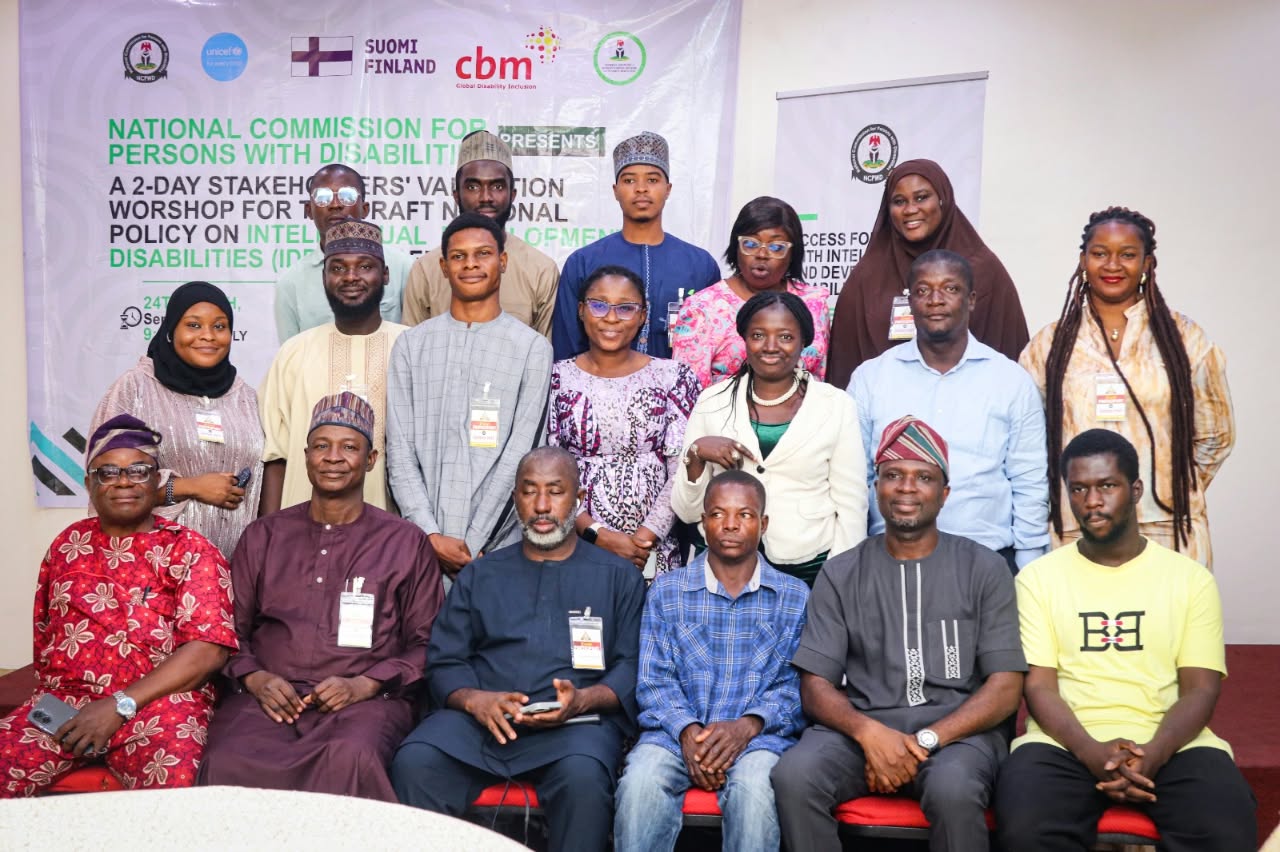
Gufwan Opens Stakeholders’ Validation Workshop as Experts, OPDs, Families Push for Practical National Policy on IDD
ABUJA — The National Commission for Persons with Disabilities (NCPWD) has commenced the validation of a proposed National Policy on Intellectual and Developmental Disabilities (IDD), in a move aimed at strengthening rights, inclusion and support systems for persons with IDD across Nigeria.
The Executive Secretary of NCPWD, Hon. Ayuba Burki Gufwan, declared open the two-day stakeholders’ validation workshop in Abuja, describing the process as a critical milestone in Nigeria’s disability-inclusive development agenda.
The workshop, held at Reiz Continental Hotel, Abuja, brought together representatives of government ministries, departments and agencies, development partners, civil society organisations, Organisations of Persons with Disabilities (OPDs), academia, parents, caregivers and families.
With the theme “Strengthening Rights, Inclusion and Support Systems for Persons with Intellectual and Developmental Disabilities in Nigeria,” the workshop is expected to provide stakeholders with an opportunity to scrutinise the draft policy, identify gaps and make recommendations before its finalisation.
Moving Beyond the Medical Model
Representing the Executive Secretary at the opening session, NCPWD Director of Planning, Research and Statistics, Mr. Aliyu Agwai, said persons with IDD have for too long been viewed primarily through the lens of medical diagnosis and dependency.
He said this approach fails to adequately recognise their abilities, aspirations, choices and contributions to society.
Agwai said the focus must shift towards removing barriers in education, healthcare, employment, social protection, justice, transportation and information, as well as addressing negative societal attitudes.
He noted that while the Discrimination Against Persons with Disabilities (Prohibition) Act, 2018 and the UN Convention on the Rights of Persons with Disabilities provide important foundations, disability rights must translate into practical programmes, budgets and responsive institutions.
Policy Targets Life-Course Support
NCPWD Technical Adviser, Dr. Adebayo Adebukola, said the proposed policy is designed to address gaps that may not be sufficiently covered by general disability legislation, particularly the diverse and lifelong support needs associated with IDD.
According to him, the policy aligns Nigeria’s approach with international standards, particularly the CRPD, and is anchored on five dimensions: Rights, Inclusion, Protection, Support and Participation.
The proposed framework covers the life course — from early identification and intervention through education, healthcare and employment to independent living and community participation.
Six Pillars, Six Major Objectives
The draft policy is organised around six strategic implementation pillars:
- Health and Well-being
- Education and Skill Development
- Employment and Economic Inclusion
- Social Protection and Community Support
- Support for Parents, Families and Organisations of Persons with Disabilities
- Research, Data Collection and Awareness
Its core objectives include strengthening legal protection, improving access to essential services, supporting families and caregivers, reducing stigma and establishing standardised guidelines for service delivery.
Stakeholders Call for Practical Implementation
Dr. Kehinde Ogunbiyitan, Head of Education Unit at NCPWD, said the validation process is aimed at ensuring that the policy contains actionable strategies capable of addressing systemic barriers.
He stressed that education cannot be addressed in isolation, arguing that sustainable inclusion requires coordinated interventions across health, education, employment, social protection and community support.
The National President of the Association for Intellectual and Developmental Disabilities of Nigeria (AIDDN), Evangelist Babatunde Willoughby, PhD, commended NCPWD for convening the workshop.
He also acknowledged the contribution of the previous AIDDN administration led by Mrs. Joko Omotola, under whose tenure the policy document was prepared and submitted for consideration.
The Commission appreciated UNICEF, Rights in Action, NGOs, OPDs, MDAs and other stakeholders for contributing to the validation process.
As Nigeria moves towards finalising the proposed policy, stakeholders say its ultimate impact will depend on implementation — particularly whether commitments on paper translate into accessible services, stronger protection, economic opportunities and meaningful participation for persons with intellectual and developmental disabilities.


