

Umuahia, Abia State
— The Abia State Disability Commission has called for the deliberate and comprehensive inclusion of women and girls with disabilities in the implementation of the newly enacted Abia State Centre for Rehabilitation of Survivors of Rape, Defilement, Domestic Violence and Any Form of Human Trafficking Law, 2026.
The Commission warned that the passage of a law, no matter how progressive, would not automatically translate into protection and justice for persons with disabilities unless the structures, services and systems established under the legislation were intentionally designed to eliminate the barriers they face.
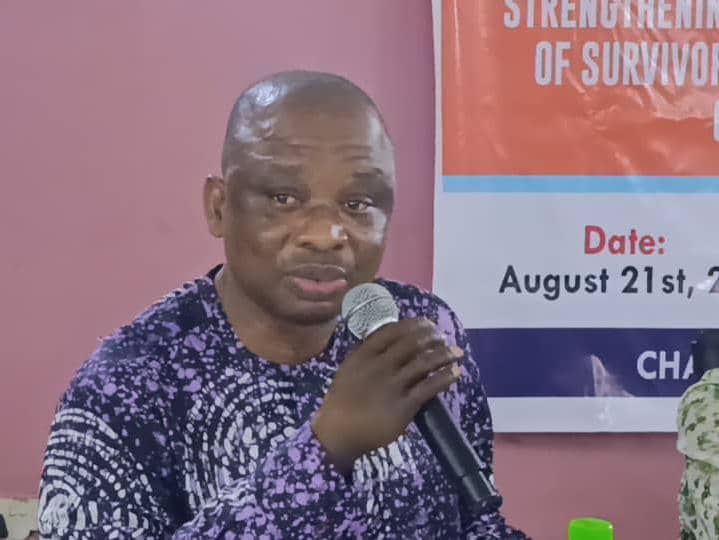
The Chairman of the Commission, Dr. David Anyaele, made the call on Thursday in Umuahia during a one-day stakeholder engagement on strengthening the operationalisation of the new law.
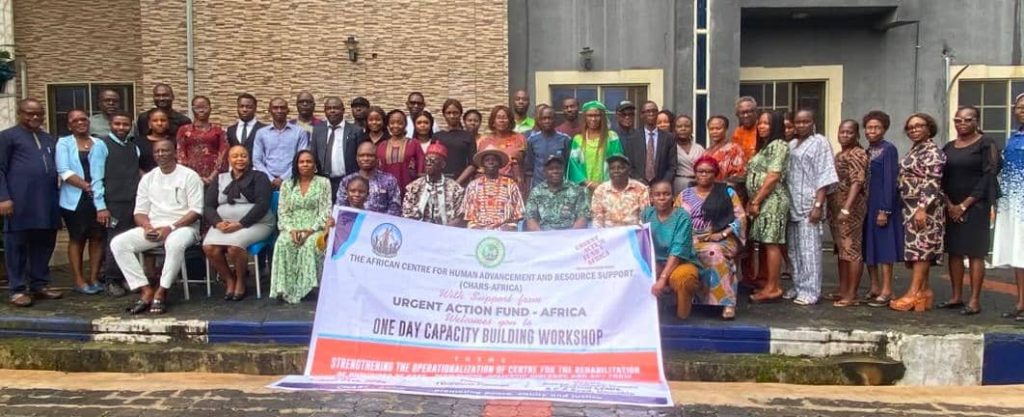
The engagement was organised by the African Centre for Human Advancement and Resource Support (CHARS-Africa) with support from the Urgent Action Fund-Africa (UAF-Africa).
‘A Rehabilitation Centre Is Not Inclusive If a Wheelchair User Cannot Enter’
Speaking at the engagement, Dr. Anyaele drew attention to the disproportionate risks confronting women and girls with disabilities, particularly in relation to sexual and gender-based violence (SGBV).
He explained that their vulnerability is often worsened by a combination of factors, including dependence on caregivers, communication barriers, lack of privacy, inaccessible reporting mechanisms, social isolation, stigma and limited access to immediate assistance.
“Women and girls with disabilities face heightened risks of sexual and gender-based violence. Their vulnerability may be compounded by dependence on caregivers, communication barriers, limited privacy, inaccessible reporting mechanisms, social isolation, stigma and reduced capacity to seek immediate assistance,” he said.
The Commission Chairman stressed that accessibility must be placed at the heart of the implementation of the new law, warning that the mere establishment of rehabilitation centres would not guarantee access for survivors with disabilities.
“A rehabilitation centre may exist, but if a wheelchair user cannot enter the building, it is not inclusive. If a Deaf survivor cannot communicate because there is no sign language interpreter, justice may be denied,” Anyaele stated.
His remarks highlighted a critical concern for disability advocates: a system can technically exist while remaining practically inaccessible to the very people it is intended to protect.
Commission Wants Disability Inclusion Built Into Implementation
To ensure that the new legislation delivers meaningful protection to survivors with disabilities, the Commission called on the Abia State Government and other stakeholders to adopt a disability-inclusive approach throughout the implementation process.
Dr. Anyaele urged authorities to ensure that rehabilitation facilities are physically accessible to wheelchair users and other persons with mobility disabilities.
He also called for information and communication to be provided in accessible formats, particularly for blind persons and people with intellectual disabilities.
Beyond infrastructure and communication, he emphasised the need to train personnel working within the survivor-support system on disability inclusion.
According to him, professionals responsible for receiving complaints, providing medical care, offering psychosocial support, facilitating rehabilitation and pursuing justice must understand the specific needs and rights of survivors with disabilities.
The Commission also demanded the meaningful participation of women with disabilities and their representative organisations in monitoring and implementing the law.
For the Commission, persons with disabilities should not merely be treated as beneficiaries of the legislation but should have a voice in determining how the systems created by the law operate.
‘Success Should Be Measured by Access, Not Structures’
Dr. Anyaele said the effectiveness of the law should not be judged solely by the number of rehabilitation centres established or programmes created.
Instead, he argued that the real test would be whether survivors—regardless of whether they have disabilities—can obtain protection, rehabilitation, justice and support without encountering barriers.
“The success of this Law should not be measured only by the establishment of structures, but by whether every survivor, with or without disability, can access protection, rehabilitation, justice and support with dignity.”
The statement captures the central challenge facing stakeholders as Abia begins the process of translating the new legislation into practical interventions for survivors of gender-based violence.
CHARS-Africa Raises Alarm Over Low Awareness
Earlier in her address, the Executive Director of CHARS-Africa, Barrister Amaka Biachi, revealed another major challenge that could undermine the effective implementation of the law: limited public and stakeholder awareness.
Biachi disclosed that preliminary consultations conducted by the organisation showed that only about five per cent of stakeholders engaged were aware of the existence of the new legislation.
She described the finding as an indication of the enormous task ahead in ensuring that the law moves beyond the pages of legislation and becomes a functioning, survivor-centred protection system.
According to her, passing the law is only the beginning. Its impact will ultimately depend on how effectively its provisions are communicated, understood and implemented by institutions and communities.
The awareness gap also raises concerns about whether survivors themselves, particularly those living with disabilities, know where and how to seek help when they experience violence.
Stakeholders Begin Conversation on Implementation
The one-day engagement provided an opportunity for stakeholders to examine how the 2026 law can be translated into effective protection, rehabilitation and reintegration services for survivors.
Participants included representatives of government ministries, departments and agencies, traditional institutions, labour, health and social service providers, civil society organisations and community stakeholders.
Discussions centred on strengthening the operational framework of the law and ensuring that the structures established to support survivors are responsive to the realities they face.
For women and girls with disabilities, however, the conversation goes beyond establishing services.
It is about ensuring that those services are physically accessible, communication-accessible, affordable, safe and free from discrimination.
Commendation for Abia Government
The Chairman of the Abia State Disability Commission commended the state government for establishing what he described as a sustainable pathway towards the rehabilitation and reintegration of survivors of gender-based violence.
He specifically appreciated the Wife of the Governor, Lady Priscilla Chidinma Otti, for championing the legislation.
He also commended the Abia State House of Assembly for passing the Bill and Governor Dr. Alex C. Otti, OFR, for assenting to the legislation.
According to him, the passage of the law sends an important message to survivors that they should not be abandoned after experiencing violence.
“The message is clear: survivors must not be abandoned, and all hope is not lost.”
A New Test for Abia’s GBV Response
As Abia State moves towards operationalising the new law, disability advocates are insisting that inclusion cannot be treated as an afterthought.
For a woman who uses a wheelchair, accessibility may determine whether she can physically reach a rehabilitation centre.
For a Deaf survivor, the availability of a qualified sign language interpreter could determine whether she can report her experience and participate meaningfully in the justice process.
For a blind survivor, accessible information may determine whether she understands her rights and knows where to seek assistance.
And for women with intellectual or psychosocial disabilities, appropriately trained personnel and accessible communication may determine whether their experiences are heard and believed.
The implementation of the new law therefore presents Abia State with an opportunity to build a GBV response system that does not merely protect survivors in principle but reaches them in practice.
The challenge now is to ensure that disability inclusion moves from policy language to concrete action—so that no survivor is forced to choose between seeking help and confronting another barrier.
Follow the The Qualitative Magazine channel on WhatsApp:


