

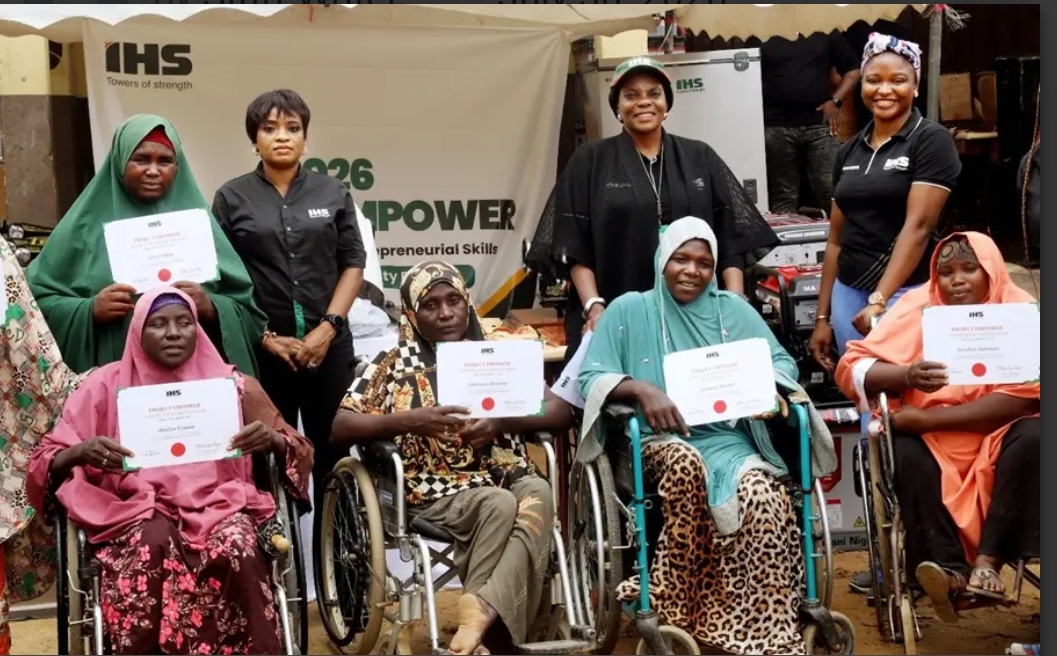
ABUJA, Nigeria – In a significant step towards promoting economic inclusion and sustainable livelihoods for persons with disabilities, IHS Nigeria has donated business support equipment to members of the Karonmajiji Disability Community in the Federal Capital Territory (FCT), Abuja, under its flagship Project Empower initiative.
The donation, presented during a colourful ceremony held in the Karonmajiji community on Monday, July 27, underscores the telecommunications infrastructure company’s commitment to empowering underserved communities through practical, long-term solutions rather than short-term interventions.
The initiative followed a comprehensive community needs assessment, which identified the specific challenges faced by entrepreneurs with disabilities. Instead of offering cash grants, IHS Nigeria adopted an asset-based empowerment model by providing business equipment that will enable beneficiaries to expand their businesses, improve productivity, and achieve greater financial independence.
A total of 50 pieces of business support equipment were distributed to carefully selected beneficiaries. The items included sewing machines, freezers, power generators, and professional hairdressing kits—essential tools aimed at strengthening existing businesses and creating new economic opportunities for persons with disabilities.
Speaking during the presentation ceremony, Titilope Oguntuga, Director of Sustainability at IHS Nigeria, said the initiative reflects the company’s unwavering commitment to advancing inclusive development and ensuring that persons with disabilities are not left behind in the pursuit of economic growth.
According to her, true empowerment goes beyond financial assistance. She explained that by providing productive assets rather than cash, beneficiaries are better positioned to build sustainable businesses, generate stable incomes, and improve the overall well-being of their families.
She noted that the intervention aligns with the United Nations Sustainable Development Goals (SDGs), particularly SDG 1 (No Poverty), SDG 8 (Decent Work and Economic Growth), and SDG 10 (Reduced Inequalities). She emphasized that inclusive economic participation is essential to building resilient communities and reducing poverty among vulnerable populations.
“Our goal is to create lasting impact by equipping persons with disabilities with the resources they need to succeed as entrepreneurs. This initiative demonstrates our belief that inclusion and sustainable development go hand in hand,” she said.

The leadership of the Karonmajiji Disability Community described the intervention as timely and transformative.
Delivering the opening remarks on behalf of the Chief of the Karonmajiji Disabled Community, Alhaji Sulaiman Muhammed Katsina, the Secretary of the Community, Alhaji Mohammed Dantani, expressed profound appreciation to IHS Nigeria for investing in the future of persons with disabilities.
He praised the company for choosing an empowerment strategy that promotes dignity, self-reliance, and economic productivity rather than dependency. According to him, the donated equipment will significantly improve the livelihoods of beneficiaries, strengthen household incomes, and provide hope to many families within the community.
He further described the initiative as a model of genuine partnership between the private sector and disability communities, noting that sustained collaboration is critical to addressing the socio-economic challenges confronting persons with disabilities across Nigeria.
The ceremony attracted a wide range of stakeholders, including traditional rulers, government officials, leaders and members of the Karonmajiji Disability Community Association, development partners, and representatives of the Field of Skills and Dreams Vocational Technical and Entrepreneurship (FSD VTE) Training Institute, which partnered in implementing the project.
The gathering reaffirmed a collective commitment to promoting disability inclusion, economic empowerment, and sustainable community development through strategic partnerships.
For many beneficiaries, the donated equipment represents more than business tools—it is a pathway to financial independence, dignity, and renewed confidence. By strengthening small businesses owned by persons with disabilities, the initiative is expected to generate ripple effects that will benefit families, create employment opportunities, and contribute to local economic growth.
Project Empower further demonstrates IHS Nigeria’s growing investment in corporate social responsibility by supporting initiatives that address inequality, promote entrepreneurship, and improve the quality of life for underserved communities.
As conversations around disability inclusion continue to gain momentum in Nigeria, initiatives such as this highlight the critical role the private sector can play in creating an inclusive society where persons with disabilities are empowered to contribute meaningfully to national development through equal access to opportunities and sustainable livelihoods.


