

By TQM News
In what could become a landmark step toward advancing economic empowerment and social inclusion for millions of Nigerians with disabilities, the Honourable Minister of Humanitarian Affairs and Poverty Reduction, Dr. Bernard Doro, has pledged the Federal Government’s full support for the establishment of the National Farm Cities for Persons with Disabilities, an ambitious initiative spearheaded by the National Commission for Persons with Disabilities (NCPWD) in collaboration with the Peace for Humanity Foundation.
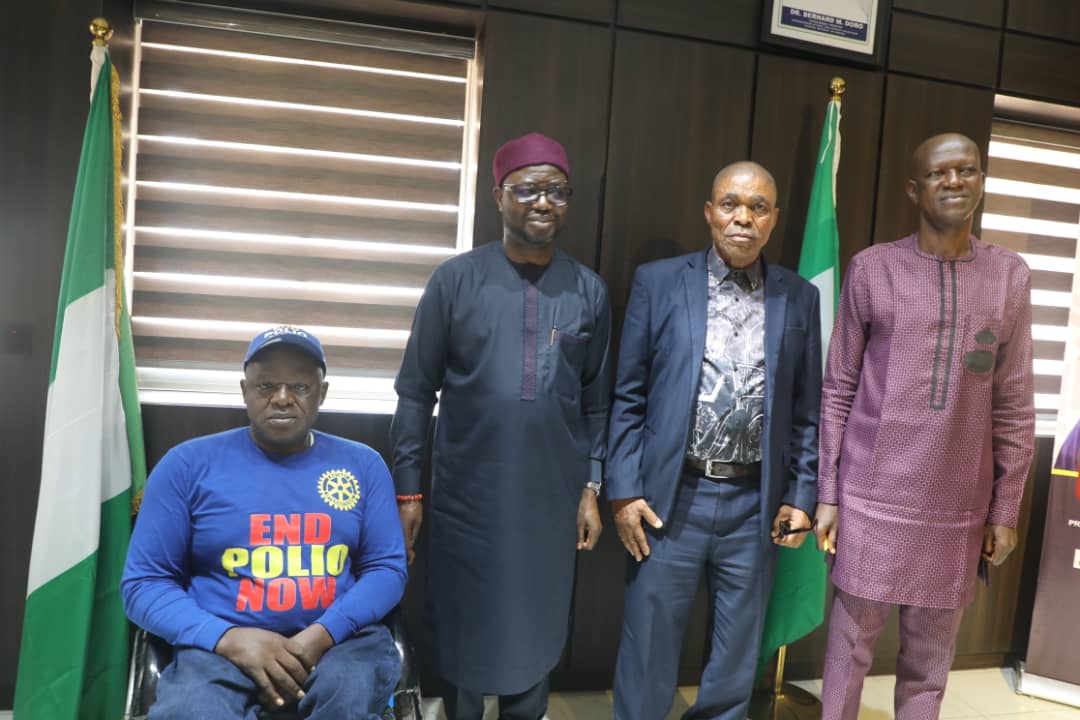
The Minister made the commitment on Thursday during a courtesy visit by the Executive Secretary of NCPWD, Hon. Ayuba Gufwan, who led the Commission’s management team alongside representatives of the Peace for Humanity Foundation to the Ministry in Abuja.
The meeting marks a significant milestone in the effort to transform the lives of Persons with Disabilities (PWDs) through agriculture, skills acquisition, accessible housing, healthcare, entrepreneurship, and sustainable livelihoods.
A Transformational Vision for Disability Inclusion
Describing the Farm Cities initiative as “timely and transformative,” Dr. Doro said the project aligns closely with President Bola Ahmed Tinubu’s Renewed Hope Agenda, particularly its commitment to poverty reduction, job creation, food security, and inclusive national development.
According to the Minister, the initiative represents a practical solution to the long-standing economic challenges faced by many Nigerians with disabilities.
“This is a laudable project. It is an initiative that everyone interested in uplifting Persons with Disabilities in this country should support and work towards its success,” the Minister stated.
He assured the delegation that his Ministry would carefully review the project’s progress report and technical documents to determine areas where government intervention could accelerate implementation.
“I will study the progress report and project documents submitted to identify specific areas where the Ministry can intervene to expedite progress. We will continue engaging with the Commission and the Peace for Humanity Foundation to address any grey areas and position the Ministry as a strong advocate for the project,” he said.
FEC Approval Process to Begin
In one of the strongest commitments made during the meeting, Dr. Doro disclosed that the Ministry intends to prepare a comprehensive policy document within the next month for presentation to the Federal Executive Council (FEC).
The document, he explained, will seek national approval for the project and facilitate government funding for its implementation.
“I will not let this project die under my watch,” the Minister declared.
“All identified gaps, procedures, and administrative issues will be addressed, especially since the project is still at an early stage.”
His remarks signal the Federal Government’s willingness to integrate disability-inclusive economic development into national policy, a move disability advocates have long demanded.
The Minister also pointed to the project’s earlier adoption by the Council on Humanitarian Affairs during its meeting in Calabar in January 2026 as evidence of growing national support for the initiative.
Creating Opportunities Beyond Welfare
Speaking during the visit, the Executive Secretary of NCPWD, Hon. Ayuba Gufwan, said the Commission’s visit was aimed at updating the Minister on the progress made so far and seeking the Ministry’s support for rolling out the Farm Cities Project across Nigeria’s 36 states and the Federal Capital Territory (FCT).
According to him, the initiative represents a major shift in disability programming—from welfare and charity to economic empowerment and sustainable development.

He explained that each Farm City is designed as a fully accessible agro-industrial community where Persons with Disabilities can live, learn, work, receive healthcare, acquire vocational skills, engage in agro-processing, and establish businesses in an inclusive environment.
“The goal is to take Persons with Disabilities off the streets and equip them with the skills and opportunities to become self-reliant,” Hon. Gufwan said.
He noted that with more than 35 million Persons with Disabilities in Nigeria, many of whom continue to face unemployment, poverty, and social exclusion, the project offers an innovative pathway to economic independence and national productivity.
“The Commission is therefore requesting the Honourable Minister’s endorsement and leadership in presenting a memo on the Farm Cities Project to the Federal Executive Council for national approval and budgetary support, collaborating with relevant Ministries to mobilise resources, and supporting the formal launch of the project,” he added.
Pilot Project to Begin in Nasarawa State
Also speaking, the President of the Peace for Humanity Foundation, Dr. Thompson Udoh, revealed that substantial progress has already been made toward implementation.
According to him, the Nasarawa State Government has committed to hosting the pilot Farm City for the North Central geopolitical zone, providing an important foundation for nationwide expansion.
He further disclosed that a Local Organising Committee (LOC) has already been constituted to coordinate activities across the country.
“The next steps are the inauguration of a National Steering Committee and the formal launch of the Renewed Hope Farm Cities Project for Persons with Disabilities,” Dr. Udoh said.
A New Model for Inclusive Development
If successfully implemented, the Farm Cities Project is expected to become one of Nigeria’s most ambitious disability-inclusive development programmes.
Beyond providing accessible housing, the initiative aims to create thousands of jobs for Persons with Disabilities and their caregivers, boost agricultural production, strengthen food security, promote entrepreneurship, and reduce poverty among one of the country’s most underserved populations.
The project also reflects a growing recognition that disability inclusion should move beyond social protection and charity to embrace economic participation, innovation, and equal opportunities.
For many disability advocates, the Minister’s endorsement represents more than political support—it signals a renewed commitment to ensuring that Persons with Disabilities are active contributors to Nigeria’s economic development rather than passive beneficiaries of assistance.
As the Ministry begins work on a policy framework for the Federal Executive Council and preparations continue for the official launch of the initiative, stakeholders across the disability community will be watching closely to see whether the Renewed Hope Farm Cities Project delivers on its promise of transforming lives, creating opportunities, and building a more inclusive Nigeria.
#DisabilityInclusion #NCPWD #RenewedHope #InclusiveDevelopment


