

By TQM News
As political campaigns intensify ahead of the August 15, 2026 Osun State governorship election, media organisations have been challenged to place Persons with Disabilities (PWDs) at the centre of election coverage by amplifying their voices, promoting their political rights, and ensuring disability inclusion remains a key part of the democratic conversation.
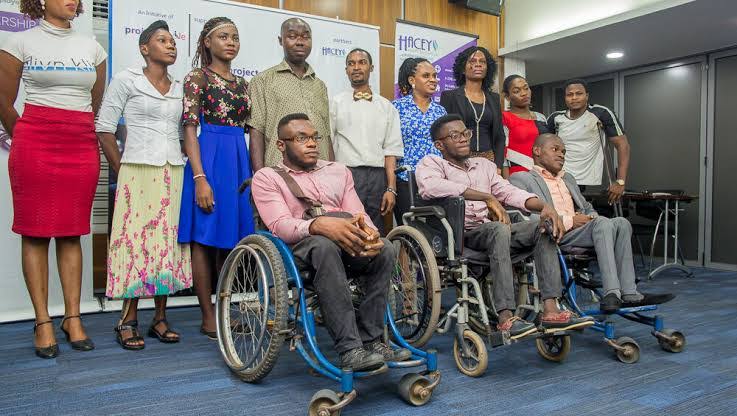
The call was made during a high-level Reflection Meeting on Media Inclusivity in Osun State, held in Osogbo on Wednesday. The meeting, organised by the Centre for Media and Society (CEMESO) in collaboration with the International Press Centre (IPC), TAF Africa, and the Nigerian Women Trust Fund (NWTF), brought together media executives, editors, regulators, civil society organisations, election stakeholders, and leaders of organisations of persons with disabilities to examine the role of the media in promoting inclusive electoral participation.
The meeting comes at a critical period when political parties are stepping up campaigns ahead of the governorship poll, with stakeholders stressing that democracy can only be meaningful when every citizen, including persons with disabilities, has equal access to information, political participation, and representation.
Inclusive Journalism Strengthens Democracy
Delivering the keynote presentation titled “Understanding PWD Inclusive Reporting as a Platform for Promoting the Image and Issues Enhancing the Voices of Persons with Disabilities,” the Executive Director of the International Press Centre (IPC), Mr. Lanre Arogundade, emphasised that inclusive journalism is not merely a social responsibility but an essential pillar of democratic governance.
According to him, the media serves as the bridge between citizens and government, making it imperative for journalists to ensure that the concerns, aspirations, and rights of persons with disabilities are adequately reflected in political reporting.
Arogundade explained that the European Union Support to Democratic Governance in Nigeria (EU-SDGN) programme is designed to promote a more inclusive, participatory, representative, and accountable democratic system by expanding civic engagement and ensuring equitable access to information for all citizens.
He noted that democracy cannot thrive where significant sections of the population are excluded from public discourse.
“The objective is to ensure that no group is left behind and that Persons with Disabilities are given opportunities to participate fully in democratic processes through fair, balanced, and inclusive media coverage,” he said.
He urged journalists to move beyond reporting disability issues only during commemorative events and instead integrate disability perspectives into mainstream political, governance, development, and election reporting.
According to him, inclusive reporting enables citizens with disabilities to contribute meaningfully to national conversations while helping to dismantle stereotypes and misconceptions that have historically limited their participation in public life.
Equal Rights Require Equal Access
Also speaking, the Executive Director of the Centre for Media and Society (CEMESO), Dr. Akin Akingbulu, reminded media practitioners that persons with disabilities enjoy the same constitutional rights as every other Nigerian, including the right to vote, seek elective office, receive information, and participate in governance.
He stressed that equal rights can only become meaningful when information is accessible to everyone, regardless of disability.
Dr. Akingbulu called on media organisations to deliberately remove communication barriers by adopting disability-inclusive practices across newsrooms and broadcast platforms.
According to him, television stations should incorporate sign language interpretation into political programmes and election broadcasts, while print and digital media should ensure their content is presented in formats accessible to persons with various disabilities.
“Media organisations should make their services more accessible by promoting sign language interpretation, providing accessible communication materials, and ensuring that facilities accommodate the needs of Persons with Disabilities,” he said.
He added that editors and media executives have a responsibility to institutionalise inclusive newsroom policies that guarantee sustained attention to disability issues rather than treating them as occasional stories.
Broadening Political Coverage
The Project Manager of the Nigerian Women Trust Fund (NWTF), Malliya Manu, explained that the reflection meeting formed part of ongoing efforts to improve the quality, fairness, and diversity of political reporting in Nigeria.
She observed that election coverage often focuses almost exclusively on male political actors while the voices of women, persons with disabilities, young people, and other underrepresented groups receive minimal attention.
According to Manu, balanced reporting requires journalists to deliberately seek out these voices and incorporate their perspectives into political stories, debates, interviews, and election analysis.
She said inclusive media coverage would not only enrich public discourse but also encourage greater political participation among groups that have historically been excluded from governance.
Sustaining Inclusive Election Reporting
In separate remarks, Project Manager of CEMESO, Timothy Bamidele, and Programme Manager of the International Press Centre, Sanmi Falobi, urged media organisations to sustain editorial attention on issues affecting persons with disabilities, women, youths, and other marginalised communities throughout the entire electoral process.
They noted that inclusive reporting should not end after election day but should remain an integral part of governance reporting, policy monitoring, and accountability journalism.
According to them, media organisations have enormous influence in shaping public perception and can help dismantle stereotypes by portraying persons with disabilities as active citizens, voters, leaders, professionals, and contributors to national development rather than merely as beneficiaries of charity.
Disability Inclusion Remains a Democratic Imperative
Participants at the meeting agreed that despite improvements in electoral inclusion, persons with disabilities continue to face significant barriers, including inaccessible polling units, limited access to voter education materials, inadequate sign language interpretation during political events, and insufficient media attention to disability-related electoral concerns.
They called on political parties, election management bodies, government institutions, civil society organisations, and media houses to work collaboratively to ensure that persons with disabilities are not excluded from any stage of the electoral process.
Stakeholders also encouraged journalists to engage more frequently with organisations of persons with disabilities, feature disability rights advocates in political discussions, and highlight policy proposals that address accessibility, inclusion, education, healthcare, employment, and economic empowerment.
Building an Inclusive Democracy
As Osun State prepares for the August 15 governorship election, stakeholders insist that the quality of democracy will not be measured solely by voter turnout or peaceful conduct of the polls, but also by how effectively the voices of historically marginalised groups are represented in public discourse.
For media organisations, the message from the Osogbo meeting was unequivocal: inclusive journalism is no longer optional—it is a democratic necessity.
By giving persons with disabilities equal visibility in political reporting, providing accessible information, and ensuring their concerns are reflected in election coverage, the media can play a transformative role in building a more representative, participatory, and inclusive democracy where no citizen is left behind.


