

By TQM News
With more than 35 million Nigerians living with disabilities and an estimated 2.1 million to 3 million residing in Lagos State alone, millions continue to battle daily challenges ranging from discrimination and poverty to inaccessible infrastructure and limited economic opportunities. Despite the existence of laws and institutions such as the Lagos State Office for Disability Affairs (LASODA), many persons with disabilities still struggle to access quality education, employment, healthcare, and public services.
Against this backdrop, a new documentary initiative is challenging stereotypes and changing the narrative surrounding disability in Nigeria.
The R4C Ability Project, an initiative spearheaded by disability advocate and creative producer Success Ezeani, is using storytelling to amplify the voices, talents, and entrepreneurial journeys of persons with disabilities through a compelling nine-part documentary series that celebrates resilience, innovation, and economic empowerment.
Rather than portraying disability through the familiar lenses of pity, charity, or inspiration, the project deliberately shifts attention to productivity, craftsmanship, entrepreneurship, and economic contribution.
Rewriting the Disability Narrative
The documentary series profiles nine entrepreneurs, artisans, creatives, and performers with disabilities from different parts of Lagos State, offering audiences an intimate look into their businesses, creative processes, and aspirations.
Each episode introduces viewers not to disability first, but to expertise.
The featured entrepreneurs explain their production techniques, tools, pricing strategies, customer relationships, and business experiences, demonstrating that their identities are defined by their skills and professionalism rather than by their impairments.
The approach represents a significant departure from traditional disability storytelling, where persons with disabilities are frequently portrayed as objects of sympathy or extraordinary inspiration. Instead, the documentaries position them as business owners, creators, employers, and contributors to Nigeria’s economy.
The project’s central message is simple yet powerful: disability does not diminish ability or productivity.
Stories of Courage, Talent and Enterprise
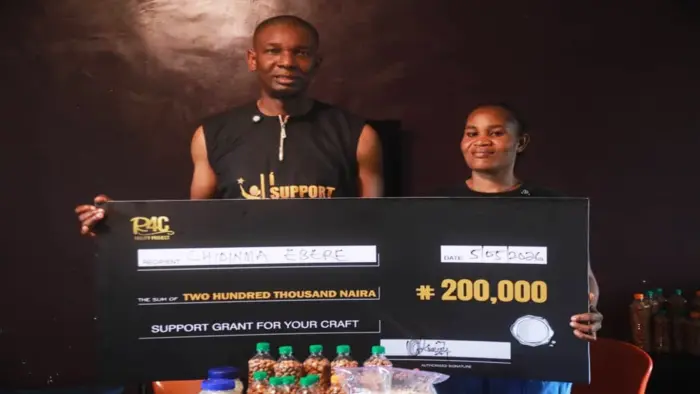
The documentary opens with Episode One, titled “Baking Hope Into Every Bite,” which follows Chidimma Ebere, a visually impaired entrepreneur whose homemade snacks business produces chin-chin and peanut cake.
Viewers witness not only the quality of her products but also the discipline, persistence, and business acumen required to sustain her enterprise. Her story reinforces the belief that talent, commitment, and determination can transcend physical limitations.
In Episode Two, “Weaving Resilience Through Adire,” audiences are introduced to Rosenje Adeniyi Afis, another visually impaired entrepreneur who has mastered the art of Adire (tie-and-dye) fabric production.
The documentary traces his journey from learning the centuries-old textile craft to building a thriving enterprise, highlighting how creativity and perseverance can overcome societal barriers.
Episode Three, titled “Disability Does Not Define Your Potential, It Reveals Your Strength,” centres on fashion designer Chinedu Joseph Alozie, whose personal story illustrates transformation, resilience, and the power of self-belief.
Alozie reflects on turning personal obstacles into opportunities while encouraging other persons with disabilities to pursue their dreams despite societal limitations.
The fourth episode, “Turning Disability Into Productivity,” tells the inspiring story of Michael Moses, a visually impaired shoemaker who refused to abandon his profession after losing his sight.
Instead, he adapted his skills and now earns a sustainable living by producing quality footwear, demonstrating that disability need not end one’s career or entrepreneurial ambitions.
Subsequent episodes continue the same powerful narrative through the experiences of several other talented creators.
Among them are performance artist and dancer Crazy Legs, who performs from Festac Town; make-up artist Kelechi Ruth Uhegwu of Satellite Town; creative entrepreneur Ugochukwu Ogugua Godfrey; beaded handbag artisan Olatunji Babatunde; creative practitioner Daniel Brown Moses; and other remarkable entrepreneurs whose businesses continue to create value despite numerous challenges.
Collectively, the documentaries showcase an impressive range of skills spanning fashion design, textile production, footwear manufacturing, dance, cosmetics, handicrafts, and creative arts.
Strategic Partnerships Driving Inclusion
The success of the R4C Ability Project has been strengthened through strategic partnerships with organisations and business leaders committed to promoting inclusion and economic empowerment.
Chief Executive Officer of OAPay, Tracy Abiola, explained that the company’s support for the initiative stems from its broader commitment to human development and financial inclusion.
According to her, OAPay’s mission extends beyond facilitating remittances to building sustainable economic opportunities for African communities.
She noted that partnering with the documentary project aligns with the company’s vision of empowering individuals and promoting inclusive development.
“We are backing immigrants and their communities with the financial tools for economic and sustainable development. Our platform is community-driven and built to uplift Africa’s growing diaspora through safe, fast, and convenient remittance services.
“Beyond remittance, we are committed to helping shape a financial ecosystem that supports individuals, families, and communities across Africa. We are proud to collaborate in promoting documentaries that showcase the incredible achievements of people living with disabilities.”
Similarly, Chief Executive Officer of Yaw Naija Entertainment, Steve Onu, described Ezeani as an exceptionally gifted creative collaborator whose work consistently promotes disability inclusion through innovative media production.
He said their collaborations on cultural exhibitions and inclusive documentary projects have demonstrated Ezeani’s unwavering commitment to transforming disability into productivity.
Also lending support to the initiative is Paul Orajiaka, Chief Executive Officer of Auldon Toys Limited, who praised the documentary for connecting commercial creativity with inclusive artisan development.
According to him, the project has successfully highlighted the technical expertise of artisans with disabilities engaged in textile production, commercial design, and bespoke fashion.
Faith Community Applauds Initiative
The Senior Pastor of Olivet Bible Church, Owen Nlekwuwa, also commended the project, revealing that his church has supported several R4C Ability exhibitions showcasing products created by persons with disabilities.
He described Ezeani as a visionary leader whose commitment to promoting visibility, participation, and economic opportunity continues to inspire meaningful social change.
Likewise, Managing Director of A.Y Shoes Global, Aloy Nwajide, said partnering with the project reinforces his belief that entrepreneurship and creativity remain powerful tools for empowering persons with disabilities.
He emphasised that inclusive economic participation benefits not only individuals but society as a whole.
More Than Inspiration
One of the documentary series’ greatest achievements lies in allowing each participant to tell their own story.
Rather than speaking on behalf of persons with disabilities, the project gives them ownership of their narratives, enabling audiences to appreciate their expertise, ambitions, and professional accomplishments.
This approach avoids the paternalistic tone often associated with disability programming and instead presents disability as one aspect of human diversity rather than a defining characteristic.
However, while the series succeeds in highlighting individual resilience, its relatively short episodes leave viewers wanting more.
Several stories would benefit from deeper exploration of the entrepreneurs’ business models, market opportunities, financial challenges, access to capital, and the policy barriers affecting business growth for persons with disabilities.
Adding data on disability-inclusive employment, entrepreneurship, accessibility, and government support programmes could further strengthen future productions by connecting personal experiences with broader systemic issues.
A Powerful Call for Inclusive Development
Despite these limitations, Turning Disability Into Productivity succeeds in delivering an important message about inclusion, dignity, and economic participation.
The documentary challenges long-held misconceptions about disability while celebrating the remarkable achievements of entrepreneurs who continue to thrive despite structural barriers.
It also reminds government agencies, corporate organisations, development partners, and the general public that empowering persons with disabilities requires more than sympathy—it demands investment in accessibility, education, skills development, entrepreneurship, and equal opportunities.
As Nigeria continues to pursue inclusive development, initiatives like the R4C Ability Project demonstrate the transformative power of media in changing perceptions and creating opportunities.
By placing talent before disability and enterprise before limitation, the documentary series offers a compelling vision of a society where every individual, regardless of disability, has the opportunity to contribute meaningfully to national development.
Ultimately, Turning Disability Into Productivity is more than a documentary series—it is a movement advocating recognition, inclusion, and economic empowerment for millions of Nigerians living with disabilities. Its stories challenge society to move beyond admiration for resilience and towards creating an environment where persons with disabilities no longer have to overcome unnecessary barriers simply to realise their potential.


