

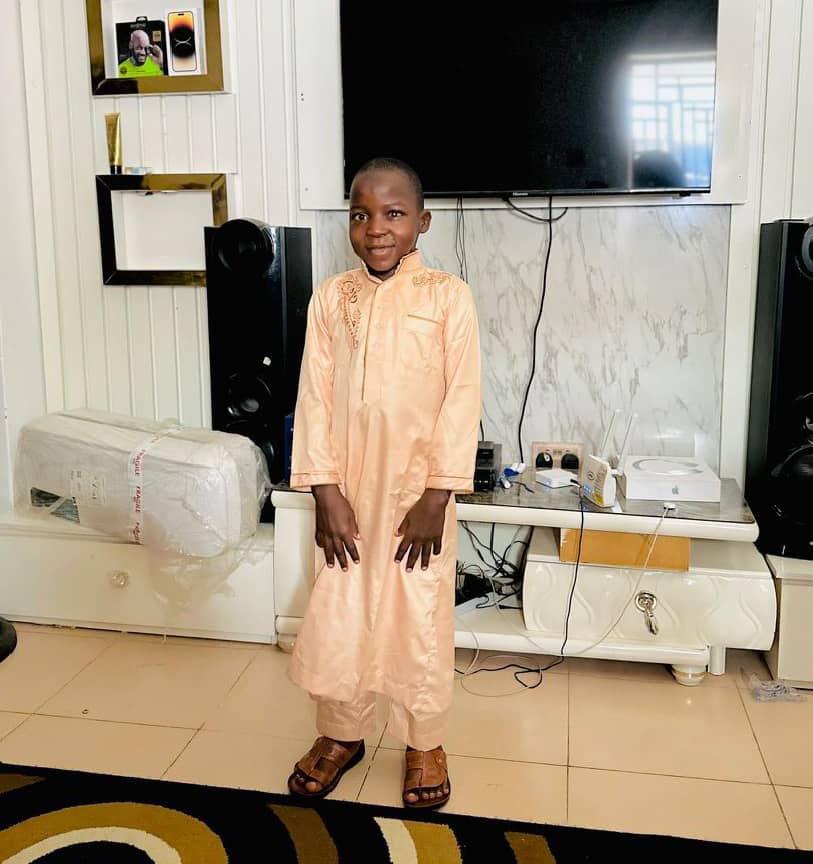
Relief, gratitude, and renewed calls for justice followed on Friday as Muhammad Abdullahi, a blind student of the Katsina School for the Blind, regained his freedom after spending seven harrowing days in captivity.
Muhammad was abducted on Friday, January 9, 2026, while on his way to school in Katsina State. According to reports, the kidnappers—suspected to be criminal elements operating in the area—forcefully took him away on a commercial motorcycle (popularly known as Okada), an incident that shocked residents and sent waves of fear across the disability community.
His abduction triggered widespread concern, not only because of Nigeria’s persistent insecurity, but also because of the exceptional vulnerability of children with disabilities, especially in conflict-prone regions of the country.
After seven anxious days of uncertainty, Muhammad was safely reunited with his family on Friday afternoon, bringing immense relief to his loved ones, schoolmates, and disability advocates who had relentlessly campaigned for his release.
Confirming the development, Muhammad’s cousin, Ibrahim Jibril Ibrahim Maigamji, expressed heartfelt gratitude to security agencies, organisations of persons with disabilities, and well-meaning Nigerians whose collective efforts, prayers, and advocacy contributed to the student’s freedom.
“We are deeply thankful to everyone who stood with our family during this painful period—security agencies, disability organisations, and members of the public who refused to be silent,” he said.
While Muhammad was still held captive, disability rights groups across the country raised strong alarms, warning that the abduction of a blind student was not just another case of kidnapping, but a glaring reminder of the dangers faced daily by persons with disabilities.
In a statement released on Thursday and made available to Inclusive News, the Joint National Association of Persons with Disabilities (JONAPWD) described the incident as a grave human rights and humanitarian emergency.
The statement, signed by Zainab Idris, Youth Wing Northwest Coordinator of JONAPWD, condemned the abduction and highlighted the increased risks faced by vulnerable groups in Nigeria’s fragile security environment.
“This is not just a security issue; it is a serious human rights and humanitarian emergency. A child with a disability, who already faces daily challenges in accessing education and building his future, has now been abducted,” the statement read.
JONAPWD stressed that children with disabilities already contend with significant barriers—ranging from inaccessible schools to discrimination—and should never be exposed to additional trauma through insecurity and violence.
The association called on the Federal Government, Katsina State Government, security agencies, disability stakeholders, traditional rulers, and community leaders to move beyond rhetoric by implementing concrete measures to protect students with disabilities, particularly those attending special schools in northern Nigeria.
They also renewed demands for strengthened security around educational institutions, safer transport systems for students with disabilities, and proactive community surveillance to prevent similar incidents in the future.
Although Muhammad’s release has brought a moment of relief, disability advocates insist that the incident must serve as a wake-up call. They warn that without targeted protection and inclusive security strategies, children with disabilities will continue to face heightened risks in a country grappling with widespread insecurity.
As Muhammad returns home to begin the process of healing, his story stands as both a testament to collective advocacy and a stark reminder that the safety, dignity, and rights of persons with disabilities must remain a national priority—not only after crises occur, but before they ever happen.


