

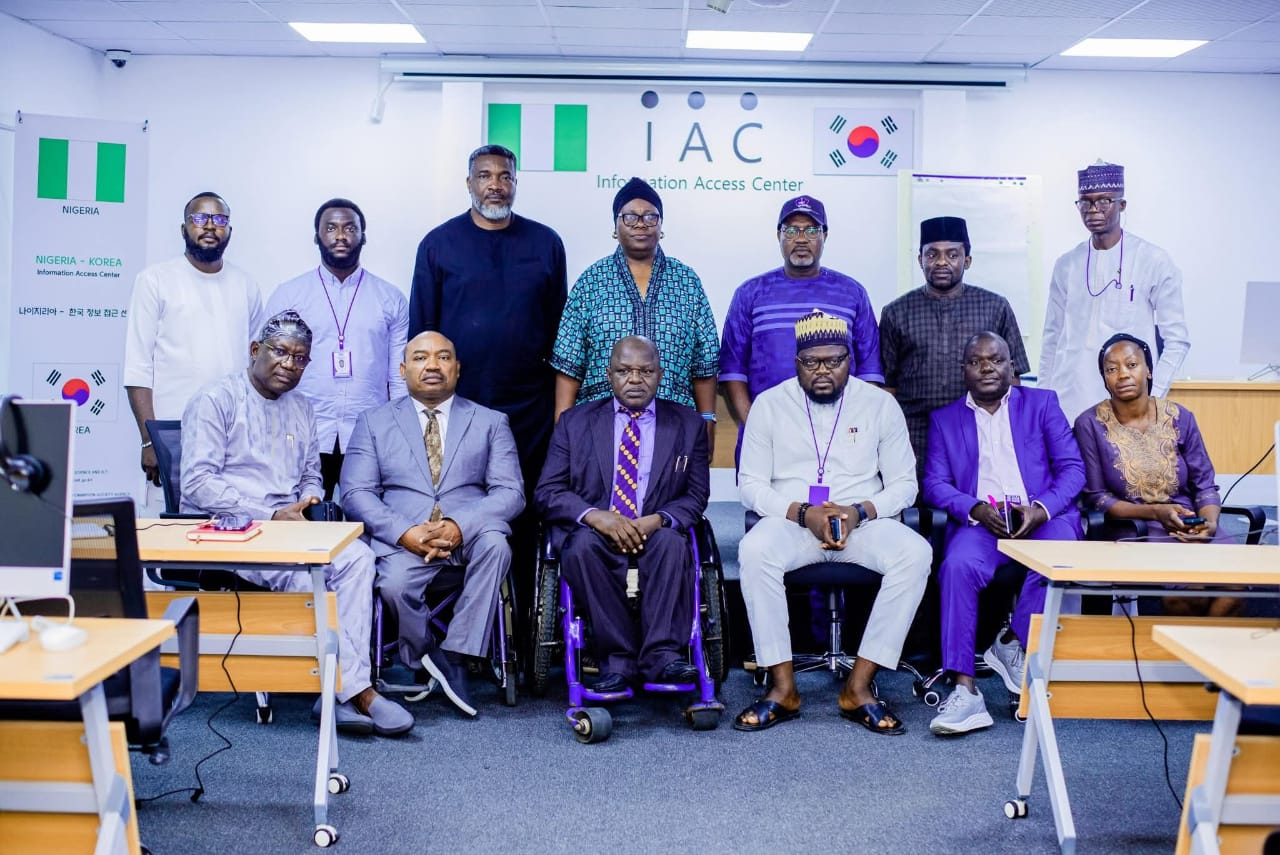
In a bold step towards dismantling digital barriers and advancing full inclusion, the National Commission for Persons with Disabilities (NCPWD) is set to formalize a strategic partnership with the Digital Bridge Institute (DBI). The collaboration, which will be anchored through a Memorandum of Understanding (MoU), aims to leverage technology to empower persons with disabilities and ensure they are not left behind in Nigeria’s digital transformation journey.
The commitment was reached during a courtesy visit by NCPWD’s leadership team to DBI headquarters in Abuja, where both institutions aligned on shared goals of promoting digital literacy, identity verification, certification, and inclusive access to opportunities for persons with disabilities.
“Disability Must Not Be a Barrier to Innovation”
Leading the NCPWD delegation, the Executive Secretary, Chief Ayuba Burki Gufwan, underscored the urgency of digital empowerment as a tool for inclusion. He stressed that technology offers unprecedented opportunities for dismantling age-old obstacles faced by persons with disabilities, from employment barriers to educational exclusion.
“We need to ensure that our community is digitally empowered, equipped, and included in the opportunities available through technology. Our vision is to create a Nigeria where disability is not a barrier to innovation, productivity, or national contribution,” Chief Gufwan stated.
He commended DBI for its longstanding record of inclusive interventions, noting that reports from across the country have consistently highlighted the Institute’s commitment to integrating persons with disabilities in its training and digital programmes.
DBI’s Commitment to Inclusive Technology
In his response, DBI President/CEO, Mr. David Daser, welcomed the initiative, describing it as a timely intervention that aligns with Nigeria’s broader digital transformation agenda. He emphasized the importance of formalizing the partnership through an MoU to streamline engagement and ensure maximum impact.
According to Daser, DBI has both the technical expertise and institutional framework to tackle several challenges highlighted by the Commission. These include combating impersonation of persons with disabilities, strengthening identification systems, and providing targeted digital literacy programmes.
“Once the MoU is signed, DBI will deploy tailored interventions to accelerate the inclusion of persons with disabilities in its national programmes, ensuring they benefit equitably from Nigeria’s digital growth,” Daser assured.
Strengthening Institutional Collaboration
The high-level meeting was attended by senior officials from both institutions. On the side of NCPWD, the delegation included Mr. Ikem Uchegbulam, Director General, Compliance and Enforcement; Mr. Lawrence Idemudia, Director, Social Integration; Ms. Enyimba Joy, Legal Officer; Mr. Gurumyen Carl, Human Resources Manager; and Mr. Pedro Afolabi, Security Aide.
DBI’s team was led by the President, joined by Mrs. Ngozi Nwoche, Head of Corporate Services; Mr. Nwanze Okonkwo, Head of Value-Added Services; Mr. Pius Togmaan, Personal Assistant to the President; and Mr. Chibundu Odiaka, Head of Special Projects.
Their joint deliberations centered not only on enhancing digital literacy but also on creating frameworks that would empower PWDs to participate meaningfully in the digital economy, thus aligning with Nigeria’s vision of an inclusive knowledge society.
A Milestone for Digital Inclusion
Observers have described the planned partnership as a landmark moment for disability inclusion in Nigeria, particularly at a time when digital transformation is shaping every sector of national life—from education and employment to healthcare and governance.
The NCPWD–DBI alliance is expected to serve as a model for how government institutions and training institutes can work together to bridge the digital divide, ensuring that persons with disabilities are not marginalized but rather positioned as active contributors to Nigeria’s development.
Towards an Inclusive Digital Future
As both institutions prepare to sign the MoU, stakeholders in the disability community are optimistic that this partnership will bring practical, measurable change. With tailored training, improved identity systems, and expanded opportunities, persons with disabilities are set to gain greater digital access, stronger voices, and increased participation in national growth.
This partnership marks another chapter in NCPWD’s ongoing efforts to champion inclusion, build strong institutional alliances, and create a society where no Nigerian—regardless of ability—is left behind in the march toward digital transformation.
Follow the The Qualitative Magazine channel on WhatsApp: https://whatsapp.com/channel/0029VanfIB50wajpjGi3JJ1G


