

By TQM News Desk | Abuja | July 18, 2025
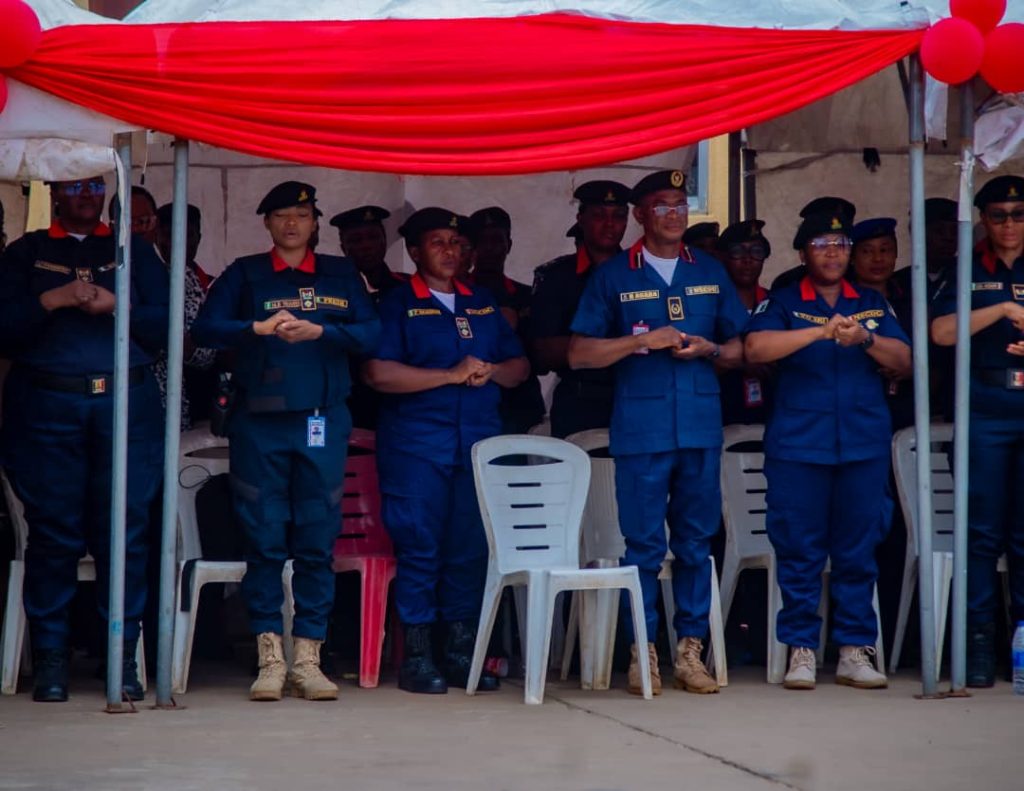
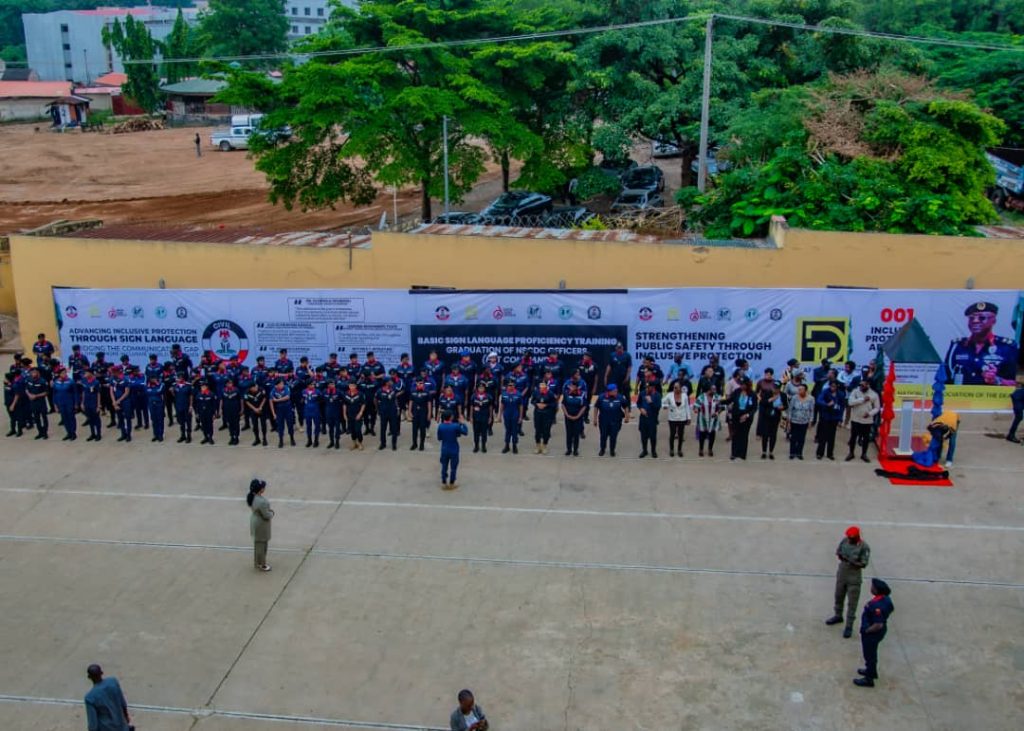
In a landmark step toward inclusive national security and community safety, the Nigeria Security and Civil Defence Corps (NSCDC), FCT Command, has successfully trained and graduated over 250 personnel on Basic Sign Language, becoming the first security agency in Nigeria to initiate such a structured program focused on bridging the communication gap between security operatives and the Deaf community.
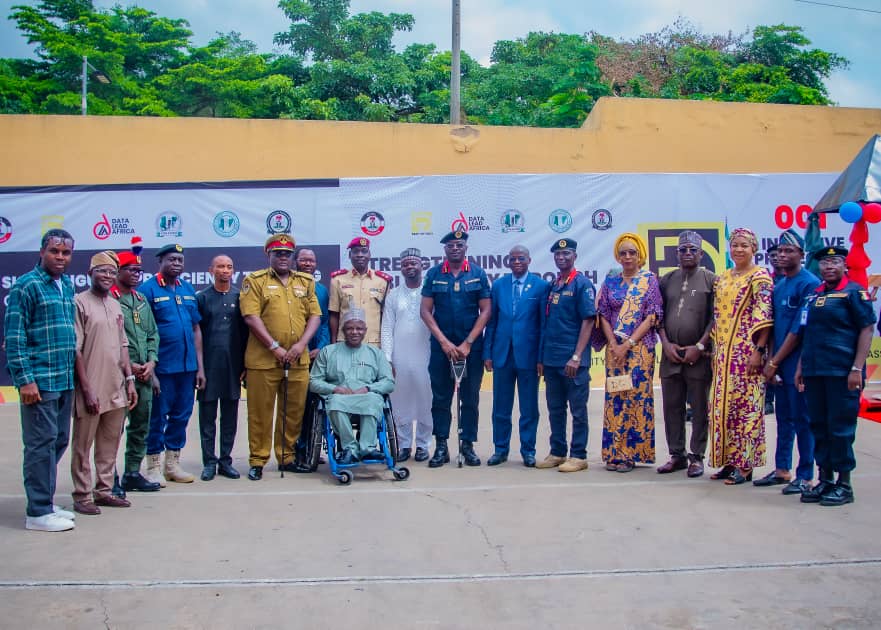
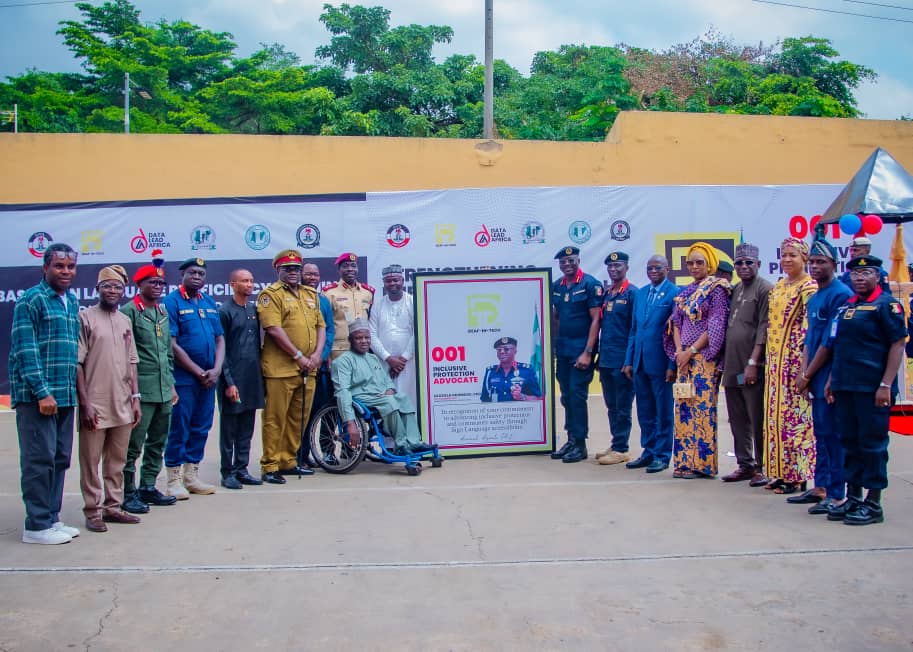
The graduation ceremony, held on Wednesday, July 16, 2025, at the NSCDC FCT Command Headquarters in Abuja, attracted accolades from stakeholders, with the National Commission for Persons with Disabilities (NCPWD) hailing the effort as a historic milestone in disability-inclusive governance.
NCPWD Applauds NSCDC’s Bold Inclusion Move
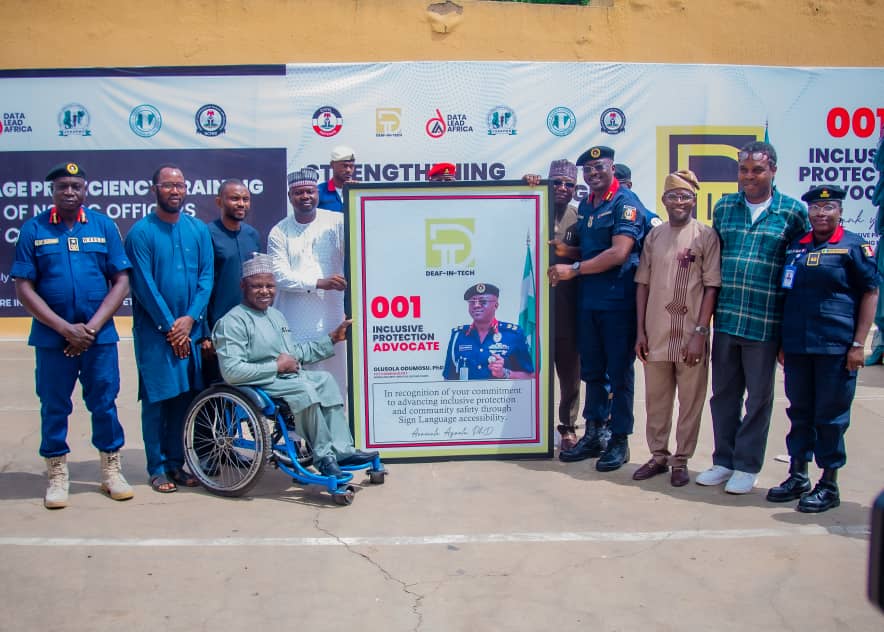
Executive Secretary of NCPWD, Hon. Ayuba Gufwan, was full of praise for the FCT Commandant, Dr. Olusola Odumosu, describing the initiative as “unprecedented” and a trailblazer in inclusive security architecture in Nigeria. Represented by Mr. Lawrence Idemudia, Director of Social Integration at NCPWD, Gufwan described Odumosu as the “001 Inclusion Protection Advocate” for his commitment to disability-inclusive protection services.
“This is more than a training program—it is a transformational moment in national security,” Gufwan declared. “Inclusion in security must not stop at communication alone. I respectfully call on the NSCDC to go further by employing trained Deaf individuals into the Corps and fully implementing the 5% employment quota for Persons with Disabilities (PWDs) as provided in the Discrimination Against Persons with Disabilities (Prohibition) Act, 2018, and enshrined in the **Public Service Rules (Revised 2021).”
Gufwan also reiterated the Commission’s unwavering commitment to supporting all security agencies through technical assistance, capacity building, and strategic partnerships aimed at embedding inclusion and accessibility in national security strategies.
“Capacity Building is the Heart of Security” — Commandant Odumosu
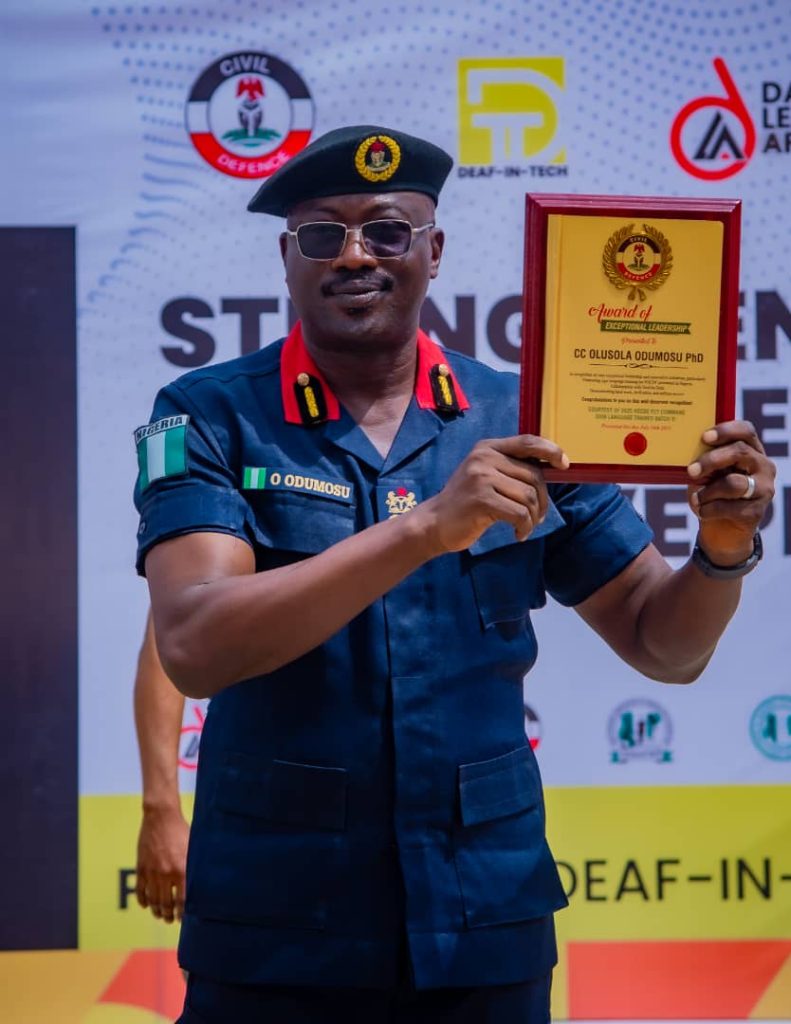
Delivering his keynote address, Commandant Dr. Olusola Odumosu emphasized that modern security service delivery must be rooted in capacity building, empathy, and responsiveness to societal diversity.
“I have always emphasized that capacity building is the cornerstone of a modern, resilient, and professional security outfit,” Odumosu stated. “This sign language training is not just another program; it is a deliberate part of our strategy to create a security system that understands, respects, and protects every Nigerian, including those with disabilities.”
Odumosu congratulated the graduating officers, commending their dedication and perseverance throughout the training. He noted that the program not only equips them with communication skills but also signals a shift toward a more inclusive security environment across the six Area Councils of the FCT.
“Inclusion is at the heart of effective security,” he added. “By learning sign language, you have made a vital commitment to ensuring that the voices of the Deaf and hard-of-hearing communities are not only heard but understood and respected.”
“This is Historic” – Deaf Community Reacts
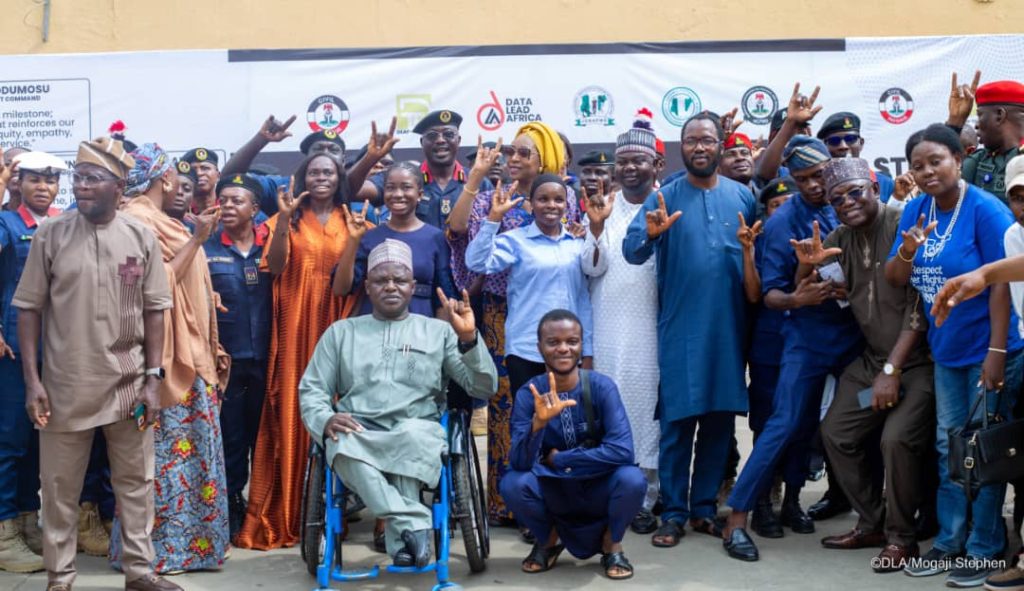
Dr. Arowolo Ayoola, founder of Deaf-In-Tech, described the initiative as a groundbreaking moment in Nigeria’s security and disability advocacy history.
“What the Nigeria Security and Civil Defence Corps, particularly the FCT Command, has done with this Basic Sign Language Training is nothing short of historic,” he said. “This is the first time in Nigeria that a security agency has made such a bold and structured move to bridge the gap between the state and a community that has long been invisible in the eyes of our security architecture.”
He expressed hope that other security agencies across the country would replicate the initiative and ensure that PWDs are not only protected but actively included in the protection process.
Certificates Awarded, Pledges Made
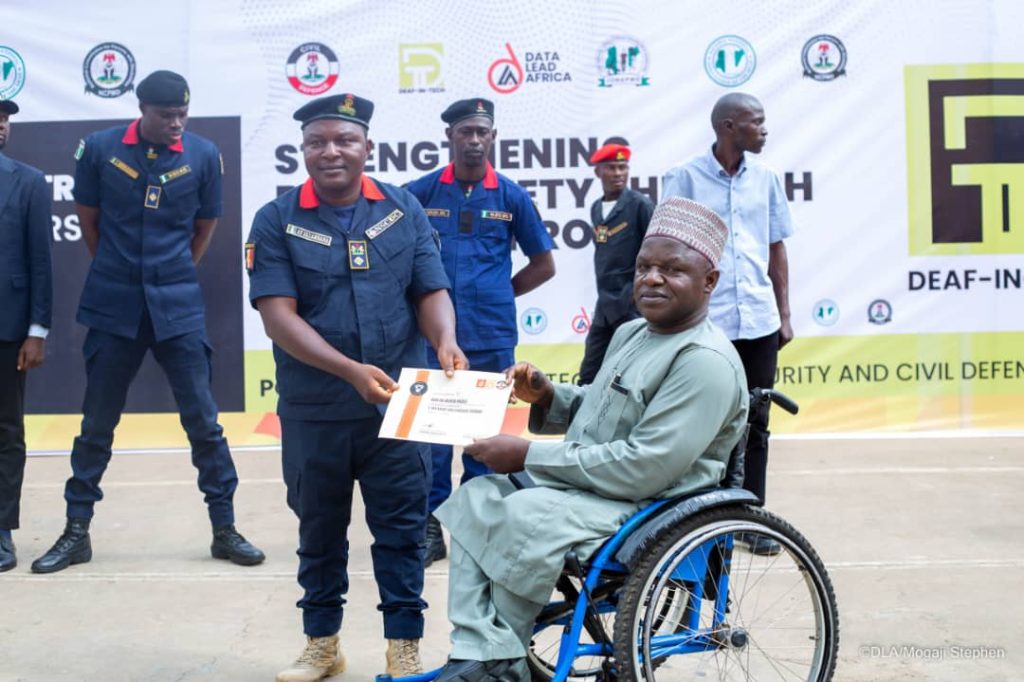
The highlight of the day was the presentation of certificates to the over 250 trained officers, each of whom pledged to become ambassadors of accessibility and inclusion in their respective duty posts.
Participants expressed excitement and pride in acquiring new skills that would not only enhance their professional capacity but also build trust within marginalized communities.
According to NSCDC officials, the program had already begun to inspire confidence within the Deaf community, restoring faith in law enforcement and creating new avenues for cooperation between citizens and the security apparatus.
A National Call to Action
Both the NSCDC and NCPWD reaffirmed their commitment to protecting the rights of all Nigerians by promoting equal opportunities and full participation in security and national development processes.
“We must move from exclusion to participation,” said Gufwan. “Let today be remembered not only for what has been achieved but for the possibilities it has unlocked for the future of security in Nigeria.”
Final Thoughts
This initiative marks a watershed moment for inclusive governance in Nigeria. It sets a precedent for what a truly people-centered security agency should look like—empathetic, inclusive, skilled, and attuned to the diverse needs of the citizens it protects.
As this bold chapter unfolds, the call is now on other security agencies, state actors, and development partners to embrace inclusion as not just a legal mandate—but a moral imperative.

Published by The Qualitative Magazine – Where Every Voice Matters


