

By Agbo Christian Obiora
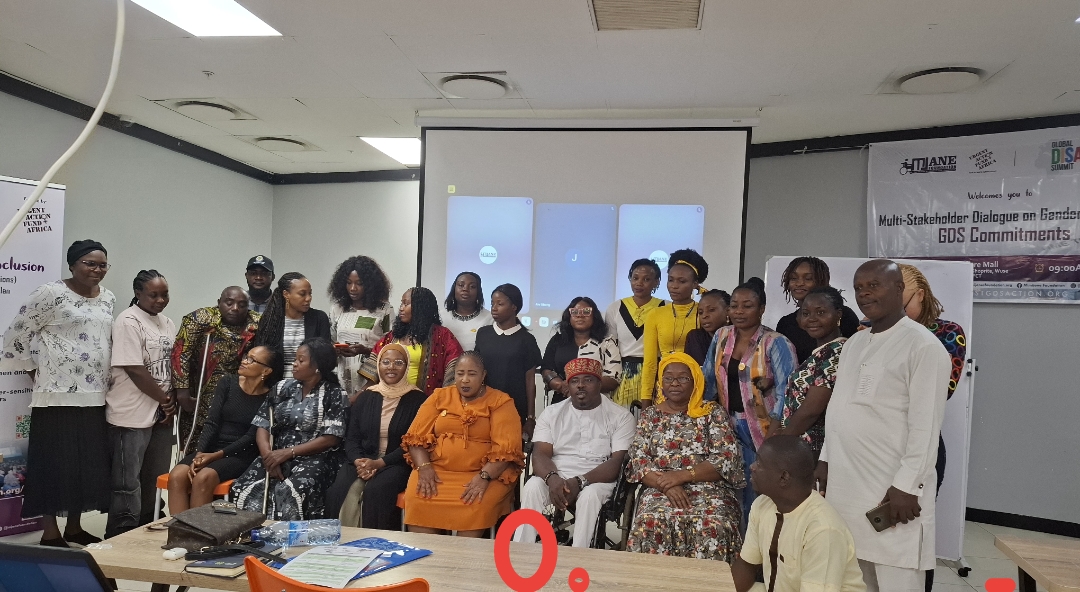
Abuja, Nigeria — In a bold and strategic move to strengthen Nigeria’s commitment to disability rights, particularly those of women and girls with disabilities, Mimijane Foundation for Women and Children with Disabilities convened a high-level multi-stakeholder dialogue on Thursday, May 22, 2025. The event, held in the nation’s capital, Abuja, was supported by the Urgent Action Fund-Africa and served as a follow-up to the Global Disability Summit (GDS) that took place in Berlin, Germany, from April 2–3, 2025.
With the theme “Multi-Stakeholder Dialogue on Gender-Sensitive GDS Commitments”, the forum brought together key government ministries, agencies, civil society organizations, international partners, and organizations of persons with disabilities (OPDs). The goal: to reflect, assess, and chart a new path that ensures Nigeria’s disability commitments are not just promises—but are actionable, inclusive, and gender-sensitive.
From Berlin to Abuja: A Call to Action
Building on insights from Berlin, participants in Abuja focused sharply on issues affecting women and girls with disabilities. Key among the topics were sexual and reproductive health rights, economic empowerment, inclusive education, disaggregated data, and access to justice. According to stakeholders, it is not enough to make pledges on the global stage—there must be clear implementation strategies with measurable targets and strong accountability mechanisms.
The gathering emphasized identifying the gaps in previous commitments and realigning priorities to better reflect the urgent needs of women and girls with disabilities in Nigeria.
Voices That Matter: Experts, Advocates, and Change Agents
One of the day’s most powerful voices was Calister Ugwuaneke, a renowned disability rights advocate and member of the Nigerian delegation to the Berlin Summit. Speaking passionately about inclusive labour markets and governance, she emphasized the critical role of OPDs in advancing the agenda.
“OPDs must unite and be strategic in pushing forward representatives who truly understand and can advocate for our issues,” she urged. “While other countries boast senators and top-level officials who are persons with disabilities, Nigeria still lags behind. Inclusion in governance is not a privilege—it is a right we must claim.”
She called for greater focus on the economic empowerment of persons with disabilities, noting that financial independence can restore dignity, respect, and societal acceptance.
A Global Declaration with Local Significance
Ambassador Mube Awala Beatrice, Executive Director of Mimijane Foundation, welcomed attendees and reinforced the importance of the Global Disability Summit. She highlighted the “Fifteen 4 Fifteen” Berlin Declaration, which demands that 15% of all resources—political, economic, educational, and otherwise—be allocated to persons with disabilities.
“Globally, persons with disabilities represent 15% of the population. It is only fair and just that 15% of national resources be dedicated to addressing their issues,” she stated. “Today’s dialogue is about refining Nigeria’s GDS commitments with a gender lens. Women with disabilities face double marginalization, and this must be urgently addressed.”
Legal Backbone for Inclusion
Another insightful session came from Barrister Florence Marcus, a seasoned legal practitioner and advocate. She laid out a roadmap for stakeholders to develop and implement gender-sensitive disability policies, with a focus on intersectionality.
Among the strategies she proposed were:
- Comprehensive legal and policy reform.
- Integration of intersectionality into national frameworks.
- Full representation of women with disabilities in policymaking spaces, gender-based committees, and economic planning bodies.
- Provision of sustainable support for women-led disability organizations.
- Inclusive service delivery in all sectors.
- Targeted economic empowerment and educational opportunities.
- Full implementation of inclusive education policies.
- Nationwide awareness campaigns to shift societal attitudes.
- Harmonization of all disability laws to reflect gender-specific concerns.
She underscored the reality that men with disabilities often enjoy greater access to employment and opportunities than women, calling it an imbalance that needs immediate correction.
A Unified Front for Inclusion
The event concluded with collective brainstorming and knowledge-sharing among on-site and virtual participants. Representatives from OPDs, women’s rights groups, and development partners contributed ideas to shape a robust action plan. Stakeholders pledged to monitor the implementation of commitments and hold authorities accountable for real progress.
What emerged was a shared commitment: to transform Nigeria’s disability framework into one that truly recognizes and responds to the unique challenges faced by women and girls with disabilities.
As the curtains drew on the Abuja dialogue, one thing became clear: Nigeria has the talent, the passion, and the will to lead Africa in disability inclusion—but only if words translate into action.


