

…Launches Advocacy Project for Accessible Transport System
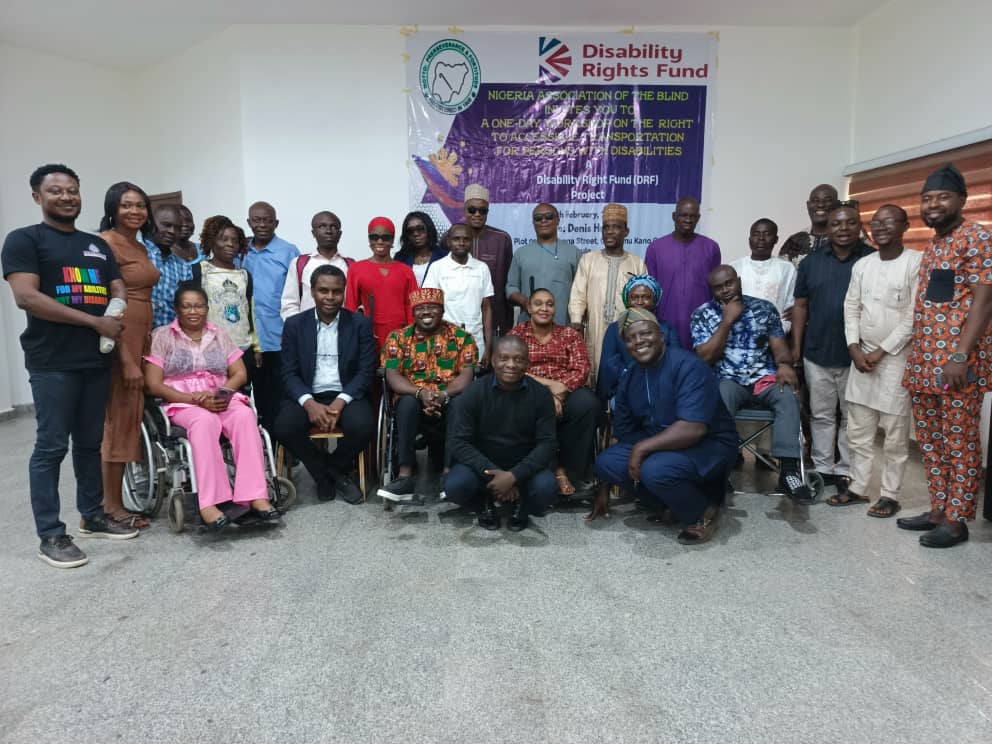
The Nigeria Association of the Blind (NAB) has taken a bold step toward achieving an accessible and inclusive transportation system for Persons with Disabilities (PWDs) in the Federal Capital Territory (FCT). In a significant move, NAB, with the support of the Disability Rights Fund (DRF), on Wednesday organized an Inception Launch and a One-Day Workshop on the Right to Accessible Transportation for Persons with Disabilities in Abuja.
The workshop brought together PWDs from different clusters and experts, to brainstorm on the best approaches to tackling the persistent challenges faced by persons with disabilities in accessing transportation in the FCT.
A Call for Inclusive Transportation
Speaking at the event, the National President of NAB, Mr. Stanley Nnamdi Onyebuchi, emphasized that the project is designed to address the barriers that PWDs encounter while commuting, particularly in urban areas like the FCT.
“This project is rooted in the daily struggles faced by persons with disabilities in accessing transportation. Our association sought support from the Disability Rights Fund to advocate for an inclusive transportation system that will alleviate the difficulties experienced by PWDs while commuting to work, school, or moving around the city,” Onyebuchi stated.
He further disclosed that the initiative will run for one year and will cover all six area councils of the FCT.
“Throughout this project, we will engage key stakeholders in the transportation sector, including government agencies, the National Union of Road Transport Workers (NURTW), and private transport operators. We will also leverage media platforms—both traditional and social media—to drive a 10-month-long sensitization campaign. In addition, we will produce and distribute IEC (Information, Education, and Communication) materials to raise awareness on the rights of PWDs to accessible transportation,” he added.
Empowering PWDs Through Advocacy
The National Secretary of NAB, Alhaji Gambo Dahiru, while speaking at the workshop, stressed that beyond advocacy, the project is also aimed at equipping PWDs with knowledge and skills to demand their rights. He pointed out that Nigeria is signatory to several international and national legal frameworks that guarantee equal access to transportation for PWDs.
“Persons with disabilities have a right to accessible transportation as outlined in the United Nations Convention on the Rights of Persons with Disabilities (UNCRPD), the Protocol for the African Charter on the Rights of Persons with Disabilities, and Nigeria’s Discrimination Against Persons with Disabilities (Prohibition) Act, 2018. These legal frameworks must be fully implemented to ensure that PWDs enjoy efficient and accessible transportation services like everyone else,” he stated.
Voices from the Disability Community
One of the participants, Joy Abdulraham, a wheelchair user with a spinal cord injury, shared her experiences of daily struggles in accessing transportation in Abuja.
“Most drivers lack awareness and understanding of the needs of persons with disabilities. Many times, they refuse to pick us up, charge us extra fees, or fail to provide proper assistance when needed. This project is a great step in the right direction because it will address the systemic neglect of PWDs in transportation planning, including the construction of motor parks, bus stops, and public buildings,” she said.
Interactive Sessions and Solutions
The event featured several engaging and enlightening sessions, each designed to equip participants with advocacy tools and strategies:
- Understanding Disability Rights and Accessible Transportation: Participants were taken through both international and national legal frameworks that guarantee their right to accessible transportation.
- Experience Sharing: PWDs narrated their daily struggles with transportation, shedding light on discrimination, infrastructural barriers, and the lack of disability-friendly transit systems.
- Advocacy Skills and Strategies: Experts trained participants on effective advocacy methods, message development, and engagement strategies to push for inclusive policies.
- Panel Discussion: A panel of experts and stakeholders deliberated on practical solutions and policy recommendations for addressing transportation barriers faced by PWDs.
Next Steps and Expectations
With this project now in motion, NAB aims to push for concrete policy actions, urging relevant agencies and transport operators to implement inclusive transport policies. The association is optimistic that with sustained advocacy, engagement, and awareness, FCT’s transportation system can become more accessible to all, ensuring that persons with disabilities enjoy the same freedom of movement as every other citizen.
The event marks the beginning of a long-overdue journey toward an inclusive and disability-friendly transportation system—one where mobility is truly a right, not a privilege.
“Stay Informed, Stay Inspired! Click the link below to Join The Qualitative Magazine WhatsApp Channel Today for Exclusive Updates on Disability Advocacy and Inclusion!”


