

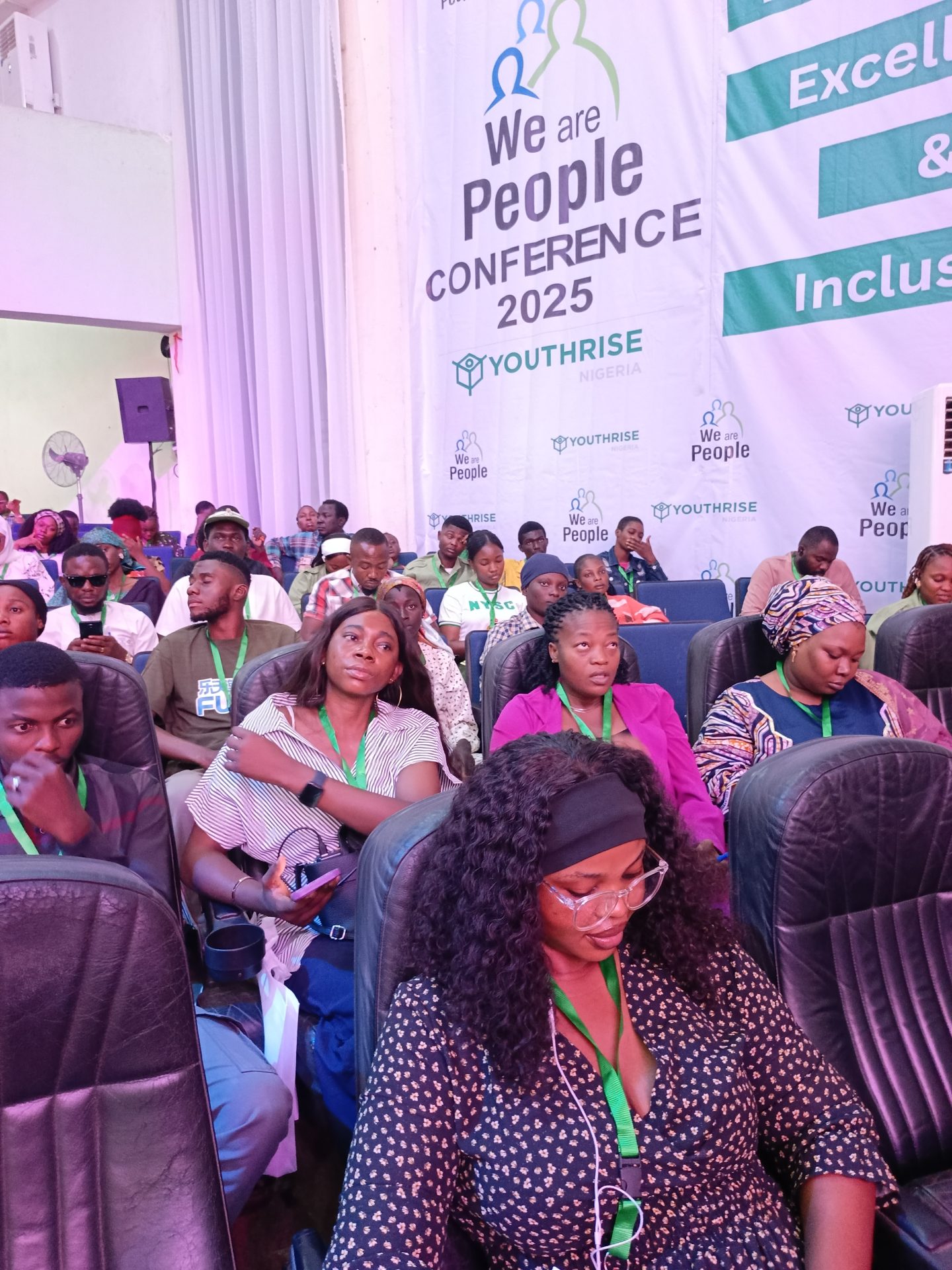
Abuja—The call for a fairer, more compassionate, and youth-driven Nigeria echoed loudly in the nation’s capital on Thursday as YouthRISE Nigeria opened the highly anticipated We Are People (WAP) Conference 2025. The two-day gathering, themed “Young People, Excellence, and Inclusivity,” brought together legal minds, disability-rights champions, youth leaders, policymakers, and advocates committed to building a Nigeria where no young person is left behind.
The event, held at the National Merit House, Maitama, radiated the vibrancy and diversity of Nigeria’s youth population—especially with the strong representation of young persons with disabilities across various clusters. From intellectual engagement to emotional storytelling and bold advocacy, the conference underscored one powerful message: young people—whether with or without disabilities—are not the leaders of tomorrow but leaders of today.

Youth Justice, Inclusion, Drug Policy Reform Take Centre Stage
Delivering the keynote presentation, UK-trained solicitor and Executive Secretary of the Administration of Criminal Justice Monitoring Committee (ACJMC), Barr. Sulayman Dawodu-Kuku, delivered a compelling critique of Nigeria’s justice system, particularly in its treatment of minors.
“A viable criminal justice system is measured by how it handles children and young people,” he asserted.
Drawing on nearly 20 years of legal experience, Sulayman highlighted the troubling gaps in the implementation of the Child Rights Act (CRA) 2003. Although the Act clearly defines anyone below 18 as a child and mandates child-friendly policing and detention procedures, many states have yet to domesticate or operationalise it effectively.
Today, only about 25 states have fully domesticated the Act—leaving thousands of children exposed to outdated laws that put the age of criminal responsibility as low as seven.
The result? Over 6,000 children remain in detention, with nearly one-third held alongside adults, interrogated without appropriate adults, or denied diversionary programmes that could protect them from lifelong stigma.
Sulayman also addressed youth drug dependency—citing UNODC figures estimating 14.3 million Nigerians use illicit substances, many of them young people.
“Drug use should be treated as a public health issue, not a criminal identity,” he emphasized. “Rehabilitation, not imprisonment, must be our path forward.”
He outlined key reforms: raising the minimum age of criminal responsibility to at least 12, establishing functional family courts nationwide, ensuring minors are kept separate from adult detainees, improving police procedures, and institutionalizing rehabilitation-based interventions.

“More Than a Conference — A Movement”
The Focal Person of the West Africa Drug Policy Network (WADPN), Nigerian Chapter, Barr. Chinwike Okereke, described the conference as “a movement powered by evidence, human rights, and community wellbeing.” Represented by Barr. Amara Ifugeze, he encouraged young Nigerians to embrace diversity, collaborate across sectors, and use their voices to drive national development.
Disability Inclusion Takes the Spotlight
One of the conference’s most powerful moments came when the Director of Social Integration at the National Commission for Persons with Disabilities (NCPWD), Dr. Lawrence Idemudia, delivered a deeply personal message on resilience, empathy, and accessibility—speaking openly about living with hearing impairment.
Representing NCPWD Executive Secretary, Chief Ayuba Burki Gufwan, Dr. Idemudia reminded participants that disability inclusion is not charity—it is justice.
He reinforced the Commission’s commitment to ensuring that young persons with disabilities have equal access to innovation, education, digital tools, career opportunities, and empowerment programmes.
“There is no inclusive future without the full participation of persons with disabilities,” he said.
Throughout the two-day programme, young persons with disabilities from diverse clusters—including physical, visual, hearing, albinism, and intellectual disability groups—were fully represented, engaged, and included in panel discussions, creative showcases, tech demonstrations, and leadership sessions.
Gufwan’s Inspiring Call to Action: ‘Be the Reason Someone Gains Access’
In a speech delivered on his behalf, NCPWD Executive Secretary Chief Ayuba Burki Gufwan set the tone for a more inclusive future:
“This conference is not just a gathering; it is a declaration that we are people—equal, capable, and essential to national progress.”
He reaffirmed Nigeria’s ongoing commitment to global disability standards, from the UNCRPD to the Discrimination Against Persons with Disabilities (Prohibition) Act.
Addressing the youth directly, he delivered a stirring appeal:
Be the reason someone gains access.
Be the voice that speaks for fairness.
Be the innovator who designs with everyone in mind.
Be the leader who refuses to leave anyone behind.
His message sparked applause and echoed the spirit of the conference—empowerment through collaboration, empathy, and action.

Youth Realities: Policing, Profiling, Mental Health, and Social Pressures
Interactive sessions explored everyday challenges faced by young Nigerians—from police profiling to mental-health crises. Participants shared their experiences with harassment, discrimination based on hairstyles or body art, and the lack of trauma-informed policing.
“Young people are not the leaders of tomorrow; they are the leaders of today. But they need a society where justice is real and accessible,” one panellist remarked.
Driving Reform Through Collaboration
Day one and two of the conference featured panel discussions on:
drug policy and public health,
tech-driven youth enterprise,
rehabilitation and reintegration programs,
disability-inclusive leadership,
civic engagement and governance,
creativity and social innovation.
Organisers noted that the presence and active involvement of youths with disabilities enriched the depth and diversity of the conversations—ensuring that inclusion was not theoretical but lived.
A Future Where Everyone Rises Together
As the We Are People Conference 2025 drew to a close, its impact was unmistakable. It delivered not only conversations but commitments—commitments to reforming Nigeria’s justice system, empowering young people, and building an inclusive nation where persons with disabilities are recognized, celebrated, and placed at the very centre of development.
YouthRISE Nigeria expressed optimism that the ideas generated over the two days would inspire bold policy reforms, strengthen youth advocacy networks, and ignite a nationwide movement for justice, inclusion, and opportunity.
The message was clear, powerful, and unifying:
Young people—whether with disabilities or not—are shaping Nigeria’s future today. And together, we rise.
Follow the The Qualitative Magazine channel on WhatsApp: https://whatsapp.com/channel/0029VanfIB50wajpjGi3JJ1G


