

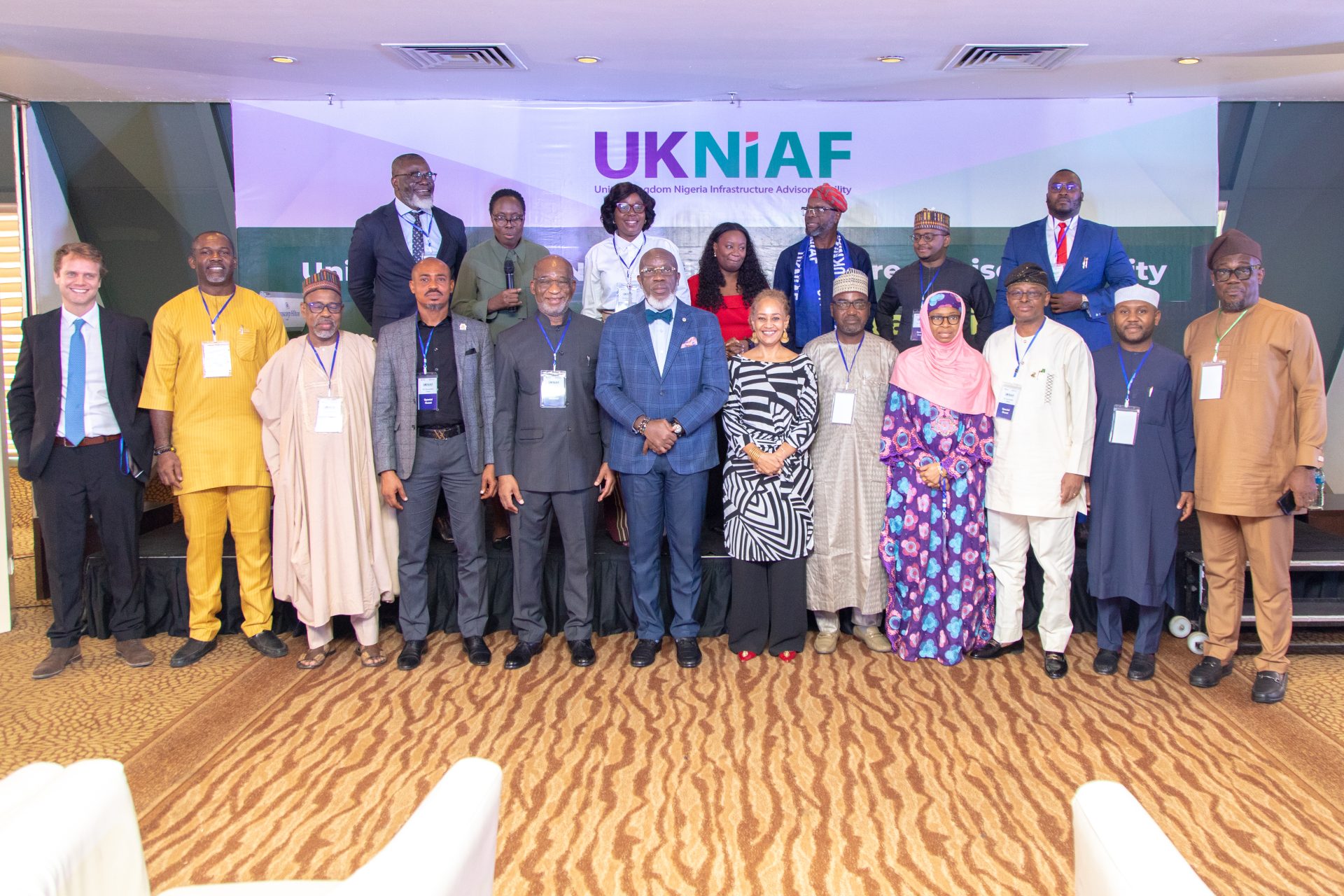
Abuja, Nigeria — The United Kingdom–Nigeria Infrastructure Advisory Facility (UKNIAF) has drawn the curtain on a pivotal chapter in Nigeria’s infrastructure development journey, as senior government officials, development partners, financiers and private sector leaders gathered in Abuja to reflect on six years of impact, lessons learned, and the road ahead.
Launched in 2019, UKNIAF represents the third phase in a remarkable 16-year legacy of UK Government support to Nigeria’s infrastructure sector. At the close-out event held on Tuesday, December 2, over 100 high-level stakeholders convened to celebrate achievements, interrogate challenges, and reaffirm commitments to sustaining reforms initiated under the programme.
A Catalyst for Reform and Investment
Since its inception, UKNIAF has provided targeted technical assistance and high-level advisory support to federal and state institutions across critical sectors including Power, Infrastructure Finance, and Roads. Its mission was clear: strengthen institutions, embed evidence-based reforms, and enable data-driven decision-making capable of unlocking sustainable infrastructure investment.
That mission translated into tangible results. UKNIAF supported the mobilisation of significant financing, strengthened institutional capacity, and helped create a more investor-ready environment for infrastructure delivery, particularly at the sub-national level. By focusing on systems, skills, and structures, the programme contributed to sector transformation beyond short-term interventions.
Plenary and panel discussions at the event brought together senior representatives from ministries, departments and agencies, alongside development partners and private sector actors. Speakers reflected on how reforms have taken root, how institutional capacity has evolved, and what will be required to maintain momentum in a complex and rapidly changing infrastructure landscape.
Power Sector Breakthroughs
One of the programme’s most celebrated impacts was recorded in Nigeria’s power sector, where UKNIAF played a strategic role in shaping policy, strengthening regulation, and opening new markets.
Among the landmark achievements was the development of Nigeria’s first Integrated Resource Plan, which provides a least-cost, low-carbon roadmap for power sector expansion. The programme also supported the Nigerian Electricity Regulatory Commission (NERC) to deploy advanced data systems capable of monitoring tariffs, grid flows, and outages in real time—boosting transparency and regulatory effectiveness.
Crucially, UKNIAF helped pioneer reforms that enabled states to establish and manage their own electricity markets, empowering them to meet local energy needs while leveraging their unique resources.
“Not an End, But a Handover”
Speaking at the event, Frank Edozie, UKNIAF Team Lead, emphasized that the programme’s close-out marked a transition rather than a conclusion.
“UKNIAF’s close-out is not an end point,” Edozie said. “It is a handover for sustained delivery. Over six years, we worked with partners to strengthen institutions with tools that make Nigeria’s infrastructure landscape more transparent, climate-smart, and attractive to investors. That legacy now rests with our partners to sustain and grow.”
Echoing this sentiment, the Honourable Minister of Power, Chief Adebayo Adelabu, acknowledged the programme’s role in shaping Nigeria’s electricity future.
“The technical assistance, capacity development, and advisory services provided under UKNIAF have laid a firmer foundation for the sustainable and inclusive electricity supply industry we are building today,” the Minister stated.
UK–Nigeria Partnership Yields Results
For the UK Government, UKNIAF stands as a testament to the power of long-term partnership. Cynthia Rowe, Head of Development Cooperation at the UK Foreign, Commonwealth and Development Office (FCDO) in Nigeria, highlighted milestones that once seemed unattainable.
“I take great pride in the achievements of UKNIAF and the strong partnership between the UK and Nigeria,” Rowe said. “Together, we have supported pioneering states to take control of their electricity markets, unlocked $75 million in financing through project preparation, and designed Nigeria’s Climate Change Fund to attract global climate investment. Our shared success shows what is possible.”
Impact Beyond the Federal Level
The programme’s influence was also deeply felt at the sub-national level. Prof. Chidiebere Onyia, Secretary to the State Government of Enugu State, described UKNIAF’s impact as both enduring and irreversible.
“The true impact of UKNIAF is reflected in the quality of ambassadors who have transferred knowledge and experience into national and subnational infrastructure delivery,” Onyia said. “UKNIAF may be ending as a programme, but its legacy in supporting senior decision-makers lives on.”
Sustaining the Gains
Beyond reflections, the close-out event delivered renewed commitments from partners to sustain tools, reforms, and knowledge products developed under the programme. It also strengthened relationships across the public, private, and development sectors, reinforcing a shared understanding of their collective roles in shaping Nigeria’s infrastructure future.
Participants included representatives from the Nigeria Governors’ Forum, the Federal Ministry of Power, the Ministry of Finance, NERC, the Rural Electrification Agency, the Transmission Company of Nigeria, and several state governments. They were joined by donor partners and Development Finance Institutions such as the African Development Bank, World Bank, and International Finance Corporation (IFC), as well as private sector and civil society actors active in Nigeria’s infrastructure and energy ecosystems.
A Legacy That Endures
As UKNIAF formally closes this phase of its work, stakeholders agree on one point: the programme’s greatest achievement lies not only in policies adopted or funds mobilised, but in the institutions strengthened, capacities built, and systems left behind.
In a country where infrastructure remains central to economic growth, job creation, and improved livelihoods, UKNIAF’s legacy now challenges its partners to carry the torch forward—ensuring that reforms endure, investments grow, and Nigeria’s infrastructure story continues to move from promise to performance.
About UKNIAF
The United Kingdom–Nigeria Infrastructure Advisory Facility (UKNIAF) is an FCDO-funded, flexible, rapid-response, demand-led technical assistance programme primarily supporting the Federal Government of Nigeria.
For media inquiries, please contact:
Nicholas Coleman


