

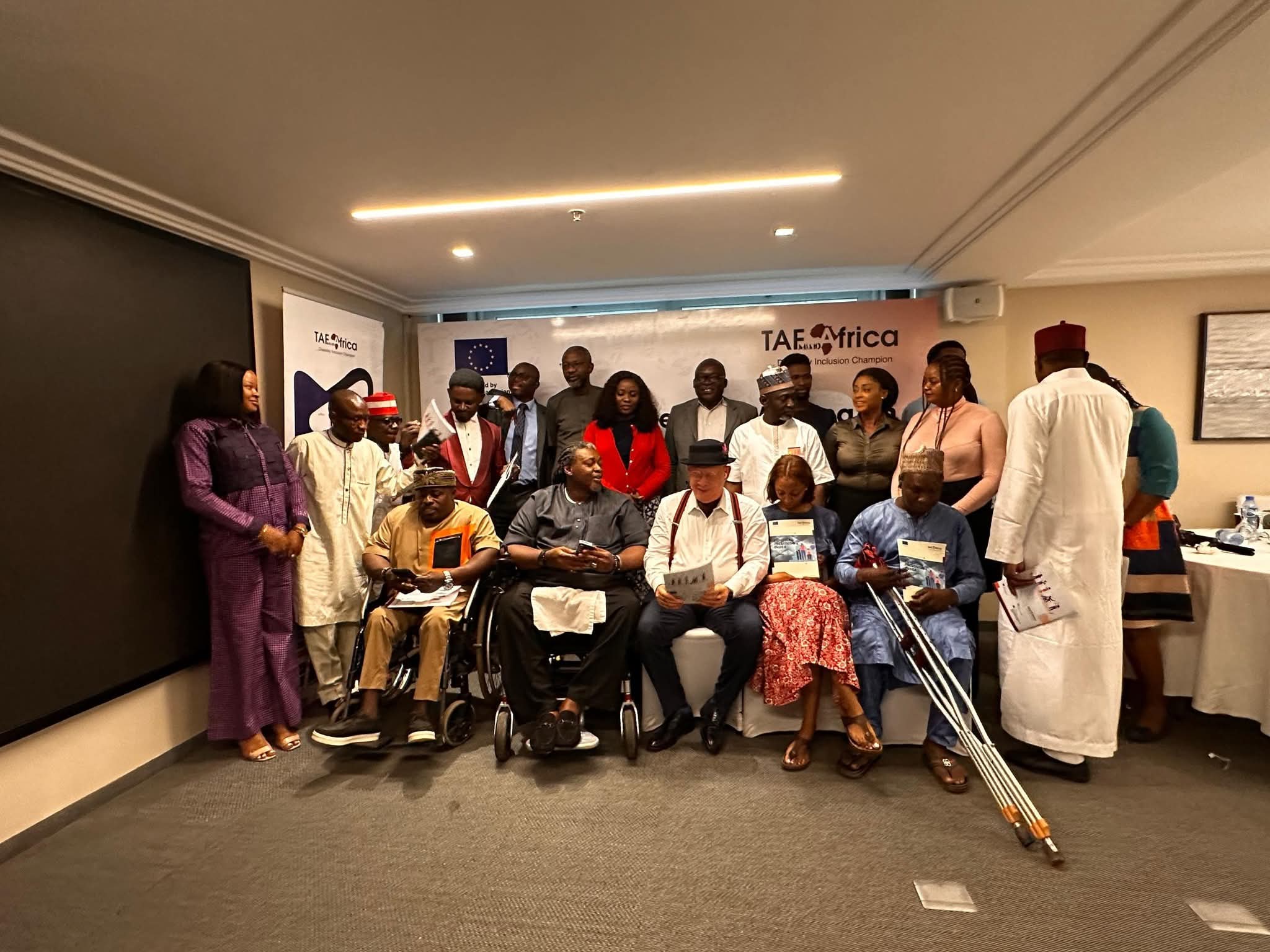
Abuja, Nigeria – July 18, 2025
In a powerful gathering of political stakeholders, civil society organizations, and disability advocates, the launch and public presentation of the Political Inclusion Index has sparked widespread commendation, placing disability inclusion at the forefront of Nigeria’s democratic development discourse.
The index, compiled through a nationwide survey involving political parties, the Independent National Electoral Commission (INEC), the media, and security forces, was described as a landmark tool for measuring and strengthening the participation of Persons with Disabilities (PWDs) in Nigeria’s political process.
The event, which brought together representatives of major political parties, officials of the National Commission for Persons with Disabilities (NCPWD), and leaders from the disability rights community, was convened to share the findings of the index and encourage proactive steps towards inclusive political participation.
In his remarks, Mr. Zissimos Vergos, Deputy Head of the European Union Delegation to Nigeria and ECOWAS, praised the index as “a timely tool that will help Nigeria advance social justice and democratic resilience.” He highlighted the growing visibility and achievements of persons with disabilities in various sectors, including politics, culture, media, sports, and science, describing their progress as “the highest form of social justice.”
Mr. Vergos expressed optimism that the recommendations from the index would be seriously considered at the highest levels of political leadership, and he emphasized the need for all democratic institutions to embrace inclusivity as a non-negotiable value.
Mr. Jake Epelle, Founder and CEO of TAF Africa, the organization behind the creation of the index, noted that the initiative was driven by the need to provide political parties and electoral stakeholders with evidence-based data on disability inclusion. He stated that the index is designed to ensure that persons with disabilities are not just passive participants but are empowered to take on leadership roles within political parties and public institutions.
“If political parties are not internally strong and democratic, then we cannot be strong nationally or sub-nationally,” Epelle said. “Running an exclusive party structure is a sure way to be voted out. Inclusion is no longer charity; it is a democratic imperative.”
The report also emphasized the critical role of continuous training for security personnel on disability rights and inclusion, especially given the high rate of personnel turnover between electoral cycles. Without consistent orientation, the report warns, gains made in accessibility and protection for voters with disabilities could easily be lost.
Participants at the event commended the holistic approach of the Political Inclusion Index, which combines policy analysis with on-the-ground realities. The document offers a robust framework for assessing how inclusive political structures are, and where improvement is most needed.
The session underscored that for Nigeria’s democracy to flourish, it must reflect the voices, aspirations, and rights of all its citizens—including over 30 million Nigerians living with disabilities.
Civil society representatives and PWD leaders who spoke at the event called for political party reforms that would establish clear quotas for PWD participation in leadership structures, candidate nomination processes, and internal decision-making bodies.
Representatives of INEC present at the session reaffirmed the Commission’s commitment to implementing inclusive policies, including the provision of assistive voting devices, sign language interpreters, and polling unit accessibility audits ahead of future elections.
Also in attendance were representatives from the United Nations Development Programme (UNDP), the British Council, the National Democratic Institute (NDI), and key disability organizations across Nigeria.
As the conversation around inclusive governance deepens, the Political Inclusion Index stands as a rallying point—uniting policymakers, political actors, and advocates around a shared goal: a democracy that truly leaves no one behind.


