

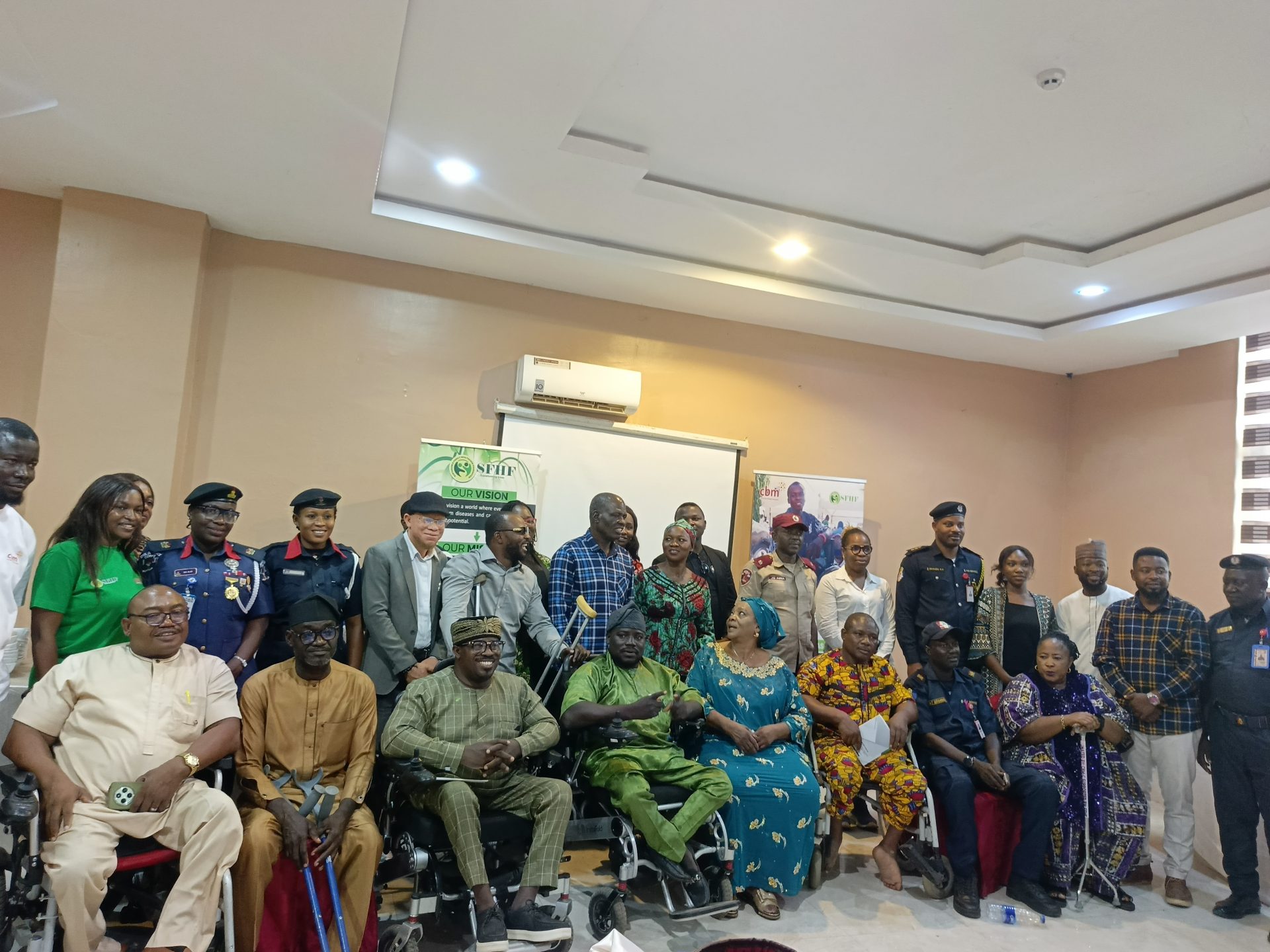
Stakeholders in the disability community have renewed calls for the full implementation of Nigeria’s disability law in the Federal Capital Territory (FCT), stressing that effective enforcement is critical to guaranteeing equal rights, opportunities, and dignity for persons with disabilities.
The call was made during a quarterly policy dialogue and roundtable discussion on the implementation status of the disability law held in Abuja, where advocates, government representatives, civil society actors, and development partners gathered to review progress and chart a path toward a more inclusive society.
Speaking at the event, Peter Ogunmayi, Executive Director of the Sustainable Family Healthcare Foundation, urged authorities in the FCT to demonstrate stronger political will in implementing the provisions of the Discrimination Against Persons with Disabilities (Prohibition) Act 2018.
Ogunmayi explained that the foundation had already begun implementing a new project designed to advance disability-inclusive development across the FCT. According to him, the initiative builds on the organization’s previous interventions in disability-focused disaster risk reduction and aims to strengthen the participation of persons with disabilities in community development processes.
He emphasized that the foundation, in collaboration with development partners, remains committed to empowering persons with disabilities through advocacy, capacity building, and livelihood support.
“Our work is driven by the belief that persons with disabilities must not be left behind in development. We are intensifying our advocacy and community engagement to ensure that the disability law becomes a living reality for those it was designed to protect,” Ogunmayi said.
Over 500 Persons with Disabilities Empowered
Highlighting the organization’s impact so far, Ogunmayi disclosed that more than 500 persons with disabilities have received assistive devices through the foundation’s interventions. He added that over 1,000 individuals had benefited from vocational skills training programmes aimed at improving their economic independence.
In addition, more than 400 beneficiaries have received empowerment support to strengthen their livelihoods and reduce economic vulnerability.
Beyond economic empowerment, the foundation has also taken steps to promote awareness of disability rights. Ogunmayi revealed that the disability policy has been translated into four local languages, with posters and flyers distributed across communities to increase public awareness and promote inclusion.
Currently, the organization is actively working in four Area Councils and several wards within the FCT, engaging community members and local leaders to ensure that disability rights and inclusive development remain central to grassroots governance.
Ogunmayi noted that since the passage of the disability law in 2018, several states across Nigeria have taken steps to domesticate and implement it. However, he stressed that the FCT must set the pace in demonstrating how the law can be effectively enforced.
“The FCT should become a model for disability inclusion in Nigeria. If we get it right here, it can serve as a blueprint for other states across the country,” he stated.
Call for Inclusion in Community Governance
The foundation also called for greater representation of persons with disabilities in community decision-making structures.
Ogunmayi urged government authorities and community leaders to ensure that persons with disabilities are included in Community Development Committees. He recommended that each committee should include at least five persons with disabilities—two women and three men—to guarantee balanced representation and participation.
He further called on government agencies and organizations to shift more attention toward economic empowerment and employment opportunities for persons with disabilities.
Tackling Stigma Through Collaboration
Also speaking at the dialogue, Ojo Oluwakemi Adeola, Desk Officer for Persons with Disabilities at the Nigeria Security and Civil Defence Corps (NSCDC), FCT Command, identified stigma and discrimination as some of the most persistent challenges faced by persons with disabilities.
Adeola emphasized the need for stronger collaboration among stakeholders to dismantle negative stereotypes and promote inclusion.
She highlighted efforts by the NSCDC FCT Command to bridge communication barriers between security agencies and the hearing-impaired community.
According to her, about 250 NSCDC personnel in the FCT have been trained in sign language to improve communication with persons with hearing impairments and enhance intelligence gathering.
“This initiative ensures that members of the hearing-impaired community can easily report security concerns and interact with security operatives without communication barriers,” Adeola explained.
Attitudinal Barriers Still a Major Challenge
In his remarks, Ikem Ochegbulam, Acting Director of Compliance and Enforcement at the National Commission for Persons with Disabilities (NCPWD), acknowledged that while progress has been made in advancing disability rights, attitudinal barriers remain a significant obstacle.
He stressed that changing societal attitudes toward persons with disabilities is essential for the successful implementation of disability laws and policies.
FCTA Reaffirms Commitment to Inclusion
Representing the Mandate Secretary of the Federal Capital Territory Administration Women Affairs Secretariat, Adedayo Benjamins-Laniyi, the Legal Adviser and Permanent Secretary, Muhammad Baba, reaffirmed the FCT Administration’s commitment to protecting the rights of persons with disabilities.
He noted that the administration remains dedicated to promoting policies and programmes that support inclusion and eliminate discrimination against persons with disabilities.
Stakeholders at the event concluded that while progress has been recorded in advancing disability inclusion, more coordinated action, sustained advocacy, and stronger enforcement of existing laws are needed to ensure that persons with disabilities enjoy their full rights and opportunities in Nigeria’s capital city.
The dialogue also reinforced the growing consensus that meaningful inclusion of persons with disabilities in governance, economic activities, and community life is essential to achieving sustainable development and social justice in Nigeria.
Click the link below to join our WhatsApp channel


