Sunday, December 14, 2025
Home Blog Page 567

LOIS AUTA’s giant strides despite disability

0

Lois Auta has over five years of experience advocating for the betterment of persons with disabilities. She is a support staff with NNPC, she is the founder and team leader of Cedar Seed Foundation, Nigeria. The NGO’s objective is to mainstream the issues and concerns of women, girls and children with disabilities in Nigeria into the national development agenda based on the United Nations evaluation of the rights of persons with disabilities (PWDs). Cedar Seed Foundation visualizes a world where People with Disability constituency participates fully in the society and enjoys equal rights. Lois is a young physically challenged lady who is very productive, a role model, hardworking, and full of ideas. She has never allowed her disability to make her a liability despite her humble background but fought her way through life. She proved her ability by driving from Abuja to Kano, about 428km, (5 hours 45 minutes) to meet with late Galadima of Kano on how to empower persons with disabilities educationally, may his soul rest in peace. Amen.  She is a sports athlete, in her empathy for her disabled colleagues and the passion in empowering them socio-economically; she set up this organization in search of ways to better their lives, thereby helping to integrate them into the society as responsible and productive citizens. She is the President,FCTDisabled Sports Club – Abuja, Vice President Mandela Washington Fellow Alumni, Nigeria Chapter, Board Member- Federation of  Civil Servants Staff with Disabilities Multipurpose Cooperative Society, Assistant National Coordinator – Advocacy for Women with Disabilities Initiative, Board Member – Potters Gallery Initiative, Member – Joint National Associations of Persons with disabilities, founder, Ability Africa, president, women on wheels multipurpose cooperative society.

She holds a diploma in Public administration from University of Abuja and is presently a Bachelor of Science (400 L) undergraduate in Public Administration from the same university.

EARLY LIFE

She was born on 29 of April, 1980 to the family of Auta Akok, the seventh of eleven children, she was born at 13th wedding anniversary of her parents. They wedded on 29 April, 1967.  That’s remarkable and she seems special and blessed from birth.  She was born into a Christian family and hails from Kagoro, Kaura Local Government of Kaduna State, raised in Kagoro by her lovely parents and siblings by names, Ladi, Jonathan, Christopher, Alice, Obadiah, Didam, Albert, Nimrod, Emmanuel, Ben and Matilda. Her parents and her siblings Jonathan, Alice, Obadiah and Didam has passed on but their legacies and memories still lives and linger on. She wishes they stayed longer to eat the fruits of their labour. They were her backbone, they made her the woman she is today and gave her life to the fullest. Wherever they are now, they should be very proud of her and she owes her entire success to them. Lois mourns and prays for them to rest in peace until she meets them again to part no more. Her siblings who are still living Chris, Albert, Nimrod, Emma, Ben and Matilda, she appreciate their support and wish to be part of the family even in her next world. She also acknowledge the support of her sister’s in-laws Ann, Lilian, Kasham and Maryam, her nieces and nephews Konyan, Sapphire, the twins (Merciful and Faithful), Gracious, Estella and Zina. She attribute the entire support for the much achieve to the God and Creator.

LIFE WHEN GROWING UP

She saw herself physically different from her siblings, children and people around her but she never allowed it weigh her down rather it gave her the strength to move on.  It was an uphill task growing up as a child with disability, physically different from other children at home and pupils in the school. She was shy to mingle with other children; she was scared of attending public functions or social gathering, always staying indoors and isolated. It took the resilient effort of her parents to brace her up and she was able to reignite her self-esteem. Some persons with disabilities blame God for their disability but she praise God for hers because to her God is using her to manifest his greatness to mankind.  Some see their disabilities as weakness, she sees hers as strength, some wait for others to give them but she works to give others. She has vowed that disability would not stop her from realizing her destiny and actualizing her goals. She is working relentlessly to be a blessing to her generation and be a source of envy not pity. She is of a strong belief that disability only affected her legs not her brains, and her vocation that she has started off in good note, she will work so hard to sustain the pace and finish also in a good one with the support of God. Some persons with disabilities see their disabilities as a challenge; she sees hers as an opportunity. With disability she drove from Abuja to Kano, she has received awards of excellent, she has empowered others, and she has explored many things in many ways and excelled, why? Due to hard work, help from God and commitment. In disability, this young lady has created abilities, hope and a brighter future. If she could do it, so many others can do it. Young people, Stop waiting for someone to help you, rise up, start doing something and investors will find you.  Disability can never define you rather you define abilities in many special ways. In a world of disability, there is ability!

She was bullied by her classmates, they mimicked the way she walk, she was mocked alongside my parents, abuses like; you cannot go anywhere in life,  lets watch and see how you will marry, that girl ”with no legs”, that disabled girl cannot do something meaningful in her life. People looked down on her, they always remind her parents that they have a child with disability and her parents responded that they should wait and see what their child will become. Her parents as if they can see tomorrow bragged that she will be the best in her endeavours and she will definitely be a great woman. Today, the girl they mocked, called all sort of names, the girl they looked down on, the girl they said can never go anywhere, who they even referred as ”no legs girl” has become a great woman, an administrator, a disability affairs advocate and activist, an international figure, a great leader, no legs girl is going to places they have never imagined, is now having meetings with the world presidents, world leaders, force to reckon with, a blessing and an achiever. Where are their children?

HER ACHIEVEMENTS

Lois Auta credibility also featured in its selection and participation as a member of the technical committee for the deliberation and draft of Nigerian Disability Bill passed at the two arms of National Assembly, waiting for presidential assent now.  She participated in Vision 20:2020 as a special interest group member for persons with disabilities. A member of the constitutional review representing persons with disabilities for North Central Geo-political zone. She was the first and only female disabled to be among the extraordinary (1000) youths that were selected to celebrate Nigeria’s democracy day with Nigerian President Goodluck Jonathan and federal ministers on 29th May, 2014, held at International Conference Centre, FCT Abuja. Lois Auta was the first Miss Wheelchair Kaduna State. She is the first female living with disability to work with NNPC from Southern Kaduna. She attended and participated at International Wheelchair Tennis Federation, double master’s clinic, Mission Viejo, California, USA. The first disabled and only fellow to receive an award from Linking Sports and Communities, United States of America for promoting disabled sports globally. She is the first to receive a certificate of Washington Fellowship signed by President Obama from Northern Nigeria. Lois Auta is the first physically challenged Mandela Washington Fellow in Kaduna State and the entire Northern Nigeria. The first disabled lady in Nigeria to meet the Obamas, She had a handshake with President Obama and a hug from Michelle Obama.

Lois Auta activities have attracted international recognition, one of which is the just concluded 2014 Mandela Washington Fellowship for Young African Leaders in the United States of America, about 50,000 youths applied in Africa, 15,000 of the applications received came from Nigeria, only 500 were finally selected.  In Nigeria alone, just 44 made it to the USA. You could see how tough it was; only the best and the brightest were selected. The CEO spent six weeks at Arizona State University studying Civic Leadership and one week in Washington DC. Lois Auta is now a Mandela Washington Fellow.  She participated fully and awarded as one of the best graduating Fellows and was given an award by Linking Sports and Communities as the Most Valuable Player (MVP) for promoting disabled sports globally.

The Executive Director/Founder, Lois Auta who is a support staff with NNPC has been nominated and elected on the 16th October, 2014 as Vice President of the Mandela Washington Fellows Alumni, Nigerian Chapter a program of Barack Obama during a 4 days reunion conference at US General Consulate Office, Lagos. She is the assistant national coordinator, Advocacy for women with disabilities initiative, she is the president FCT disabled sports club, she is a board member, potters gallery initiative, she is also a board member cooperative federation of persons with disabilities in Nigeria, founder, Ability Africa, president, women on wheels multipurpose cooperative society.

HER ORGANIZATION CEDAR SEED FOUNDATION

Cedar Seed Foundation, (CSF) is a Youth led non-governmental, non-profit and non-sectarian membership based development organization that promotes the participation of women and young persons with disabilities into human rights based development in Nigeria, founded and run by Lois Auta and her team members. Their membership includes women groups, self-help groups, special schools, cooperative societies/groups representing over 55,000 memberships across Nigeria. They work to mainstream the issues and concerns of persons (females and males) with disabilities in Nigeria into the national development agenda based on the United Nations Convention on the Rights of Persons with Disabilities (UNCRPD). Cedar Seed Foundation has been active and running activities for the past five years, though formally registered in 2013.

Their Values:

Champion inclusion

Empower persons with disabilities

Deliver excellence

Accountability

Respect others

The organization focuses on ensuring that women and young persons with disabilities practically participate fully in addressing their key sensitive issues in the society and enjoy equal human rights based development and opportunities by providing services that support youth and persons with disabilities in all aspects of life.

WHAT THEY DO

They mainstream the issues and concerns of persons with disabilities in Nigeria into the national development agenda based on the United Nations convention on the rights of persons with disabilities and of action on the rights of persons with disabilities.

THEMATIC AREAS

Democracy and good governance

Entrepreneurship

Medical Health Services

Education

Employment

Empowerment

Accessibility

Economic and Social Security

Advocacy

DEVELOPMENT STRATEG IES

Legislative advocacy

Capacity building

Development networking

Civic engagement

PROJECTS THEY HAVE DONE SO FAR

CSF has in 2012, partnered with Potters Gallery Initiative to carry out an empowerment programme for people with disabilities (PWDs) using Art exhibition to present, discuss and document their electoral experiences through Democratic Governance for Development with contributions from EU, UKAID,CIDA and UNDP. The project was designed in view of the challenges around infrastructure and how most people with disability were disenfranchised due to their inability to access polling units. The event involved the people with disability doing an art exhibition that captured their own personal stories on their electoral experiences. This initiative was termed “Vital Voices for Democracy”.

CSF has also successfully implemented an empowerment project tagged ”Easter Reach Out” in 2013 which supported 120 PWDs with mobility aids in Kaduna State. The project was funded by the Nigerian National Petroleum Corporation, NNPC. CSF also had an event ”Inclusive Education Project” where they awarded scholarships and provided scholastic materials to 100 students with disabilities in May 2014 in Abuja, with fund support from Sahara Group.

With support from US Embassy, NDI and UNDP (through DGD), CSF also carried out Capacity Building Training workshop on Organizational Capacity development in collaboration with Potters Gallery Initiative for the members of the two organizations.

In September, 2014 with the support of US Embassy, Nigeria.  Cedar Seed Foundation empowered 30 young persons with disabilities from ages 18 to 25 with International Jazz Artist Bobby Ricketts on Music skills in Abuja. It was inspiring.

December 03, 2014 Cedar Seed Foundation in commemoration of International Day of Persons with Disabilities marked the day by an advocacy walk, radio talk show and a press conference, they talked about nagging issues on disability, the theme for the year and demanded President Goodluck to sign our bill into law. Media outfits, CSF team members and friends of the disabled were present and the event was aired on national news on major television channels in Nigeria. It was a huge success.

December 22, 2014 Cedar Seed Foundation organized Christmas Reach-Out with support from Sahara Group distributed 50kgs of bags of rice to each beneficiary. More than 100 persons with disabilities in the FCT participated and benefited from the event, drawn from the six area councils of the federal capital territory. Lives were touched!

CSF is a reputable organization registered with Corporate Affairs Commission (CAC) of the Federal Republic of Nigeria with Reg. number 63008 and as well a legally registered  org. with Joint National Association of Persons with Disabilities (JONAPWD) and Coalition for Youth Capacity (CYC).

OUR PARTNERS

  • The Autas
  • United Nations Development Program
  • Nigerian National Petroleum Corporation
  • Sahara Group
  • United States of America Embassy, Nigeria.
  • Youngstars Foundation
  • New Estate Baptist Church
  • IREX
  • YALI

AWARDS RECEIVED

  • House of David, Utako, Abuja, Nigeria, June 2012 — The Most Courageous Member
  • National Wheelchair Tennis Federation Clinic, Abuja, Nigeria May 2013 —- Best Female Player/Winner
  • Linking Sports and Communities, Arizona, USA July 2014 —– (MVP) Most Valuable Player for promoting disabled sports globally.

HOW WILL SHE BE REMEMBERED?

Lois Auta wants to write her name in Gold and in her words, she said the following; I want to be remembered as a change maker, a servant, a giver, a passionate leader, a problem solver, a leader with innovative ideas, a good listener, generous woman, a committed and transparent leader, helper, an ethical leader and a woman with integrity.  Whoever you are, whatever your pedigree, you and I will only be remembered for two things after this life. The problems you created in peoples life OR the problems you solved in peoples life.

HER MESSAGE TO MR PRESIDENT MUHAMMADU BUHARI

Persons with disabilities have rights and such rights could be exercised when our bill is signed into law with a commission to run our affairs, Nigerian disability bill have been harmonized in both houses. Please, ejoh, kusu, don Allah Sir, kindly assent to our bill now.

HER HOPES

To be a change agent in her community and society at large. She hopes to contribute her quota in the improvement and building her country Nigeria. She hopes to see Persons with Disabilities as decision makers, leaders of the world leading companies and directors. She hopes to see qualified persons with disabilities being employed. She hopes to see them living a comfortable life. She hopes to see accessible Nigeria for persons with disabilities. She hopes to see end to poverty especially among persons with disabilities, She hopes to see every child is educated, She hopes to see a transparent and accountable government. She hopes to see Nigeria living in peace, love and harmony. She hopes to see the end to boko haram insurgency, killings, bombings, abduction, rape, kidnapping, armed robbery, corruption and gender based violence. She hopes to see an inclusive development in all the three tiers of government. She hopes to see during her lifetime, she dedicated herself to this struggle of the less privileged Nigerian people. I have cherished the ideal of a democratic and free society in which all persons live together in harmony and with equal opportunities. It is an ideal which I hope to live for and achieve. I will continue fighting for inclusion and participation of persons with disabilities in all government policies and programs until the end of my days.

HER DREAMS

She is dreaming of implementing African disability act through the help of other stakeholders and partners. She is dreaming of an empathetic community, society and country. A country where people love each other, the kind of love where we truly put others first before ourselves. She is dreaming of a country where education is valued as the means by which society is improved and progressed. She is dreaming of a country where we can all have our needs met. She is also dreaming of a country that is corruption-free. A dream of seeing killings turned to feelings. Dream of a country where disability issues will be prioritized. Dream of a country where everybody enjoys equal rights and opportunities. Dream of a country where resources are shared. Seeing disability act being implemented in this country and Africa just like ADA in the US is a dream of all persons with disabilities.

Lagos Danfo Driver Who Lost Both Of His Legs In A Road Accident, But Continues His Job

0

The story of a 32-year-old Pius Abayomi Abiodun is one which causes remorse, pity and at the same time could go for one of the ‘Wonders of Lagos’. The handsome well-built light complexioned gentle man is one of the thousands of Commercial Bus Drivers, popularly called Danfo Drivers, in Lagos.

For a passenger boarding his bus for the first time, nothing suggests Pius has no legs. When a reporter boarded his bus 2 weeks ago at Town Planning junction towards Western Avenue in Lagos, he didn’t notice Pius had no legs to drive the Danfo. After about 10 minutes journey, a driver who rode a mini truck pulled up on the lane Pius drove and before the passengers could blink their eyes Pius increased his speed and got at par with the truck, looked towards the driver and said, “Iwo, ma deal pelu e (You, I will deal with you). You dey try me?” Despite words of caution from his conductor, who said “Leave am” severally Pius did the unimaginable as if he was instructed by the Road Safety men, he applied his breaks and forced the mini truck to a slower speed, one of the Road Safety men gesticulated to the truck driver to pull over for retinue check. Pius didn’t say a word but this reporter could read something like, “You drivers with legs, I will make you all to respect me by force!”.

A more careful look at Pius behind the wheels, the reporter was in for a shocker. Pius controlled the accelerator and brake pedals with his hands. He exhibited the mastery of his specially built Danfo which he operated without any qualms. The reporter and Pius exchanged phone numbers with a promise he would get in touch for an interview soon.

As nature would have it, Pius and the reporter met at the Town Planning Road Junction Bus Stop, where they first met. The reporter quickly hopped into the front passenger seat Pius had instructed his conductor to reserve for the reporter. It was a trip through Western Avenue to Nigeria Breweries Area to Orile Iganmu linking Coker (Ijeshatedo Area) and through Apapa-Oshodi Express Way to Oshodi Terminus and Down to Town Planning Road Junction. The trip lasted for 1 hour 20 minutes and a trip that also got Pius very sober because of a few of the questions took him back memory lane when he had both legs and functioned like every other Lagos Driver with two legs. On the day they agreed to meet as nature would have it they met at the same spot the reporter boarded his bus.

Pius who hails from Mowo, Badagry in Lagos was not born without legs. According to him, he was involved in a fatal accident.

“I was driving a Danfo bus on April 3, 2011, along Lagos Abeokuta Expressway by May Flower Hotel close Olorunsogo Bus Stop. Suddenly the bus developed a fault I felt I could fix. I went down from the bus to the rear where the engine compartment is. While trying to fix my Danfo, another driver was driving on a top speed hit me against the rear of my bus and that was all I knew. I was rushed to the National Orthopedic Hospital, Gbobi, Lagos. Two days after the accident, my two legs were amputated. I was at Igbobi for 4 months. The operation, medication and physiotherapy cost me all my savings. And I had to go to people seeking for financial assistant. In all it cost about 4 Million Naira to get me out of the hospital.”

Thereafter he was discharged and what could be least described as frustration set in for Pius who had never taken to begging to live.

He was in a dilemma as to how to care for his wife who was pregnant then and his daughter and other bills.

“I got so frustrated that I always thought of suicide as an option. Most times I am moody because I couldn’t imagine I no longer had legs to move around.”

Not giving up on his condition, Pius decided to go into Weight Lifting. This was after it had been confirmed to him he would need artificial limbs for both legs. The cost of two limbs, according to him, was 5 Million Naira.

“I didn’t give a second thought to begging as an option for survival”, Pius said in a louder tone.

He joined other physically challenged sportsmen at the National Stadium, Surulere Lagos. Even at that he wasn’t in his best state of mind. He kept telling his new found friends (since the old friends were nowhere to be found) that he used to be a commercial bus driver. One day at the National Stadium someone who felt moved by Pius’ attitude suggested he goes to The Mobility Aid and Appliances Research and Development Centre, Amuwo Odofin area, Lagos owned by millionaire, Cosmas Okoli who is also physically challenged.

“When I met Cosmas, he encouraged me and asked me what I could do. I told him I used to be a Danfo driver. He assured me, he would help me construct a bus I can drive with my hands.”

Pius had to also look for a car dealer that could give him a bus and he could pay on instalments. He succeeded in getting a dealer. Took the automatic Volkwagen Bus (Danfo) to Cosmas who fabricated some metals to the pedals, he simply called ‘LEGS’. A closer look at the device built by Cosmas which cost 50 Thousand Naira only shows the break and accelerator pedals are both controlled by a long rod underneath the steering.

The metal rod controls the break and accelerator pedals. To speed he pulls up the rod to his chest and to apply the break, he pushes the rod down. Pius has so mastered the use of his special device that most commuters who board his bus hardly notice the man behind the wheels has no legs.

Asked if he has ever had experience of passengers being scared on sighting him after they have boarded his bus, Pius chuckled said:

“A lot of passengers express their disbelieve. Though I had never had a situation of passengers getting scared of me. A lot of them watch me as I drive. Some pray for me while others are too stunned to talk until they get to their destinations.”

Pius revealed he does not go out for any social activities. He likes to be indoors whenever he is not on Lagos road trying to make ends meet. He likes to help his 2 kids Rachael aged 5 and Samson aged 2 with their home work from school.

Does Pius feel pains on any part of his body since he does everything with his hands?

“Yes, I feel pains like once a month on spot of both legs that I was amputated.” Obviously, as one may see in the photo above, he was amputated beyond the knell joints.

When does his day start?

“I leave my house at Mushin area around 9 a.m. every morning. I don’t stop work until 8 p.m. at night.”

So how does Pius who has no crutches around him inside the bus get into the bus daily?

Pointing at the rear of his car, he said “I use my wheel chair. I park my bus around 3 streets away from my house so once I park, the conductor helps me get the wheelchair down and I get on it.”

There are stories of bus conductors absconding with money made from daily trips. How does Pius who lost his mother 5 years ago guide against this?

He further revealed that he does not employ unknown conductors. “I employ those who live in my neighbourhood.” He replied without much attention as he tried to confirm if he has all the seats occupied in his bus at the popular Cele Bus Stop on Apapa Oshodi Express Road.

Pius doesn’t work on Sundays. He goes to church with his immediate family members. They all ride with him on Sundays from their Itire Road, Mushin abode to The Redeemed Evangelical Ministry (TREM), Kirikiri Road, Apapa, Lagos.

Pius gets his own share of harassment from Police man and officials of Lagos State Traffic Management Authority (LASTMA). Sometimes he is left to go free when they realize he is physically challenged and sometimes he has to bribe to escape the wrath of the law. Like every Danfo driver, has a nick name. He is called Oni Mama which means the one has a mother. Before the accident that claimed his 2 legs, Pius had the bumper sticker with inscription “Oni Mama” on it. Since then he has been referred to as such among those who know him way back.

The reporter was curious enough to ask Pius if he still makes love to his wife. With a brighter smile, he nodded in the affirmative. What about girl friends?

“I don’t have girlfriends. I have no time to chase women about. I appreciate my wife, Sulia who is very obedient. She is a good woman,” he said.

About the time we go back to Oshodi Terminus, Pius who drove Danfo painted light blue with some level of discipline told the reporter he services it every 2 weeks and pays attention to the special device. He buys a spray regularly from Cosmas Okoli which he uses on the device.

Pius doesn’t want to continue as a Danfo driver, he wishes he gets enough money to start off some other businesses particularly auto parts sales once he finishes paying for the Danfo which he bought on hire purchase.

Giving Hope To Children With Special Needs

0

The Engraced Ones is prayer support and advocacy initiative established three years exactly at April, 2015. The group is comprised of parents of children with special needs and other adults who love children with special needs. The main purpose of this group is to rally round one another as parents of these children and to sensitize the public about their condition while advocating for better health, education and good living condition of vulnerable children. The group in their wisdom refer to these children as engraced children and that was why the NGO goes by the name The Engraced Ones.

I met with the convener of the NGO Mrs. Biby Yinkere who is a parent to a child with special need in a programme she organized, which I was invited by a friend, after seeing what she and her group is doing for children living with cerebral palsy, autism, intellectual disability etc, I decided to have a chat with her as my own way of adding a voice to her advocacy.

In this interview, she spoke on how it all started, the challenges of taking care of a child with special needs and the future plans for the group.

TQ: What inspired you to initiate this group?

It was God who inspired me. God specifically spoke to me about it and I followed his instruction. I move around the schools, churches, and I noticed that children with special needs are not enrolled in schools, they don’t accompany their parents to churches, parties and programmes and they are not in their family pictures. There is a lot of exclusion, all these convinced me that it was the right thing to do. The discrimination of the engraced child started from the home; so, I needed to educate these families that there is nothing demonic about the child. It is only a health condition. I understand that the perception of the parents of the children is key, for instance, when I had my child, my husband and I didn’t see her as less than a human and because of that, her siblings and our extended family members have high regard for her. This consequently increased her confidence level as she grows. Beyond the home, the schools do reject these children, the school authority needs to be enlightened to accept them because that will go a long way to encourage the parents to believe in these children and take them to school. There was also the need for parents to take these children to hospital for proper check-up and advice because they should understand that it is not a spiritual matter as the society most times presumes. The society needs to be enlightened to see beyond the physical looks of these children and see the human and beauty in them.

TQ: You emphasized on the need for the children to be enrolled in school, how easy is it for these children to go to school or is there challenges associated to their enrolment in school?

Firstly, the school authorities don’t want see them because it poses challenges to the teachers; for instance, children with down syndrome have special learning method which the regular school teacher may not have requisite training and skills to cope with. They are slow in learning and the children with cerebral palsy sometimes are more of physical thing. A child that can’t sit down properly, it will be a herculean task for our conventional schools with over 100 pupils to accommodate them. Again, the attitude of other parents through isolating their children from these children with special needs. For instance, children with autism that have some character traits like heating their head on something or jumping around at times. These parents assume that such is transferable and can be transferred to their children, so they don’t want their children to associate with such children. So, they threaten to withdraw their children if such a child is retained by the school authority. Then again, there was a school I wanted to enroll my daughter, the principal told me that it was not as if the school can’t take my child but the teachers are not always comfortable with this kind of children and if he insisted and she stays, she won’t get the desired love from the teachers.

TQ: Since these children with special needs are highly discriminated upon in our conventional schools, how do these children acquire formal education?

We have some special schools in Abuja here.  We have school for the handicapped in Kuje, Abuja that has boarding facilities that accommodate all kinds of children with special needs, but it is not enough because it can’t cover the number of children with special needs in Abuja. Moreover, some of these children need physiotherapy and behavioural therapy at home before going to school. For instance, when a child is two years old, the child can’t fit into boarding facilities, so the child should be enrolled in a privately-owned school where the child will be firstly rehabilitated before the child will be enrolled into the big school. Sometimes, the child will be so rehabilitated to the extent that the child will have little or no problem to mainstream into big special schools. But the problem is that these private-owned special schools are very expensive. They charge between two hundred thousand naira (#200,000) to two hundred and fifty thousand naira (#250,000) monthly.

TQ:  Do you have an idea why these special needs are very expensive considering their importance?

Yes, it is the cost of running these special schools. The owners have to engage the services of many caregivers, physiotherapists, speech therapists, special educators. These professionals are far-fetched, we don’t have much of them in Nigeria. For instance, a physiotherapy charge as much as seven thousand naira (#7,000) per day for a child. Again, the teaching style is like one-on-one basis and each child require a teacher for close monitoring and guidance and there are other facilities put in place to enhance their learning environment. These are the reasons why these special school are expensive, they need external assistance to make it affordable for those parents who can’t afford it.

TQ: The right for education as enshrined in our constitution is a right for every child, going by your earlier explanations, it is expensive to train a child with special needs in schools, is there any assistance from government you are aware of to ensure that these children acquire formal education?

It is the right of these children as you said even the whole world is promoting the Sustainable Development Goals (SDGs), which is preaching leave no one behind, so every child must be carried along in the area of education and health. We have Ministry of Education and Health, they are knowledgeable about these issues and the onus is on them to do the right thing. May I use this medium to call on well to do individuals, companies/organizations to come to the aid of these children with special needs. Today, organizations are putting money and resources on programmes which has moral issues meanwhile there are cogent issues begging for their attention. Nothing is too small. In our group, we are putting together our little funds to support physiotherapy of those children who their parents can’t afford it. One major problem in our group is that some of the parents are not working due to the severity of their children condition which needs constant attention. We are empowering these parents so that they can directly take care of their needs and that of their children. We appeal to individuals and organizations to come in and take any of these measures to reach out to these children; sponsor physiotherapy services of some of these children, award scholarship to some of them or economically empower their parents. For instance, one of the children who got scholarship from our group, the mother just has makeshift shop at Kurudu with six children. Most times, she can’t even afford transport fee to attend our programmes at Maitama from Kurudu.

TQ: Have your group approached any agency of government for collaboration?

For now, we have not but we are taking step to do that. Why we delayed in doing that we want to move from where we are to a reasonable extent before we seek on how we can be helped.

TQ: What are your plans to expand your scope?

We will soon embark on social media campaign. We will be talking to some radio stations to use their medium to spread the message; we have started going to schools and churches to sensitize them. We will be embarking on prayer/sensitization walk, engage in fundraising because we want to set up a centre that will be providing affordable education for these children with special needs, provide vocation training for children with learning disabilities and the mothers of these children. Presently, we have one of their mothers being trained as a special educator who will in turn train other mothers.

TQ: What advice do you have for parents who have children with special needs but due to some reasons, they are still hiding them?

According to the bible, children are gifts from God. It is a known fact that it is demoralizing if you have a child with special needs because having carried a child for nine months and it came out this way. But believe me, there is a purpose for whatever that has happened. You have to accept it, don’t live in denial, move on with the child, take responsibility, look beyond what the doctors told you about the child if their comments are negative. For instance, my own child and many other children in our group have lived beyond the expectations of the doctors, support the child, seek professional advice, join support group like ours, read up about your child’s condition, understand the child better and make informed decision about the child’s future.

 TQ: Please can you share with me some of those special attributes of these children with special needs?

They are very observant, intelligent, caring. They are first to notice something new around them; first to notice when you have a new pair of shoes, new hairdo and so on. They are peace lovers, they are very innovative.

TQ: Parting words?

I appreciate the work you are doing and God will reward your effort, keep it up.

It is sad, the level of discrimination and gross neglect of Nigerians with disabilities

0

Mr. Gboyega Ibukun Alesinloye is an assiduous person with disabilities with an impeccable achievement. Four two years ago Mr. Gboyega in Ebute Meta area of Lagos State was born into a humble of Mr. J.K Alesinloye and Late Mrs.M. M, Alesinloye with four other siblings Mrs Funmilola Joesph, Pastor Olakunle Alesinloye, Olasupo Alesinloye and Sunday Enitan Alesinloye. This happily married man who grew up around Agege/Ikeja Lagos have a degree in Microbiology and master’s degree in International Health and Development.,  In this interview, we try to dip into his life and how he managed to achieve so much in the face of disability.

TQ: What is your Educational background?

I actually had my first encounter at a school at the Atundaolu Handicap Primary School, Surulere but had to stop when my family moved away from the neighbourhood, including other family matters. After three years, I resumed at a different school, State Primary School, Iloro, Agege which was the beginning of my mainstream educational experience. From here, I went to St. Joseph Secondary School, Mangoro, Agege for my Senior Secondary Certificate and later attended the University of Ibadan for my first degree (BSc.) in Microbiology. After working for few years, I applied for and was awarded a Ford Foundation International Fellowship for my master of public health, MPH, degree in International Health and Development at America’s only school of tropical medicine – the Tulane University School of Public Health and Tropical Medicine, New Orleans.

TQ: How did you fund your education?

I would like to state that I had a very rough and financially-challenging background, hence, I am a product of the generous care of Catholic’s Daughters of Charity who largely took care of my secondary school support and that of my first degree. Perhaps, I’d share more on this with you some other time/avenue. My second degree in the U.S. was through the Ford Foundation International Fellowships Program award.

TQ: To you recall when your disability occurred and how it happened?

No, but I was told I had Polio when I was less than a year old.

TQ: Did your disability affect your education in any way?

Yes, it affected the early years when I had to stop and stayed at home for three consecutive years. I only had some physical barriers/challenges afterwards since my subsequent schools were not special schools.

TQ: Do you recall facing problems of discrimination during your school days and now that you are working?

Not really but well, due to my personality and background, I am never so sensitive to picking up discriminatory attitudes and not good at reading meanings to attitudes and gestures. So, I won’t be able to highlight many discriminating cases/instances I faced personally during those days except those meted by structural barriers and peers; most of which had to do with being kept out of the loop of things pertaining to social gatherings, discussions and engagements. But I’ve not been able to pick up any from my work setting.

TQ: What are the other challenges you are facing presently in carrying out your daily activities?

This would be being looked down upon on the virtue of just living with a mobility disability by default, until they get wind of my status and personality.

TQ: Going by your peculiar experiences of discrimination and challenges you faced, proffer solutions in your own understanding how the lives of people with disabilities can be greatly improved?

I believe persons with disabilities can greatly protect themselves by having more positive disposition to life and having very strong and high level of self-esteem.

TQ: Please outline your achievements so far that you are living with disabilities?

Since I had Poliomyelitis as an infant, I’ve lived all my life with a disability. Except the grace of God, I’m not that good nor perfect nor with the affluent background to have achieved the much I have till date. I can’t really recall/outline all you would term “achievements,” but will try to the best of my understanding and view.

Most importantly, my education, and present status, has been a huge achievement for me considering my humble and challenged background. I remain the only one with a tertiary educational certificate in my family. I’ve had to go to school with empty stomach many times, walked tens of kilometers, and didn’t experience any post-class lesson/coaching. I’ve had to also do without some level of social engagements with peers in exchange for my studies which contributed immensely to passing my SSCE at a sitting. I also did something I never thought I’d do to raise money for my JAMB form – no, it’s not bad nor harmful but painful. Eventually, I entered and studied for my first degree without a strong backbone but a consistent support to cater for the major funding required from the Daughters of Charity.

In my final year, expected of every final year student, I started hunting for after-school opportunities such as post graduate opportunities. Then, I stumbled on a poster on Ford Foundation International Fellowships Program, Ford IFP, but wasn’t qualified as it required three years of post NYSC work experience. After working for about two and a half years, I decided to apply for the fellowship in 2007, though primarily to just get experience and prepare towards the following year. Little did I know that that was the chance God had kept for me. I applied, and among about two thousand other applicants, I was one of the cohorts of 16 that got it in 2008, had a year of Pre-Academic Trainings in-country and left the shores of the country for my dream of having an international degree in the U.S.A.

In order to honor the commitment I made to the Ford IFP, I returned to Nigeria after my studies. It wasn’t so easy readjusting to the system after staying away and enjoying the best of civilization, care and provision for people, and persons with disabilities in particular, for so long. But I had to constantly remind myself of the need to stick with and honor my commitment towards contributing my quota to the socio-economic development of the country, and specifically, the disability community.

As you’d expect and wonder, it has been so challenging and getting engaged professionally wasn’t so easy as well. But eventually, I reaped the benefits of networking and being nice to all when a friend of mine and fellow Nigerian in the U.S. (at Tulane) helped in securing a dream job here with one of the leading international organizations in public health having a tie with one of the past presidents of America.

TQ: What are the factors responsible for you recording so much success in spite of the enormous challenges?

I’d say strong belief in myself and my abilities, while being mindful of all my actions and activities in the past. I relate freely and fairly with everyone I encounter irrespective of age, economic status, education, gender and disposition about me. The climax of all these is my trust in God and His good plans for me in granting my expectations.

TQ: Are you married?

Yes

TQ: How did you find your wife?

At a function in Lagos to celebrate Christmas with Orphans and Vulnerable Children.

TQ: What are the challenges you faced in getting her to marry you?

Having to be together irrespective of disability considerations and discrimination

TQ: As one who has been able to shake off disability, what advice do you have for persons with disabilities?

Have a positive disposition to life and see beyond your disability (ies) for the inherent opportunities, skills and abilities in you. Concentrate more on developing yourself and skills to stand out and be a marketable asset in our challenging and competitive society at large.

TQ: What is your reaction on the state of a person with disability in Nigeria is it improving or declining, the bill, security and other national issues as it affect PWDs?

Well, compared to the stone age, I’d say it’s improving, but far from it in today’s age of modernization, especially amidst the enormous wealth we have as a country. Having experienced and enjoyed the kind of care and protection persons with disabilities get in a caring and responsible society and as a strong disability advocate in Nigeria, I can’t but remain sad about the level of discrimination and gross neglect, and violation of human rights persons with disabilities face in this country.

On several occasions, we have toiled and labored so hard, with enormous support from development partners, to develop, summit and garnered support for successful passage of the Nigerian Disability Bill by the National Assembly only for our former and incumbent presidents to blatantly refuse assenting to it. With the signing and ratification of the United Nations Convention on the Rights of Persons with Disabilities, UNCRPD, by Nigeria, we thought that would automatically translate to better lives for us through enhanced livelihood, employment cum social security, and importantly to the passage of the disability bill. Instead, we continued to be disappointed, ignored and treated as insignificant, unfortunate and inconsequential entity within our own country.

In cases of emergencies, including insecurity, political unrests, riots etc, we, persons with disabilities, are mostly affected, and we remain the most vulnerable and at risk. People and authorities completely forget about persons with disabilities but focus more on women and children, without any regard for those among them living with disabilities. At a time, I approached the National Emergency Management Agency on the inclusion of persons with disabilities but nothing was done and no PWD was even employed nor contracted on this, to the best of my knowledge.

It’s a well-known and acknowledged fact that the passage of any law or policy does not automatically translate to better lives. Yet, it’s about the most important step towards such good life as it establishes and enshrines existence to such entity covered for protection, provision and correction. The existing of a Nigerian Disability Act, with an implementing commission, will enlist us as one of the progressive societies in the world and further stamps our mark on the path of greatness and as a leading example of a country truly worthy of a seat on the UN Security Council, and will in no time make it permanent.

TQ: What is your career aspiration or rather life aspiration?

Hmmnn….I wish to get the needed support to earn a PhD in my career path as soon as possible.

TQ: Parting words/Final words

Adegboyega Ibukunoluwa Ajani Ebenezer Alesinloye is very passionate about seeing a Nigerian society build upon equity and justice, caring for the vulnerable groups and respecting the fundamental human rights of her citizens borne out of a strong, proactive and responsible democratic values, virtues and willingness.

I’d love to reiterate the fact that “Basic Life’s Troubles and Problems are Mere Challenges to Test the Sincerity of One’s Purpose in Life

A man become a source of hope to people with disabilities after he lost his limbs

0

Mohammed Abba Isa was born in Maiduguri, the State Capital of Borno on the 12th of December, 1972 and was brought up in the same city.  He hailed from Yunusari Local Government of Yobe State. He attended to Bullunkutu Primary School, Maiduguri, from 1980-1986, thereafter; he proceeded to Government Senior Science Secondary School Monguno where he completed his secondary school in 1992. He obtained a Bachelor Degree in Public Administration from the University of Maiduguri in 2013 and Post Graduate Diploma in Project Management. He worked with Chad Basin National Park Maiduguri, Borno State, for a period of 6 years, from 1994 – 2000 and later he worked as an Administrative Assistant with Yobe State Community-Based Poverty Reduction Project (World Bank Assisted) now Community and Social Development. He is a family man who with one Daughter Fatima Mohammed Isa who was had by his wife that abandoned him when he had an accident in 2006. He is happily married now with beautiful Zarah Muhammad Umar.  he was pioneer/founder/former State Chairman of Joint National Association of persons with Disabilities (JONAPWD), Yobe State Chapter; He is the APC Zonal Disable leader North East and State Chairman, Spinal Cord Injury Association of Nigeria, Yobe State Chapter. He is the Executive Director, Rebuilding Hope on Wheels Initiatives (RHOWI)Yobe state Chapter, it isNGO/DPO/CSO that has been transforming the lives of PWDs and advocating for inclusive development in Yobe State. He has attended several courses in development work and civic engagements both in United State of America, United Arab Emirate UAE and other African Countries. He is a certified member of different professional bodies and organizations, UN member with CSCM of Cosp11 to UNCRPD, Member Institute of Public managers and Administrators IPMA, Members Chartered Institute of Project Management CIPM, Member Amnesty Internationally Org. For human rights, Member Yobe Network of CSOs of Nigeria, Cluster member with CISLAC for PWDs, Member Kpankpando Foundation care for less Privileges and Member Christopher foundation for PWDs UK.

He has some fellowship awards, Drew University USA, New Jersey, North East Intellectual Entrepreneurship Fellowship NEIEF, Bridge Fellow award on intersect between Sustainable Development Goals and UN convention for the rights of persons with disabilities SDS/UNCRPD.

He has some leadership awards of excellent, Youth Ambassador by Zudam and Maigoje Foundation, Leadership award by Garkuwan Nakasassu foundation Kano, Ambassador of Peace by NEYIF in collaboration with NERI, YARI network award in completion of course on concept of Human Rights.

He is one of the three Nigerian trained experts on United Nation Convention of rights for persons with disabilities UNCRPD and Sustainable Development Goals with Implicit reference to Persons with Disabilities certified by BRIDGE International Disability Alliance (IDA), International Disability Development Consortium (IDDC) and World Disability’s Caucus.

He is also one of only two Nigerians selected as members to Civil Society Coordination Mechanism CSCM on Conference of State Parties 11 to UNCRPD by International Disability Alliance (IDA).

In this interview, he shared with us how he had a spinal cord injury in an accident and other of his life experiences.

Do you recall when your disability occurred and how it happened?

My disability occurred in the course of my sacrifice. As the eldest son in our extended family, I was the bread winner. When our father was alive, he was a civil servant serving at the INEC office in Maiduguri. After his death, his gratuity was not paid to us for almost 3 years. Therefore, as the eldest child, I began to pursue his benefit. In the course of our pursuit, we were lastly told that it is only in INEC headquarters in Abuja that we could be attended to, so I started traveling to Abuja. I was in INEC headquarters for 3 times but all my efforts didn’t yield any fruit. When it seems all hope has been lost, we got a phone call from one of their Staff and I was told to quickly come to Abuja assuring me of his assistance on the matter so that they will pay us in the next quarter of the year. On that fateful day 16th October, 2006, as I was on my way to Abuja, I was involved in a ghastly motor accident, along Bauchi to Jos Road, in which I sustained a Spinal Cord Injury (SCI) that confined me permanently to a wheel chair after a series of treatment and rehabilitation in Germany and India with the sponsorship from Yobe State Government. After my self-expulsion and have reported to my office since. I thank God for my life. Life is all about living.

Did your disability affect your education in any way?

To me disability is about mindset, zeal and ability to aspire in life. The time I can say my disability affected my education was during my trauma period, I was an undergraduate when I had accident. I went back to school after years of treatment as a result of my accident and I went back as a wheel chair user. Gracefully, I obtained my BSc (Hons) in Public administration in 2013.

How did you fund your education?

I funded my education through self-sponsor through monthly earnings.

Do you recall facing problems of discrimination during your school days and now that you are working?

No, I have never experienced any discrimination during my studies at the University, either from colleagues or lecturers. In fact, I was recognized as a Special student. They gave me assistances that persons with disabilities require. Sometimes, lecturers would even change venues of our lectures because of me if the building was not accessible or wheel chair complied. But, as a person with disability in Nigeria, discrimination is inevitable. Nigerian society has a wrong notion about disability. Nigerians believe that the best for someone with disability is street begging.

What are the other challenges you are facing presently in carrying out your daily activities?

The Greatest challenge I am facing are inaccessibility and discrimination. When you are denied access to social interaction, you have been discriminated. For instance, I cannot have access to public buildings like banks, Market places, State offices, libraries, schools and transportation systems. Architectural designs and construction of public estates and other community houses are exclusively inaccessible to the PWDs. It is difficult for PWDs to use most public buildings without lift and ramps. I have never used my ATM card on any machine by myself. I always have to get helping hands. Transportation is very important in ones day to day activities or in carrying out business transactions. If orderliness is restored, and accessibility facilities provided at our bus stops, railway stations and airports, the PWDs will embrace life with more confidence. And if there is legislation, which provides that all vehicles imported for the purpose of public transportation must have accessibility facilities, then the PWDs will be able to make remarkable progress in the very competitive world.

Going by your peculiar experiences of discrimination and challenges you faced, proffer solutions in your own understanding how the lives of people with disabilities can be greatly improved?

The problems facing People Living with Disabilities (PWDs) in this country are enormous, and these are militating against their productivity and performance. There is need to sensitize the governments, individuals, private organizations and civil society organizations to create conducive atmosphere for social, economic and political integration of the PWDs. The voice of the persons with disabilities must be heard loud and clear. In my opinion, the lives of PWDs can be greatly improved if opportunities for local stakeholders to meet and share ideas with counterpart from other countries in any conference, symposium and articulate positions that would proper solutions and recommendations that would enable both the private and public sectors to deal adequately and effectively with the challenges faced by persons with disabilities in Nigeria.

Please outline your achievements so far that you are living with disabilities?

So far my achievement in disability communities cannot be over emphasized. As we are all aware, JONAPWD has been existing for the past 20 years in this country, but Yobe state was excluded, persons from the state were not given the opportunity to participate. I am the founder of JONAPWD in Yobe State to become a State Chapter in 2012. Being the State Chairman, during the period under review we have sensitized the Stakeholders, Private organizations, media organizations, community leaders, religious leaders and CSO about the objectives of JONAPWD in the State and LGAs. We advocated for the inclusion of persons with disabilities into Special Empowerment programmes like Sure-P and vocational trainings by the State Government. It is in my reign that Yobe State University gives free education to persons with disabilities in the State.  Through our courtesy to the office of SSG we advocated for the empowerment of 1000 PWDs in order to stop them from street begging, establishment of disability commission, Housing Schemes, Rehabilitation of workshops, Establishment of special schools for the visually impaired persons in the state capital, and we have been assured by the State government that all will be implemented. Through my contact with the NGO to Partner with JONAPWD, SIR EMEKA OFFOR FOUNDATION distributed 75 tricycles and 25 crutches to PWDs in Yobe State

What are the factors responsible for you recording so much success in spite of the enormous challenges?

Is Courage and determination, if you believe in Allah (SWA) you will lack nothing. So if persons with disabilities will have this mindset, they can harness their potentials and make out something good for themselves. So disability cannot be and will never be an obstacle in spite of the enormous challenges we are facing.

Are you married?

Yes. I was married before my disability with one daughter Fatima. But, unfortunately, I got separated with Fatima’s mum in 2011. Then in 2014, I got married to a daughter of a former head of Service in Yobe State Government, Late Mohammed Goni Umar.

If Yes, How did you find your wife?

I married my present wife after my first wife whom I married before my disability left me as a result of my predicament. In fact, it was a very painful moment in my life trying to recover from my spinal cord injury, my wife left me. But the disappointment has turned a blessing. God substituted her with a younger and more beautiful one who is also from a highly respected family. She agreed and married me with my present condition. She is a graduate of Estate Management, lecturing at the Federal Polytechnic Damaturu. Her father was one of the respected figures in the State, and a man of his words. I did not face any challenge in marrying her. The only thing I heard was when some people contacted her father and asked him ‘BABA, do you know that the persons you are giving out your daughter for marriage is GURGU(a person with disability)?’. Then Baba said he was aware, and added ‘what happened to him can happen to anybody, he told them that he asked his daughter 3 times but she confirmed that she is in love with him. My own is to pray for them and may Allah bless their union, I have no objection’. Four months after our wedding, my wife’s father died after a brief illness. May his soul rest in perfect peace and may  Allah bless him with jannatul firdaus. Ameen.

What are the challenges you faced in getting her to marry you?

I did not get any challenges in marrying my present wife Zarah Muhammad Umar.

As one who has been able to shake off disability, what advice do you have for persons with disabilities?

My words of advice to persons living with disabilities are that they should accept the reality; disability is not inability in any aspect of life. They should not allow the situation they find themselves to weigh them down. As you may already be aware, persons living with disabilities, physical, visual, learning related or otherwise, are perhaps the most marginalized and discriminated segment of our society today. They are often excluded/neglected from participating actively in the socio-economic and political growth of the nation. The common perception of disability intervention either on the side of governments, organizations and individuals is often in terms of charity and welfare, therefore to empower them to enable them build capacity and contribute their quota to the development of their immediate societies and self-actualization have so far become a mirage. This consequently portrays them as a liability to the society. Lastly, my advice to PWDs is that they should try their best to live an independent life. This is not to say that you will not ask for help when needed, but do not entirely depend on others for your daily survival. This will reduce the discrimination. More importantly ‘he who must have friends, must himself be friendly to forestall incidences of discrimination.’ Be friendly and always have a positive outlook.

What is your reaction on the state of a person with disability in Nigeria is it improving or declining, the bill, security and other national issues as it affect PWDs?

Nigeria as one of the Signatory members for the UN Convention on the rights of persons with disabilities failed to meet up the expectation/aspirations of 28m PWDs in Nigeria, I am not happy with GEJ for not signing National Disability bill into law when it was passed by the 7th Assembly.  If there is legislation all that we are advocating for; inclusion, discrimination free, accessibility to public building will be a lot easier. The bill is to protect our rights, give us direction and sense of belonging and self-reliance. The signing of disability bill into law will transform PWDs psychologically, physically, socially and on other National issues that affect PWDs. Therefore I am calling on the present administration that as part of the APC manifestation under section 22 is the quickest implementation of policy and passage of National Disability Bill into law by President Muhammadu Buhari GCFR. I am calling on the government to expedite action for the benefit and well being of 28m PWDs in Nigeria.

What is your career aspiration or rather life aspiration?

Reading and travelling

Parting words/Final words?

Information dissemination is very vital and also a backbone in any organization. The Qualitative magazine I believe is set up bridge the communication gap between PWDs and the nation building. It makes us proud as the media print organization that is communicating to the world about our plights and the way they affect us. I will suggest that the magazine should be distributed to all geo-political zones of the country to enable it reach every nooks and crannies of the country. Kudos to The Qualitative Magazine.

My philosophy is physical disability Is not a barrier to a willing soul By Dr. David Akanji, a Nigerian blind special educator based in USA

0

Akanji, an educator who just got a doctorate degree in Special Education from Gallaudet University, Washington DC, United States of America, is a man who does not believe that his sight impairment is an excuse for him not to reach the heights. In fact, Akanji is a better cook than some with unimpaired sight. In this interview with Seyi Oduyela, he shared his life experience. His journey started from Bode in Iwo, Osun State, Nigeria, through Little Rock in Arkansas and now Hyattsville in Maryland. He also spoke about his new book and his pet project. Excerpts:

Who is Dr. David Akanji? 
I am a native of Iwo in Osun State of Nigeria. It is very important for me, at this particular time, to begin the story of my life in earnest. An article writer says: “Life is a place full of struggles. It is also like a pendulum, which swings from side to side, no one knows when and how it will fall.” As a blind person, I started my struggle in life at a very early age. My philosophy of life is: “physical disability is not a barrier to a willing soul.” 
What year were you born and where is your place of birth?
I was born in 1955. Historically, I was born at Bode, a village near Iwo, a town in Osun State of Nigeria. 
Were you born blind?
I became blind when I was an infant. 
Tell us about your elementary education.
I did not start my primary education until I was 10 years old. I started my education at Ogbomosho Blind Training Centre in 1961. Ogbomosho is in Oyo State of Nigeria. I was there from 1961 to 1963. During the same year, 1963, I was sent to my parents at Bode in order to continue my primary school education. I was at Bode District Council School from 1963 to 1966, when I successfully completed my primary school education. I did not even stop there. In 1967, I had the opportunity to attend Oshodi Vocational Training Centre, where I learned Advanced Braille and Telephone operation. Oshodi is in Lagos, former capital city of Nigeria. I was at the Centre from 1967 to 1968. In 1969, I attended Iwo Catholic Secondary Modern School, where I learned typing. I was there till the end of 1970. Modern School is like Middle School. In 1971, I started my High Education at Ibadan Christ Apostolic Grammar School, Aperin-Oniyere, Ibadan, where I successfully completed my School Certificate papers with flying colours. I was there from 1971 to 1975. In 1981, the then Oyo State Government sent me to the United States of America for further studies. I was admitted by the then Arkansas Enterprises for the Blind. I was there so that I could be taught to use some different types of machines to enable me compete successfully with my sighted colleagues academically. 
How long were you there? 
I was there for two semesters. In 1982, I was admitted by Philander Smith College, Little Rock, Arkansas for my Degree programme in Special Education. I was at Philander from 1982 to 1985. I successfully completed my degree in three years instead of four. I graduated with Magna Cum Laudi. My thanks will always go to God and Dr. Joseph Amprey, the Vice President for the Academic Advancement at Kutz Town University in Pennsylvania. He was the one who got me a scholarship with which I did my graduate programme at Howard University in Washington DC. 
When did you start your graduate programme at Howard and for what course? 
I started my graduate programme in 1986. I was at Howard from 1986 to 1987. I completed the programme in three semesters instead of two years. My course of study was M.Ed in Special Education, specializing in Learning Disabilities. 
Did you participate in any extracurricular activities on campus? 
When I was at Philander, I was a member of “Who is Who” among American Universities and Colleges. I was also a member of Alpha Kappa Mu.
What did you do after you left Howard University? 
After the completion of my MA at Howard, I had the opportunity to teach blind people like myself at Logan School for the Blind in North East, DC. I taught sighted students too. I taught braille to blind people and English Literature to the sighted people for many years. I taught with the District of Columbia Public School. Most of my students attended and are still attending the University of the District of Columbia. 
You have a PhD. When and where did you do it? 
Realistically, I started my PhD in 1998 at Gallaudet University, Washington, DC. Frankly speaking, the journey at Gallaudet as far as PhD is concerned was not a smooth one. But as the Lord would have it, I survived the Doctoral ordeal. By the grace of God, I took my qualifying exams and passed. 
What did you write your PhD Thesis on? How did you choose the topic and why? 
The topic of my dissertation had been in my mind since the time I was at Philander after I had seriously looked into the problems of blind people like me in Nigeria. As I was thinking about this problem, I started to have the feeling that one day I will go into the nitty gritty of these problems. As I was examining the problems facing blind people in Nigeria, I was able to realize that the contributing factor to the problems of blind and visually impaired in Nigeria must be poor management on the part of administrators.
What are the challenges you are facing? 
The journey has not been easy. One thing about disability that I do not like so much is that you have to prove yourself to people every time. As far as people are concerned, once a person is disabled, there is nothing, absolutely nothing that can come out of you. It is left to the physically challenged person to prove that physical disability is not a barrier to a willing soul and also there is no mountain a man or woman cannot climb provided he or she sets the mind on it. 
How did you become blind, since you stated earlier that you were not born blind? 
When I was a small child, my parents said it was small pox. You know in our country, a very little thing could be blown out of proportion. That is through those evil doers.
When you look back at the beginning and now, how do you feel? 
As far as my accomplishments, I strongly believe that I have changed most people’s attitude towards people who are physically challenged. If I can do this, then there is no excuse for anybody not to want to strive. 
Tell us more about your family: What is your position and how many children? 
I am the third child. My mother gave birth to five children. My father is a polygamist. He married two wives.
From what I know and understand about Iwo people, they are predominantly Muslims. Were you a Muslim before you became a Christian? 
I was born Muslim. My Muslim name is Sabitu. 
Why and how did you become a Christian? 
When I was at Ogbomosho Blind Training Centre, the Baptist Missionaries preached to me and I found Jesus through them. Most importantly, through me, all the people in my family are Christians now.
What led to the book you wrote on Blind Education in Nigeria? 
As I have already said, being a blind person and when I got here, especially when I was in Nigeria, I started to go to school, I encountered a lot of problems. There is nothing more stressful, especially when you are physically challenged and you are struggling to survive and people are putting barriers upon barriers on your way. If you don’t have God’s backing and you are not fully determined, there is every possibility for that particular person to give up. As a result, I did not give up and I was able to complete my secondary education in Nigeria. I made up my mind that well, whatever is going to happen, I am not going to sit down and fold my arms and see other blind people encounter the same problems I encountered when I was young like them. As I have told you, my PhD dissertation topic came when I was doing my second statistics at Philander. When I went to Nigeria for data collection and blind people started to narrate to me what those of them who were attending school were going through, I was weeping inside me. I don’t know why they should be neglected like that. As a matter of fact, the government is not even ready to care for them. Some of them were sent to vocational schools but after graduation they have nothing to do. No jobs and the government is not doing anything to set them up. So they eventually go back to begging for survival.
So I felt someone has to stand up to do something to help this people and that is exactly why I decided to write the book.
What do you think your book will achieve? 
To serve as an eye opener. It is a wake up call to the Nigerian government at all levels. 
What message do you have for physically challenged people? 
They should be fully determined. They should not allow anybody to intimidate them or tell them that they cannot do anything about their condition because disability is not inability.
What do you think the Nigerian government should do about education?
I think the system of education in Nigeria should be reviewed because we have been giving ourselves what I can call mental torture. For instance now, you tell me that someone who passed literature and science but failed English language cannot go to the university. Did he write his science, literature, economics and other subjects he passed in another language? For the physically challenged, government should provide adequate educational materials that will help the disabled get the right education they deserve. And those sent to vocational training centres should be taken care of. They need to be gainfully employed.
What is the difference between living in Nigeria and America as a physically challenged person? 
Oh my goodness! The gap is too wide. First, America takes proper care of physically challenged people. Let me give you an example: on metro buses and train, disabled people enjoy priority seating. The sidewalks here too enable blind men like me to go anywhere with my cane. Nothing like that exists in Nigeria. Not because we cannot afford it back home. It is because of lack of priority of the government in Nigeria. Those who are not even physically challenged find it hard to live comfortably. 
What do you do for fun?
I don’t go to parties. Any party you see me, that person must be very important to me. I do go to parties on very rare occasion. 
You live by yourself. How do you do all the things you do by yourself? 
That is training. That is why America is great. I learned a lot of self-reliant skills at the Arkansas Enterprises for the Blind. They taught me how to cook. I did not know that I could do what I am doing now. I realized my potentials at Arkansas Enterprises for the Blind. I can do almost everything by myself. I can cook, bake cake and more. Before I will request for any help from a sighted person, I should have tried so hard. 
Do you consider going back home?
Yes. I am working on a project now. I have a foundation. The project is setting up school system from elementary to university and vocational training centres to help the physically challenged.

My limbs was chopped off because I am a Nigerian

0

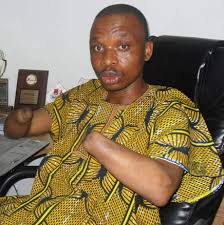
David Anyaele was born during the Nigeria-Biafran war at #63, Dikenafar Road, Aba into the family of Mr.  &Mrs. Robert Anyaele Agwu of Amorji, Igbere Bende Local Government of Abia State. He spent his early life at Ngwa Road area of Aba where he attended Akoli Road Nursery School, Clifford Road Primary School, Wilcox Memorial Comprehensive Secondary School, Ogbor Hill Aba and later University of Education Winneba, Ghana.

He is a chartered member of Nigeria Institute of Public Relations, a motivational speaker, activist and peer counselor and businessman (exporting and importing). Also, the Executive Director, Centre for Citizens with Disabilities (CCD). The Centre for Citizens with Disabilities (CCD) is an organization of, and for persons with disabilities that works to promote human rights and inclusion of persons with disabilities and their families in development efforts. It was established in 2002 in Lagos and incorporated with the Corporate Affairs Commission Abuja as a charitable organization. We have over the past 15 years sought a redefinition of society’s perception of the plight of persons with disabilities. It seeks to realize its mandate through embarking on research, campaign and advocacy, peer group support, networking activities, and training/empowerment projects. The CCD’s mandate and objectives of the are: to protect, promote and safeguard the rights/privileges of persons with disabilities, and promote public enlightenment in civic education, human rights and public policy; to initiate and implement programs, policies and activities geared towards the promotion and enhancement of the welfare of persons with disabilities; to empower or assist empowering persons with disabilities and regularly assess the impact of public policy, human rights and report same through publication, seminar and workshop and lectures; to educate, sinusitis, counsel and mobilize persons with disabilities in various areas critical to their survival and progress and support and advocate for the respect for the rule of law and due process, among others.
We cannot deliver our mandate without collaboration. We have a close relationship with all the major cluster groups and association working on disability issues in Nigeria. Also, CCD is a member of the following organizations: Coalition of disability organizations, Nigerian Coalition on International Criminal Court, International Campaign Against Impunity, Transition Monitoring Group (TMG), Lagos State Civil Society Coalition, Citizens Forum For Constitutional Reform, Coalition for Issue-based Politics and Good Governance, Coalition of Nigerian Human rights CSOs on UPR, Africa Campaign on Disability and HIV/AIDS, UN Coalition Against Corruption among others.

He is happily married to Anne and they are blessed with two boys and a girl.

In this interview, he spoke about how he lost his limbs and the challenges thereafter.

TQ: Do you recall when your disability occurred and how it happened?

This year marks the 19th Anniversary of my limbloss. While visiting Freetown Sierra Leone, January 19, 1999 the RUF rebels of Sierra Leone chopped off my hands forcing me into disability community just because of my identity as a Nigerian.

I lost all in Freetown, I returned not just empty handed but without hand which is man’s greatest tool in life. I also lost friends and family relatives as a result of societal discrimination, stigma and isolation that are associated with living with disability.


It was a kind of a standing instruction from Charles Taylor that Nigerians must be thought a hard lesson on how not to dabbled into internal crisis of another nation, every Nigerian was, therefore, marked for murder or, at least, maiming to serve as an evidence that they were not welcomed like the soldiers of the ECOWAS Monitoring Group (ECOMOG), the military intervention force put together by West African leaders to restore peace to the war torn countries of Liberia and Sierra Leone.

One day, precisely January 19, myself and other residents received a gang of gun wielding youths as visitors and were duly informed that the visit was to carry out the instructions of Charles Taylor that Nigerians must either be killed or maimed.
I wanted to run, but one of the boys called me back. He first gave an order that I should be shot, but another one said no, that I should be sent to Nigerian government to go and tell the government that ECOMOG should stop attacking them. “He gave a fresh order that my hands be cut, so that I will go and show it to my country. I was to be shot, so I had to stretch my left hand and it was chopped off. When the guy wanted to fire me, I put forward my right hand and it was cut off, that was how I lost my two hands.

“After the two hands were severed, it was like they were still not satisfied, while I was crying to God for help, the rebels were annoyed, one of them poured fuel on me and set fire on me, until one of them said that they don’t want me to die, so that I could show my scare to my people as a testimony that they don’t want Nigeria’s intervention in their domestic affairs.”

It was by special grace of God that I was able to move from the scene of this incident Kissy bypass to Kissy Road where I was able to find roving United Nations Observation personnel. It was there that I was evacuated to Counghought Hospital.Late, the Nigeria contingents of ECOMOG were alerted about what happened to me, from there I was evacuated to Military Hospital in Freetown,   where I got treatment before my evacuation to a safe point. By February 3, 1999, I was flown to Nigeria and taken straight to a military hospital Yaba, where I was treated and discharged on August 30, 1999 for rehabilitation.

TQ: Did your disability affect your education in any way?

It was a huge challenge, especially when I was writing my professional examination. In fact, I had to drop from the program due to hostile environment and bad attitude of examiners on my disability. I was encouraged by the program director to continue.

TQ: How did you fund your education?

My education was self-funded by at later days I got a kind of support from family and friends.

TQ: What are the other challenges you are facing presently in carrying out your daily activities?

My major challenge is the cost of procurement and maintenance of the assistive device which I am using. It cost me 42,000 Euro to fix my artificial hands, excluding flight ticket, feeding, accommodation for me and my personal assistant.

TQ: Going by your peculiar experiences of discrimination and challenges you faced, proffer solutions in your own understanding how the lives of people with disabilities can be greatly improved?

To improve the living conditions of persons with disabilities, there is the need to secure a legal framework that would prohibit discrimination on the grounds of disability. This is because; section 15 and 42 of the 1999 constitution is silent on discrimination of persons with disabilities. Also, it is important for states to take appropriate measure to protect persons with disabilities from harmful practices.

TQ: Please outline your achievements so far that you are living with disabilities?

I can’t count them. The most important thing here is that through my disability, I have been privileged to meet you and your team. God has been gracious to me and all I have needed HE has provided to HIS own glory.

TQ: What are the factors responsible for you recording so much success in spite of the enormous challenges?

Trust in God. The Bible I read teaches me to trust in the Lord with all my heart, in all my ways acknowledges HIM, and HE will direct my path.

TQ: Are you married?

Yes.

TQ: If Yes, How did you find your wife?

I met my wife while worshipping at Maryland Seventh Day Adventist Church, Lagos, where I worship. She is a member of the singing group. After the ministration service, I started discussing and interacting with her, it was from there that we became very close friends.

TQ: What are the challenges you faced in getting her to marry you?

Non

TQ: What are the challenges you faced in finding and keeping relationship?

I don’t struggle to find and keep relationship because I don’t go to relationship empty handed. I go into relationship with something that will benefit all.

TQ: As one who has been able to shake off disability, what advice do you have for other persons with disabilities?

Be strong and very courageous. The society is very hostile to pwds BUT with trust in God you will overcome.

TQ: What is your reaction on the state of a person with disability in Nigeria is it improving or declining, the bill, security and other national issues as it affect PWDs?

You may be aware that the sixth legislative session of the National Assembly passed and harmonized the Nigeria Disability Bill 2009. The bill which seeks to ensure full integration of persons with disabilities into the society prohibits discrimination and harmful treatment against persons with disabilities. It also makes provision for the establishment of a National commission for Persons with Disabilities and vests it with the responsibility for their education, health care and protection of their social, economic and civil rights was the fourth bill passed in favour of Nigerians with disabilities since the advent of democratic rule in 1999. Regrettably, just like his predecessors, President Goodluck Jonathan refused assent to the bill reason that the bill provided for the setting up of a commission for disability affairs.

That notwithstanding, the current National Assembly has refreshed the process of securing a legislation that will project Nigerians with disabilities from discrimination and harmful practices. The House of Representatives has passed its own version while the House Senate had its public hearing on the bill on Wednesday March 6, 2013. The Federal Ministry of Women Affairs and Social Development in their contribution at the public hearing insists that the Commission is not desirable but requested for the strengthening of the Department of Rehabilitation, Federal Ministry of Women Affairs and Social Development (FMWASD)which is inconsistent with Article 33(2) of the UNCRPD which states as that “States Parties shall, in accordance with their legal and administrative systems, maintain, strengthen, designate or establish within the State Party, a framework, including one or more independent mechanisms, as appropriate, to promote, protect and monitor implementation of the present Convention”. The fear is that if adequate measure is not taken by the organizations of persons with disabilities, the FMWASD may kill this bill which our organization has classified as the only disability bill in the face of the earth with the highest gestation period as it has taken more than 10 years to secure a National disability law for Nigeria. I will like to call on the NASS to take adequate measure to ensure that a commission is provided on the bill. Also, President Goodluck Jonathan should ensure that his government protects the rights of persons with disabilities through signing of the bill into law. A country is not measured by the number of persons in their parliament but by the quality of life of weak and vulnerable members of the society like persons with disabilities. 

TQ: What is your career aspiration or rather life aspiration?

To serve persons with disabilities better.

TQ: Parting words/Final words.

I like to commend your team for the quality work you are doing for Nigerians with disabilities, may God bless your efforts and supply all your needs to sustain this work. I thank you so much.

0

THERE IS BEAUTY IN EVERY DISABILITY

Helen Halima Makama

Helen Halima Makama is the face of Kpankpando foundation 2017. She was born in Jos, plateau state thirty six (36) years ago by Mr. Danlami Makama and Mrs. Anna Bankat. She is from Jos South L.G.A. and the only daughter in a family of six, all her siblings are boys. She attended Patmon Nursery and primary school, Narayi, Girls High School Gindiri, Jos 1994-2000, Ahmadu Bello University Zaria, 2001-2007 where she acquired a degree in Urban & Regional Planning. She was enrolled in the mandatory NYSC in 2008. She is a member of Nigerian Institute of Town Planners (NITP). The face of Kpankpando Foundation in 2017 and recently her reign was extended to 2019 because the competition for the face of Kpankpando Foundation did not hold in 2018 because the founder of the foundation Senator Osita Izunaso’s mother died few days to the anniversary of the foundation, which normally ushers in a new face of the foundation.

Queen Helen is a renowned disability advocate and ambassador, one of the pioneers of the recently passed Nigerian disability prohibition bill (a bill that is expected to be established by UN member countries in furtherance of UN Convention on the rights of Persons with Disabilities (UNCRPD)) which awaits the assent of the President. She is also propagating the SDGs, Vision 2030 for mainstreaming people with disabilities in these programmes.

In this interview, she shares with us how her disability occurred, her achievements as the face of Kpankpando Foundation and life aspirations.

TQ: Do you recall how and when your disability occurred?

It was exactly on May 9, 2009 in Gwarinpa during my youth service in Abuja. I was in a car with friends and my friend who was on the steering lost control of the car, the car summersaulted severally, the other two of my friends died at the spot, I survived with severe injuries. I had internal bleeding and a crack on my spinal cord, the resultant effect was that I could no longer walk and I was rehabilitated to be using wheelchair.

TQ: How did you, your family and close friends take it after it was confirmed that you will be on a wheelchair?

It was a disaster to me because I never dreamt of having disability. It was disheartening to my family and close friends. I was full of thought on how to cope with it. Then people started looking at me with a lot of pity, it was discouraging. There were some friends who stayed away from me. It is only when something like this happens that you will know your true friends. My family was confused at first but they later understood that the only option was that I have to be rehabilitated, and start using wheelchair. Then we became positive and look forward for a better future.

TQ: Do you face discrimination and stigmatization thereafter?

Actually, the kind of discrimination I am facing is people looking down on you, some people will see and just pass without any recognition simply because you are on wheelchair. There are perceptions like how am I going to cope, how can I perform my feminine duties and again some use derogatory words while describing me.

TQ: What are the challenges you face in performing your duties as a town planner?

As a town planner, I have to go the site. Unfortunately, my wheelchair can’t access the site locations so I limit my work in the office using the laptop to analyze land usage and drawings. But if I must visit a site, I normally rely on my colleagues to do the site work for me and thereafter we do analysis together.

TQ: Is there any measures that can be put in place for you to visit site just for work fulfillment?

You know there are different site locations and at different times. Nothing can be done about that but for worst scenario, if my presence is needed at the site, I will get there with a HILUX van. Come to think of it, accessibility problem poses the greatest challenge to us living with disabilities in Nigeria. As a town planner, I noticed that we have pedestrian bridges without ramps, shopping malls without ramps, numerous public buildings without ramps, no side walkways on our roads and many more places that lack disability friendly facilities.

TQ: Can you share with me some of your achievements so far?

In the course of my work as a town planner, I worked as a team in planning a layout. I ensured that the malls are designed to have ramps for easy access for people with disabilities. As the face of Kpankpando Foundation, I was among those who pioneered Nigerian Disability Prohibition Bill that was passed by National Assembly and has been transmitted to the President for his assent.  The bill if it became law will address so many challenges faced by people with disabilities in Nigeria. There will be penalty for discriminating against people with disabilities in the area of employment, political participation, etc. and it will be unlawful for any public building not to have disability friendly facilities.

TQ: I learnt that you are the face of Kpankpando Foundation, what made you stand out among other beautiful and qualified ladies?

We were 12 of us that contested, 2 from each geopolitical zone. It was not actually about facial beauty but more of your understanding of disability issues and your passion about the plights of people with disabilities and your charisma. I think these were majorly what the judges considered because your duties as the face of Kpankpando foundation is advocate for the rights of people with disabilities and also execute programmes that geared towards assisting them to realize their potentials.

TQ:  what are the benefits associated to “Face of Kpankpando Foundation”?

It provided me with a platform to speak for 27 million Nigerians with disabilities which has always been my passion.

TQ: What is your thought about The Face of Kpankpado Project?

I will say that it is all about beauty in disability, it is not necessarily the physical beauty but about those challenges in disability that are surmountable. As the face of Kpankpando foundation, you are exposed to formulation of programmes that will offer direct action to the needs and care of other people with disabilities. For instance, through the project, scholarships has been awarded to some people with disabilities, some have been economically empowered, health insurance scheme has been secured for some people, there has been advocacy drive to see that the rights of people with disabilities are upheld through the bill pioneered at the National Assembly and there has been an advocacy for government to allocate certain percentage for people with disabilities in the area of employment and encourage the private sector to do same. Employment of people with disabilities will go a long way to alleviate their sufferings, we have 27 million Nigerians with disabilities, which is one third of the entire population. If they are properly engaged, we will be winning the poverty war and the impact will be tremendous to our economy.

TQ: What will be your fulfillment at the end of your reign as the Face of Kpankpando Foundation?

To see that people with disabilities are being employed after graduation. To see that Nigerian Disability Prohibition Bill became Law.

TQ: Are you in a relationship?

I am single, some men are calling me claiming that they love me but I am being careful.

TQ: Having been able to shake off your disability, what advice do you have for other people with disabilities?

The challenge of your disability should not deter you from your dreams. We can achieve anything and even help people who are able, just be positive and creative. Always understand that any challenge that comes to you is temporary. We all have talent, discover what you are good at and do it diligently.

TQ: State of Nigerians with disabilities, is it declining or improving?

A lot of NGOs have been speaking on the issues of disability; holding workshops and seminars with little impact on people with disabilities. We now need action plans that will have great impact on the lives of people with disabilities directly, because with all these talk shows, it seems that an average person with disability is getting poorer.

TQ: Security and economy, how did they affect people with disabilities at this time?

Those of us from the north central and north east who are always confronted with these problems will tell you that the chance of survival of persons with disabilities during these attacks is very slim. During attacks, people are running for their lives, we can’t run and nobody will remember to help us. So, you are at the mercy of the attackers.  On the part of economy, it has been most unfair to us living with disabilities, especially high cost of transportation. We pay more on transport because we can’t use the cheapest means of transportation, most of us have resorted to taxi (popularly known as drop). A journey that will cost other #50, will cost us #500 to #1000 meanwhile we have slimmest opportunity to means of livelihood. High cost of living affects us more. Corruption has affected us also because resources meant to provide for us and put facilities in place to make life easier for us has been diverted into private pockets.

TQ: Your Career and other life aspirations?

I want to be a philanthropist. I have plan to go back to school for my masters and thereafter establish a town planning firm because I want to be financially suitable before establishing an NGO. I have seen that some NGOs are having challenges because the founders are not financially balanced before setting them up, therefore, when they get funds, they will have little to show for the funds they got because some of funds goes into their personal needs.

TQ: Parting Words?

I want to thank the publisher for giving me the opportunity to speak out through this medium. As election is approaching, I call on our members to come out and exercise their franchise. Vote wisely, vote for those who will promote our cause. People should learn to live in peace, we should rise above corruption, ethnicity and religion. We should concentrate more on our similarities like economic issue because price of things is high and they are the same everywhere. We should be more concern about those issues that will address our well-being as a people.  

viagra fiyatları Orijinal olan Viagra krem

0

Orijinal olan Viagra krem satın al sayfasında hızlı bir şekilde ürünümüzü sipariş verebilirsiniz. Piyasa da özellikle tele pazarlamacıların pazarladığı 30 lu adı altın da satılan vega hapları sahte olup merdiven altı diye tabir edilen ürünlerdendir. Viagra erkeklerde sertleşme problemini tamamen yok ederek ereksiyonu en etkili şekilde sağlamaya yardımcı olan Sildeanfil’i içerir. Viagra’nın yerli ve yabancı alternatifleri vardır ancak güvenilir olması açısından orjinal Viagra’nın tercih edilmesi önemlidir. Yine 50 ml’lik şişelerde sunulan bu ürünümüz ilişki süresini uzatmak ve maksimum zevk almak isteyen erkekler için ideal best perfect olup erken boşalmayı önleyici etkiye sahiptir. Fiyat listesine baktığımızda 4 tane hap içeren film tabletlerin fiyatı 150 ila 160 Türk Lirası arasında değişmektedir. Bu ürünün etki ve özelliklerini tam olarak görebilmek, ilişki esnasında hazır olabilmek için birliktelikten 20-30 dakika önce kremi penis bölgesine sürmeni yeterli olacaktır. Erkeklerde sertleşme, ereksiyon olamama, bayanlarda vajinal kuruluk, cinsel isteksizlik gibi sorunları ortadan kaldırabileceğiniz Eczanelerde satılan cinsel haplar ve Eczanelerde satılan cinsel haplar çeşitleri hakkında daha ayrıntılı bilgileri diğer yazılarımızda da bulabilirisiniz. Viagra bu ilaçların etkilerinde ciddi bir artışa neden olabilir. Otolog kemik iliğinin faydalı etkileri kronik kritik ekstremite iskemisi olan hastalarda hücre infüzyonu ve antioksidanlar / L-arginin. Sağlık sorunu olmayan erkeklerin kullanabileceği bir ilaçtır. “Bilemiyorum. Artık arka arkaya sekse devam edebilir. Günümüzde kullanılan Viagra, Amerika Birleşik Devletleri’nde 1998 yılında FDA onayıyla birlikte ilaç pazarına sunulmuştur. Sisteme verilen siparişler sesli tasdik alındıktan sonra 1 iş günü içinde kargoya teslim edilmektedir. Bu sebeple ticari faaliyet gösteren eczaneler ve diğer sağlık merkezleri bu para kazanmak için 99 TL’nin üzerinde satmaya mecburdur. Müzeye dönüştürülen evin bahçesindeki kediler bir fenomen. Viagra fiyat seviyeleri, etki ve yan etkileri, güvenliliği ve sağlıklı oluşu gibi konularda bilgi sahibi olunmalıdır. Dünyanın en iyi geciktirici hapı sadece geciktirmek ile de kalmıyor, aynı zamanda müthiş bir performans artışı sağlayarak, aynı gece içerisinde 4-5 defa cinsel ilişkiye yorulmadan, sertleşme sorununuz olmadan gire bilmenize olanak tanıyor. Bu yüzden ürünü yarı aç şekilde kullanmanız etkisini iyi şekilde hissetmenize yardımcı olur.

viagra ne demek