

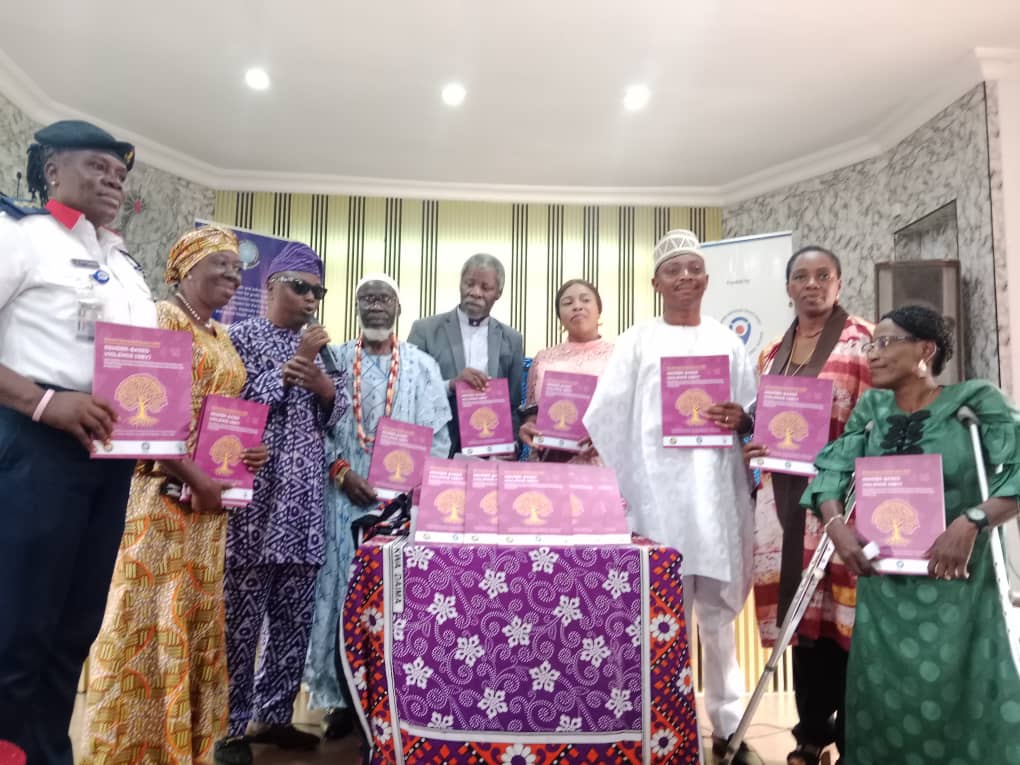
Osogbo, Nigeria — In a significant stride toward inclusive justice and gender equity, the Centre for Women’s Health and Information (CEWHIN) has officially launched a Standard Operating Procedure (SOP) to guide a survivor-centered, multi-sectoral response to Gender-Based Violence (GBV) and harmful practices in Osun State. The landmark document was unveiled on Tuesday, July 23, 2025, in Osogbo, drawing together key government stakeholders, civil society organizations, law enforcement agencies, faith-based institutions, and disability rights advocates.
The SOP, funded by the United Nations Trust Fund to End Violence Against Women, aims to ensure that women and girls—especially those with disabilities—receive inclusive, respectful, and effective support when facing abuse and discrimination. This new framework establishes a clear roadmap for assessment, investigation, prosecution, and survivor care across sectors, including justice, health, social welfare, education, and community engagement.
A Game-Changer for Disability-Inclusive GBV Response
Atinuke Odukoya, Executive Director of CEWHIN, described the SOP as a transformative document built through the input and cooperation of numerous Ministries, Departments, and Agencies (MDAs), Non-Governmental Organizations (NGOs), Community-Based Organizations (CBOs), and the Joint National Association of Persons with Disabilities (JONAPWD).
“What we are launching is not just a book,” Odukoya emphasized. “It is a comprehensive, actionable guide that puts survivors at the center, with special attention to women and girls with disabilities who are often doubly marginalized. It gives professionals the tools to act with sensitivity, consistency, and compassion.”
She urged that the SOP should not gather dust on shelves, but rather be studied, internalized, and put into immediate use across all relevant institutions. “The SOP includes everything from appropriate language to use when speaking to survivors, to clear referral pathways for accessing physical health services, mental health care, and empowerment programs,” she said.
Stakeholders Echo Support and Urge Action
Juliet Olumuyiwa-Rufia, the lead consultant on the SOP development, underscored the importance of removing societal and physical barriers that prevent persons with disabilities from accessing justice and essential services.
“We must begin to build with accessibility in mind—from ramps in public buildings to sign language interpreters in hospitals,” she stated. “Disability is not the problem; the barriers are. And these barriers are within our power to remove.”
Olumuyiwa-Rufia called for collective implementation, stressing that awareness creation and accountability are the first steps to real change. “Now that we’ve launched the SOP, it’s up to all of us—government, society, and individuals—to ensure it works in practice.”
Ayobami Oyetunde, Executive Secretary of the Osun State Bureau for People with Disabilities, echoed the same sentiments. “This document has clearly defined roles for all stakeholders. There are no excuses now. We must act swiftly and responsibly,” he said.
Stephen Oluwafemi Idowu, Chairman of JONAPWD Osun State Chapter, praised CEWHIN and its partners for their foresight and commitment. “This SOP is a win for our community. If followed, it will reduce stigma, abuse, and institutional negligence, leading to better lives for our members,” he noted.
Government Ministries Pledge Commitment
Mrs. Aderibigbe, representing the Commissioner for Women, Children and Social Welfare, Ayo Awolowo, commended the initiative, noting that it was long overdue. She assured that the Ministry would revise its current protocols to align with the SOP and step up support for survivors of GBV, especially those with disabilities.
Funmilayo Abdullahi, research assistant on the SOP project and a CEWHIN associate, highlighted the collaborative effort that went into the document’s creation. “Every stakeholder was part of the process—from drafting to validation. We expect that same sense of ownership to drive the implementation phase,” she said.
Rights Activists Weigh In
Human rights advocate and member of the Osun State Community Task Force Against SGBV, Citizen Lola Wey, emphasized the unique vulnerability faced by women and girls with disabilities.
“It’s one thing to be a woman or girl in our society and another to have a disability. The compounding discrimination is real. This SOP offers a structured approach to provide them with the dignity, access, and justice they deserve,” she said, calling on philanthropists and the public to support CEWHIN and government agencies in ensuring enforcement of the SOP.
A Blueprint for the Future
The launch of the SOP is not only a milestone for Osun State but also sets a precedent for other states in Nigeria to adopt inclusive, survivor-centered GBV response frameworks.
The document serves as a model of what cross-sector collaboration can achieve when the goal is to create a more just, equitable, and inclusive society.
As stakeholders celebrated the SOP launch, the overarching message remained clear: implementation is key. The success of the SOP hinges on collective will, accountability, and the unwavering commitment to ensure that no woman or girl—especially those with disabilities—is left behind.


