

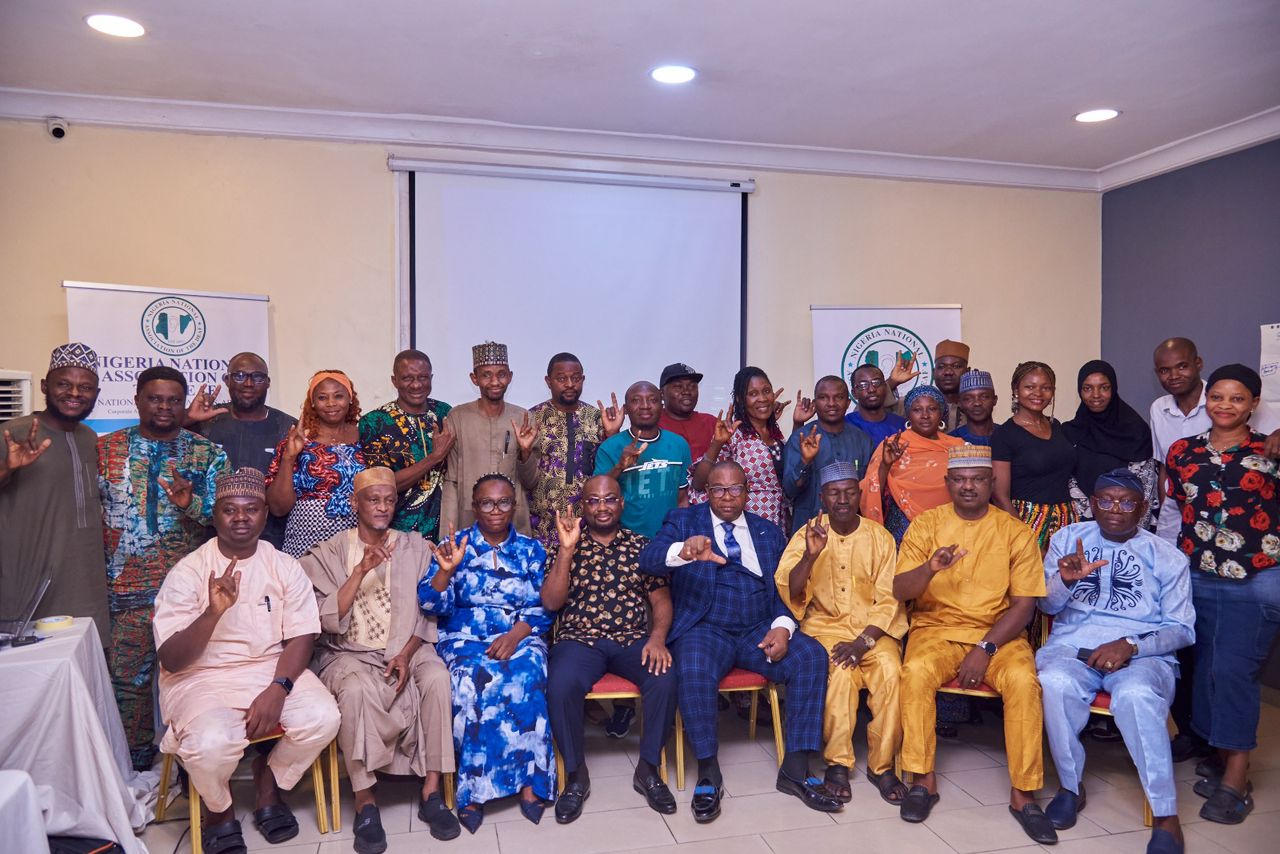
In a decisive move to deepen institutional strength and reinforce transparency, the Nigeria National Association of the Deaf (NNAD), with support from the Disability Rights Fund (DRF), has successfully concluded a two-day capacity-building programme for its Board of Trustees (BOTs), National Executives, and Secretariat staff.
The high-level training, held from February 16–17, 2026, at Class Suites Hotel, Jabi, Abuja, brought together the leadership core of the association in what many participants described as a “defining moment” for NNAD’s institutional growth.
Setting the Tone for Transformation
The programme commenced at 11:00 a.m. on the first day with an opening prayer led by NNAD’s National Treasurer, Mr. Taofeek Abdulkarim (popularly known as Tao). In a symbolic and powerful expression of inclusion and identity, the National Anthem was rendered in sign language — a poignant reminder of NNAD’s advocacy mission and the strength of the Deaf community.
In his welcome remarks, the Chairman of NNAD’s Board of Trustees, Chief Zubairu Mamman Isah Dugu, warmly received participants and commended the facilitator for lending his expertise to the association. He stressed that institutional development is not optional but essential for relevance, sustainability, and impact in today’s evolving civil society landscape.
Other Board members, including Alhaji Usman Nahuche and Mr. Laurence Idemodia, underscored the importance of continuous learning, noting that organizations that fail to adapt often struggle to survive. They encouraged participants to approach the sessions with openness and commitment.
Strong Voices from the Disability Movement
Adding depth to the discussions was Dr. James David Lalu, former Executive Secretary of the National Commission for Persons with Disabilities (NCPWD). He advised NNAD to review its Constitution to formally recognize the grant-sourcing and institutional support roles played by Secretariat staff — a move he suggested would enhance internal fairness and operational clarity.
Similarly, Mr. Theophilus, Africa Representative of the Disability Rights Fund (DRF), reiterated the organization’s commitment to strengthening the capacity of Organizations of Persons with Disabilities (OPDs) across Africa. He emphasized that strong governance structures are fundamental to attracting sustainable funding and advancing disability rights advocacy.
Representing the broader disability community, Mr. Uche Andrew of JONAPWD urged participants to embrace knowledge with humility. Using the analogy of an egg, he illustrated how knowledge must be carefully nurtured to yield meaningful results, cautioning that negligence could undermine collective progress.
Governance, Accountability, and International Best Practices
The sessions were facilitated by governance expert Dr. ThankGod, who delivered comprehensive modules focused on:
- Governance versus management roles
- Financial oversight in underfunded projects
- Accountability and transparency standards
- Safeguarding obligations
- Compliance expectations for internationally funded NGOs
According to the Project Director, Malam Aliyu Mai, the workshop was deliberately structured to align NNAD’s internal systems with international best practices, particularly in light of increasing donor scrutiny and compliance requirements.
Dr. ThankGod explained that governance within NNAD must be anchored on a clear understanding of the association’s vision and mission. He clarified the legal and fiduciary responsibilities of the Board of Trustees, outlining three fundamental duties: duty of care, duty of loyalty, and legal responsibility to members.
He further introduced the concept of Thinking and Working Politically (TWP), noting that leadership within civil society organizations must be strategic, context-aware, and adaptive.
Clarifying Roles and Strengthening Structures
A significant highlight of the training was the clarification of administrative roles. It was explained that while the President serves as the head of the Secretariat, the management team operates as the technocratic and permanent arm of the association. The Programme Director manages operational budgets and financial resources, with the President remaining accountable to the Board.
The facilitator recommended the development of a comprehensive Board Manual to guide tenure, accountability processes, and operational procedures. He warned that the absence of clear policies often leads to governance conflicts and reputational risks.
Confronting Transparency Gaps
Participants engaged in honest conversations about common red flags of poor transparency, including selective reporting, resistance to audits, undocumented decisions, and the concentration of financial information in a single individual.
“Transparency builds trust; secrecy undermines legitimacy,” the facilitator emphasized — a statement that resonated deeply with attendees.
NNAD’s National President, Malam Haruna Muhammad Tsafe, candidly acknowledged that the association had previously lost grant opportunities due to the absence of audited financial statements. He stressed that improved financial systems are no longer negotiable but a prerequisite for growth.
The facilitator reinforced this point, stating unequivocally that no credible donor would provide funding — regardless of size — without reviewing audited reports.
Zero Tolerance for Corruption and Strong Safeguarding Measures
Beyond systems and structures, the programme placed heavy emphasis on organizational culture. Leadership, participants were told, must set the tone by promoting zero tolerance for corruption, establishing clear reporting lines, protecting whistleblowers, and embedding compliance into performance systems.
Safeguarding, the facilitator noted, must go beyond avoiding scandal. “Safeguarding is about protection,” he said, adding that it should remain a standing agenda item for leadership discussions.
In a moving conclusion to the programme, participants took a safeguarding oath, pledging to uphold ethical standards, protect vulnerable members, and reject any form of exploitation or abuse within the association.
A New Chapter for NNAD
As the curtains closed on the two-day retreat, NNAD leadership expressed confidence that the training marks a turning point in the association’s evolution. With stronger governance frameworks, enhanced financial accountability, and renewed ethical commitments, NNAD is positioning itself for sustainable growth and greater impact in advancing the rights and welfare of Deaf persons in Nigeria.
For stakeholders within and beyond the disability movement, the message from Jabi was clear: institutional strength is the backbone of effective advocacy — and NNAD is taking bold steps to secure its future.
Click the link below to join our WhatsApp channel


