

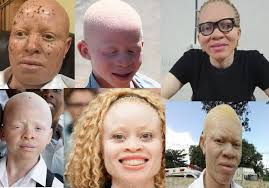
…Calls for Policy Reforms, Public Education, and Healthcare Support to Protect Over Two Million Nigerians With Albinism
As the world commemorated the 2024 International Albinism Awareness Day on June 13, a Nigerian non-governmental organisation, One House Development Initiative, has raised a clarion call for urgent public education, stronger protections, and inclusive policies to safeguard the rights and lives of Persons With Albinism (PWAs).
In a powerful statement marking the day, the group’s Team Lead, Tubosun Olabomi, decried the persistent discrimination, ignorance, and deep-rooted myths that continue to endanger PWAs across Nigeria. He noted that despite global awareness campaigns and international recognition of their rights, many Nigerians with albinism still live in fear and exclusion due to age-old superstitions and societal neglect.
Over Two Million Nigerians with Albinism Still at Risk
According to Olabomi, Nigeria is home to over two million persons with albinism, yet their challenges remain largely invisible in national conversations and policymaking. “Albinism is not a curse or a disease,” he said. “It is simply a genetic condition, and persons with albinism deserve to live freely, safely, and with equal opportunities like every other Nigerian.”
The United Nations established International Albinism Awareness Day to shine a light on the struggles and rights of PWAs and to promote their full inclusion in society. However, Olabomi stressed that in Nigeria, this global commitment has not yet translated into real protections or support for affected individuals.
“Instead of being embraced, people with albinism are often treated as outcasts—haunted by myths, targeted by discrimination, and overlooked by policies,” he said.
Ancient Myths, Modern Dangers
The organisation expressed grave concern over harmful cultural beliefs that continue to portray PWAs as supernatural beings or harbingers of misfortune. In some communities, these dangerous myths have escalated into harassment, exclusion, and even ritual killings.
“These baseless beliefs are not just offensive—they are deadly,” Olabomi warned. “They rob people with albinism of their dignity, their safety, and in some cases, their lives.”
He added that the social stigma often leads to educational exclusion, workplace discrimination, and limited access to healthcare and political participation.
Health Risks and Lack of Support
Beyond social challenges, persons with albinism face serious health vulnerabilities, particularly skin cancer due to extreme sensitivity to ultraviolet radiation. PWAs also experience common vision impairments such as nystagmus, photophobia, and reduced visual acuity, which further complicate their daily lives.
Olabomi pointed out that access to protective resources—including sunscreen, UV-protective clothing, anti-blue light glasses, and regular checkups—remains a luxury for many, due to poverty, lack of awareness, and poor policy attention.
He called on the government to take immediate action to integrate the needs of PWAs into the national healthcare system, including:
- Coverage of sunscreen, protective wear, and glasses under health insurance schemes;
- Inclusion of albinism-related conditions in public health education;
- Creation of access pathways to specialized dermatological and ophthalmological care.
Recommendations for Action
The organisation laid out a comprehensive roadmap for transforming the lives of PWAs and combating the prejudice they face. Some of the key recommendations include:
- Massive media campaigns to educate the public on albinism and counteract damaging superstitions;
- Training for teachers and school administrators to create inclusive environments and tackle bullying against children with albinism;
- Enforcement of existing protective laws, such as the Violence Against Persons (Prohibition) Act, and creation of albinism-specific policies;
- Support for leadership and empowerment programmes to include PWAs in governance, advocacy, and entrepreneurship;
- Accessible counselling services and peer support groups to help PWAs cope with trauma, discrimination, and low self-esteem.
Olabomi emphasized that inclusion must go beyond words—it must be felt in schools, workplaces, hospitals, and the media. He called for accurate and respectful representation of PWAs in film, journalism, advertising, and public discourse, so that the next generation can grow up seeing diversity as normal.
“We Are Not Cursed. We Are Human.”
In his concluding remarks, Olabomi offered a moving reminder of the humanity at the heart of the campaign.
“People with albinism are not ghosts. We are not magical beings. We are human—vulnerable, gifted, and full of dreams,” he said. “What we need is not pity, but protection. Not superstition, but support. Not fear, but freedom.”
As Nigeria joins the rest of the world in marking International Albinism Awareness Day, One House Development Initiative’s message is clear: ending discrimination against PWAs is a moral duty and a human rights obligation. It is time for governments, civil society, media, and communities to work together to dispel myths, promote dignity, and ensure that persons with albinism are no longer left behind.


