

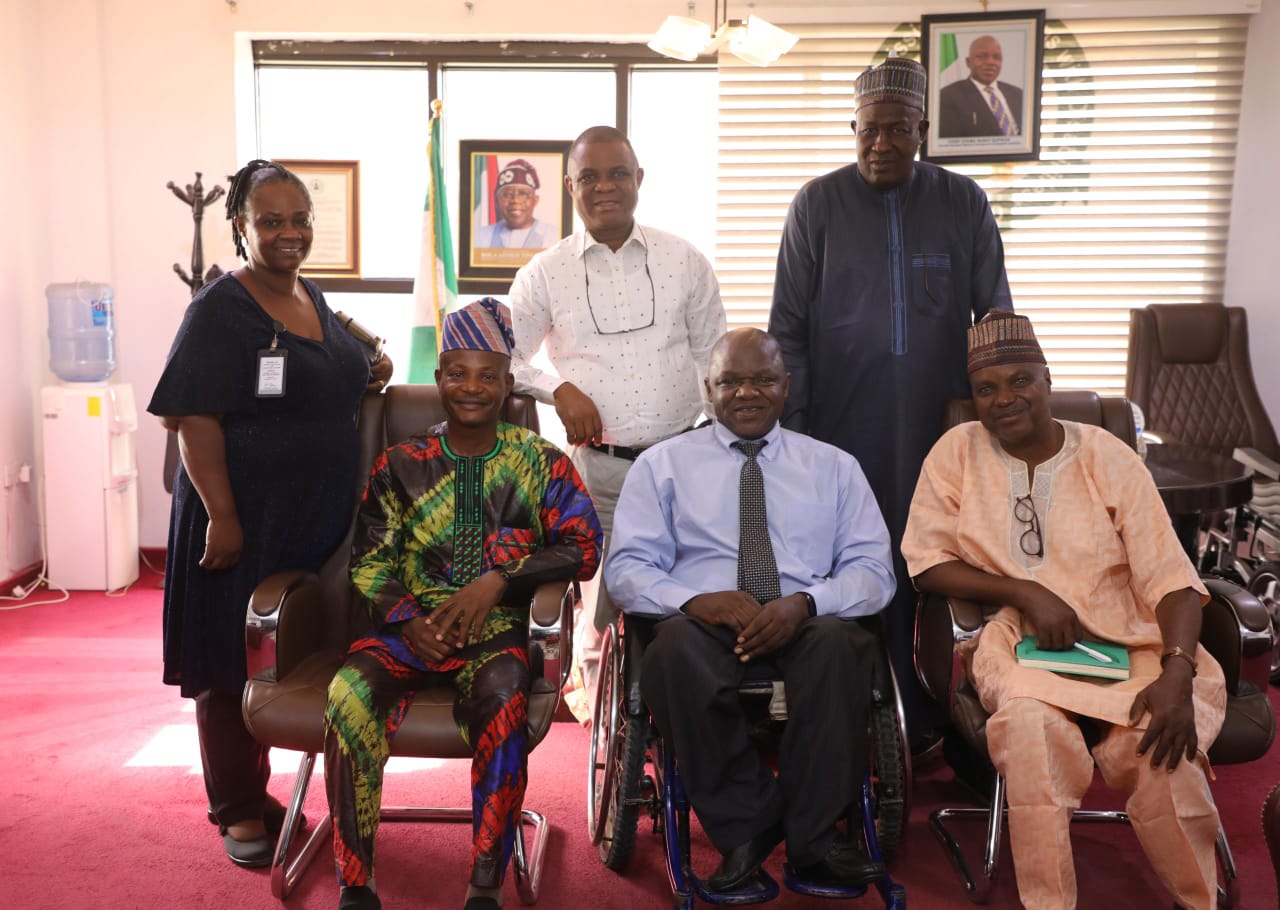
In a renewed push to strengthen disability inclusion across Nigeria, the National Commission for Persons with Disabilities (NCPWD) has entered into a reinforced partnership with the National Association for Exceptional Children (NAEC). The collaboration marks a significant step toward improving support systems, policies, and opportunities for millions of Nigerians living with disabilities.
During a high-level strategic engagement held at the Commission’s headquarters in Abuja, the Executive Secretary of NCPWD, Hon. Ayuba Burki Gufwan, commended NAEC for its decades of unwavering commitment to supporting exceptional children and advancing inclusive development in Nigeria. The NAEC delegation was led by its National President, Professor Julius Abiola Ademokoya, a renowned scholar and advocate for exceptional children.
A Growing Disability Population and the Call for Stronger Action
Hon. Gufwan highlighted that Nigeria’s disability population—now estimated at over 38 million persons—requires a stronger, more coordinated national response. He emphasized that inclusion cannot be achieved in silos, calling for deeper collaboration among government institutions, civil society, academia, and professional associations.
Despite progress made in recent years—including the domestication of the Discrimination Against Persons with Disabilities (Prohibition) Act, 2018 in more than 20 states—the Executive Secretary expressed concern over persistent funding constraints hindering the full-scale implementation of disability programs across the country.
He pointed to global best practices such as South Korea’s disability employment quota system, which mandates that organizations hire persons with disabilities and imposes penalties for non-compliance. Gufwan noted that adopting similar models in Nigeria would significantly enhance employment, economic empowerment, and protection for PWDs.
“No Disability Left Behind” — A Renewed Promise
Reiterating the Commission’s vision for a fully inclusive society, Hon. Gufwan declared:
“Building a highly inclusive society is not only possible, it is necessary. We must work together to ensure that no child, no adult, and no community of persons with disabilities is left behind.”
He underscored NCPWD’s commitment to championing policies that guarantee accessibility, inclusive education, employment opportunities, healthcare access, and equal participation for all persons with disabilities.
NAEC Reaffirms Commitment to Exceptional Children
Responding to the Commission’s call, Professor Julius Ademokoya reaffirmed NAEC’s readiness to deepen its collaboration with NCPWD. He noted that NAEC has, for decades, been at the forefront of advancing the welfare, skills development, and educational opportunities of exceptional children across Nigeria.
He expressed optimism that the strengthened partnership will expand inclusive education initiatives, agricultural empowerment programs, economic opportunities, and community-based support for children with special needs and their families.
Professor Ademokoya also extended heartfelt appreciation to NCPWD for its logistical and institutional support during the 2025 International Disability Day celebrations, noting that the Commission’s leadership has been instrumental in elevating the voices of persons with disabilities at both national and global platforms.
A Stronger Future for Disability Inclusion in Nigeria
At the end of the meeting, both institutions reaffirmed their commitment to intensifying joint efforts aimed at improving the conditions of exceptional children, strengthening systemic support structures, and building a nation where every individual—regardless of disability—has the opportunity to thrive.
The partnership signals a new phase in Nigeria’s disability inclusion journey, one anchored on collaboration, policy reform, and sustainable empowerment.
The NCPWD, under the leadership of Hon. Gufwan, continues to advocate for nationwide implementation of disability-friendly policies, stronger enforcement of the Disability Act, and the creation of an environment where no disability group is left behind.


