

By The Qualitative Magazine News Team | July 23, 2025 | Abuja
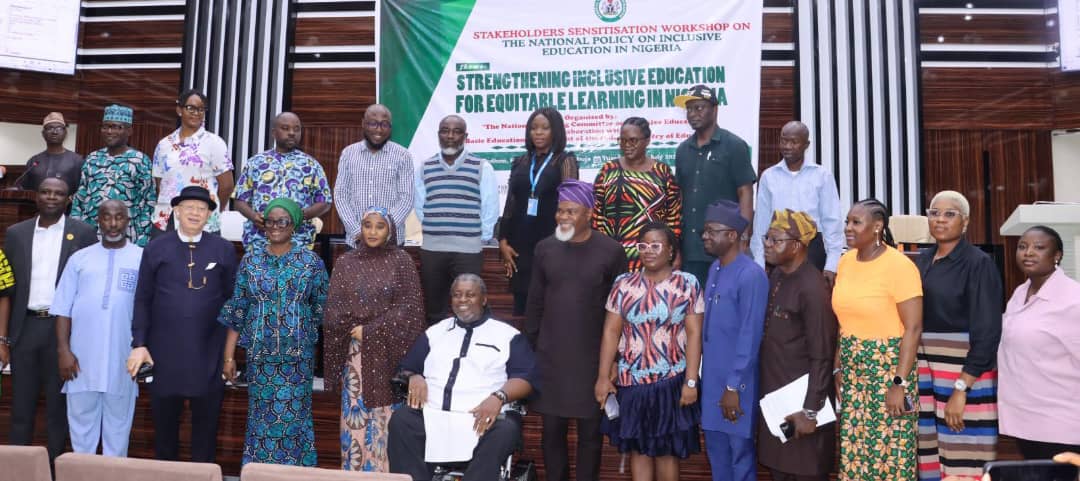
In a major step toward achieving educational equity for all Nigerian children, the National Commission for Persons with Disabilities (NCPWD), in collaboration with the Federal Ministry of Education and the National Working Committee on Inclusive Education, has convened a high-level National Workshop aimed at pushing for the implementation of the National Policy on Inclusive Education in Nigeria.
Held on Monday, July 22, 2025, at the Federal Ministry of Education Headquarters in Abuja, the workshop, themed “Strengthening Inclusive Education for Equitable Learning in Nigeria”, brought together critical stakeholders from government ministries, development partners, and civil society. The goal: to revise, domesticate, and implement the long-awaited inclusive education policy across the 36 states of the federation and the FCT.
The event marks a turning point in the nation’s push toward educational justice—anchored on Sustainable Development Goal 4, which advocates for inclusive and equitable quality education and lifelong learning opportunities for all.
In his opening remarks, Dr. Adebukola Adebayo, Technical Assistant to the NCPWD, highlighted the strategic significance of the workshop, noting that inclusive education is a non-negotiable imperative if Nigeria hopes to close the existing learning gaps and empower every child, especially those with disabilities.
“This workshop is a crucial platform for advocacy. It is a chance for stakeholders to align their perspectives, identify pressing challenges, and develop coordinated strategies toward building a truly inclusive educational system in Nigeria,” Dr. Adebayo emphasized.
Representing the Federal Government, Professor Suwaiba Ahmad, Honourable Minister of State for Education, declared the workshop open with a passionate call to action.
“This gathering marks a pivotal moment in our collective journey to mainstream inclusive education. The Federal Ministry of Education remains fully committed to ensuring that every child in Nigeria—regardless of disability, gender, socio-economic status, or background—is given an equal opportunity to learn, grow, and thrive,” she stated.
Prof. Ahmad stressed that inclusive education is more than a policy—it is a reflection of the kind of society Nigerians want to build. “It’s about ensuring that our collective actions foster a nation where no one is left behind, and where education serves as a bridge to equality,” she added.
Presenting a detailed overview of the Revised National Policy on Inclusive Education, Mr. Kehinde Ogunbiyitan, a member of the National Policy Committee, underscored the urgent need for all government bodies, educational stakeholders, and international partners to develop strategic action plans. These plans, he said, should focus on creating awareness and driving systemic change in both public and private schools.
“We can no longer delay. The time to act is now. We need coordinated efforts and continuous awareness creation to ensure the policy doesn’t remain on paper but is felt in classrooms across the country,” Mr. Ogunbiyitan declared.
The workshop saw robust participation from leading development partners who have long championed inclusive learning in Nigeria. Organizations such as Partnership for Learning for All in Nigeria (PLANE), Sightsavers Nigeria, British Council, UNICEF, PLAN International, and TAF Africa were all present, lending their voices and expertise to the crucial dialogue.
In a united front, all stakeholders present reaffirmed their commitment to support the NCPWD and the Ministry of Education in the quest to deliver an education system where inclusion is not the exception, but the norm.
The event concluded with a renewed call to state governments, school administrators, civil society actors, and donor agencies to work in synergy to ensure that inclusive education becomes a lived reality for every Nigerian child, regardless of ability or circumstance.


