

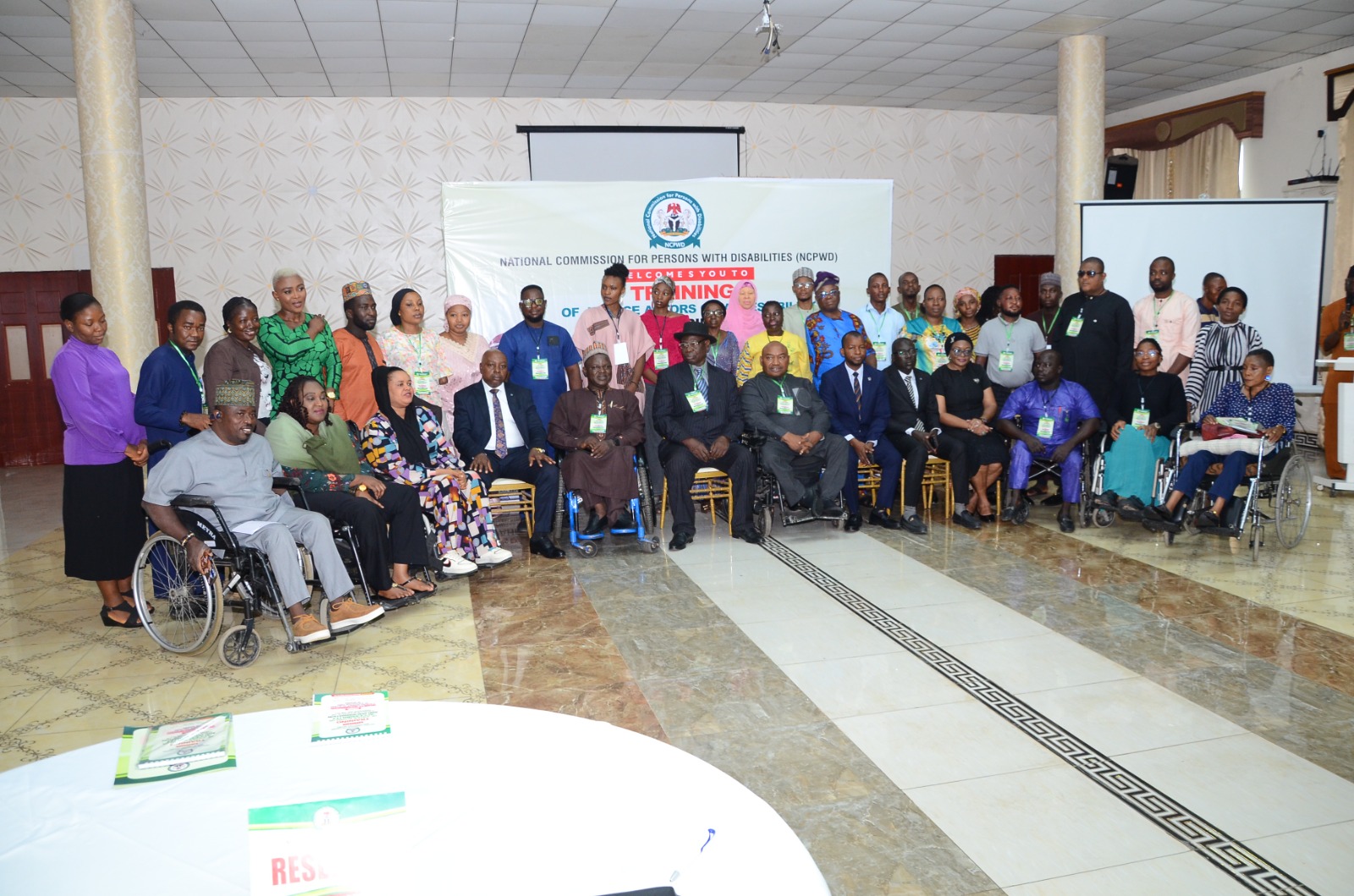
Abuja, Nigeria – May 21, 2025
In a bold step toward dismantling long-standing barriers to justice for millions of Nigerians with disabilities, the National Commission for Persons with Disabilities (NCPWD) has officially flagged off a nationwide capacity-building program targeted at justice sector actors. The initiative, described by stakeholders as a groundbreaking move, is aimed at reshaping the legal and institutional landscape to reflect the rights and dignity of persons with disabilities across Nigeria.
The inaugural training session took place on Monday, May 20, 2025, at Pave Hotel and Suites, Kado, Abuja, and attracted key representatives from the Nigeria Police Force, the Nigeria Correctional Service, and other frontline justice institutions. Themed “A Strong Barrier to Access to Justice for Persons with Disabilities in Nigeria,” the program seeks to spark critical conversations and practical reforms around inclusivity within Nigeria’s justice system.
The nationwide training is expected to roll out across the 36 states of the federation and the Federal Capital Territory (FCT), focusing on equipping justice actors with the knowledge, tools, and mindset required to recognize and eliminate discrimination, whether systemic or structural, in the delivery of justice.
Hon. Gufwan: “Access to Justice is a Right, Not a Privilege”
Speaking at the opening ceremony, the Executive Secretary of the NCPWD, Hon. Ayuba Burki Gufwan, delivered a powerful message, urging the justice sector to lead the charge in creating an inclusive and equitable society for all Nigerians, regardless of ability.
“Access to justice is not a privilege—it is a fundamental human right. Yet, millions of Nigerians with disabilities continue to face physical, systemic, and attitudinal barriers that prevent them from fully participating in legal processes,” he said.
“This training is not just a program; it is a call to action for every justice actor to be an advocate for equity, inclusion, and dignity. We are building a Nigeria where justice is not selective but accessible to all.”
Gufwan’s remarks struck a chord with participants, many of whom acknowledged that while reforms have been attempted, much more needs to be done to ensure the justice system is inclusive, accessible, and responsive to the unique challenges of persons with disabilities.
Key Issues Explored: Legal Frameworks, Gender Justice, and Institutional Reforms
The training delved into a range of critical themes and issues, including:
- Review of national and international legal frameworks that protect the rights of persons with disabilities, particularly in the context of access to justice;
- Physical and procedural accessibility as a necessary condition for inclusive legal systems;
- The intersection of gender and disability in justice administration, spotlighting the multiple vulnerabilities faced by women and girls with disabilities;
- Strategies for eliminating discrimination within correctional and law enforcement institutions;
- And the vital role of justice sector agencies in safeguarding the rights and freedoms of persons with disabilities.
The sessions were interactive and participatory, offering justice actors practical scenarios and solutions to common accessibility challenges within their operational environments.
Prince Uchegbulam: From Tokenism to Transformation
Delivering a stirring keynote address, the Director of Compliance and Enforcement at NCPWD, Prince Ikem Uchegbulam Esq., emphasized the urgent need for transformative practices in the justice sector.
“Discrimination—whether overt or subtle—remains a pervasive barrier that silences the voices of persons with disabilities in our justice system. We must shift from tokenism to transformative inclusion,” he said.
“This training represents a landmark movement to institutionalize respect, accessibility, and compliance in all our justice and correctional procedures. Every law enforcement officer here has the power to effect that change.”
Uchegbulam challenged the participants to return to their agencies as champions of inclusion, ensuring that persons with disabilities are not only seen but heard, respected, and protected throughout the justice process.
Participants Commit to Action
Participants from the Nigeria Correctional Service, the Nigeria Police Force, and other agencies expressed deep appreciation for the training, describing it as timely and eye-opening. Many pledged to serve as agents of change within their respective institutions, using the knowledge gained to influence policies, practices, and attitudes.
A senior officer from the Nigeria Correctional Service remarked, “This is the first time we are being trained on how disability issues intersect with justice delivery. It’s a perspective we must mainstream if we are truly committed to fairness and equity.”
NCPWD: Committed to Inclusive Justice for All
The National Commission for Persons with Disabilities reaffirmed its dedication to bridging the justice gap for persons with disabilities through sustained engagement with the judiciary, law enforcement agencies, and civil society. The Commission emphasized that the nationwide training is just one part of a broader agenda to dismantle discrimination and institutional bias.
According to Hon. Gufwan, “We are building momentum. The journey toward justice for all has begun, and we are determined to see it through. With the cooperation of the justice sector, we can transform Nigeria into a nation where every citizen, regardless of ability, can find justice without fear or favor.”
As the nationwide rollout continues, expectations are high that the initiative will serve as a catalyst for real, measurable change in how justice is accessed and delivered for persons with disabilities in Nigeria.


