

By Agbo Christian Obiora
In a strong reaffirmation of the government’s commitment to building a more inclusive society, the Executive Secretary of the National Commission for Persons with Disabilities (NCPWD), Chief Ayuba Gufwan, has restated his vision of making Nigeria the most disability-friendly country in the world.
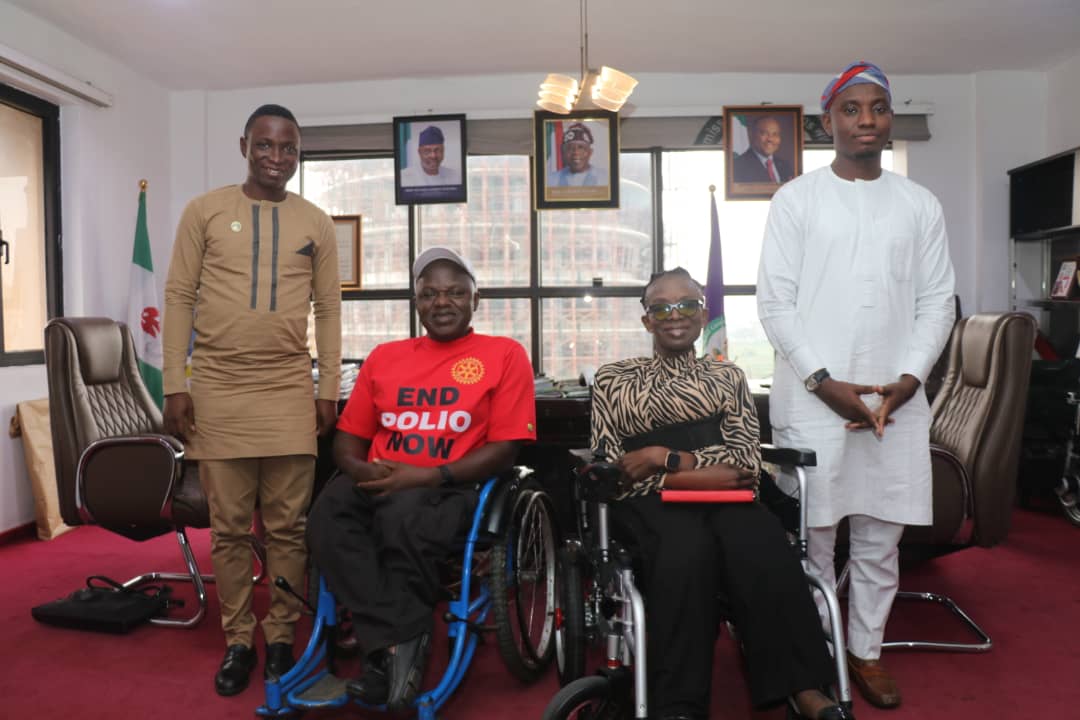
This declaration was made during a high-level meeting held on Monday, July 7, 2025, at the Commission’s headquarters in Abuja, where Chief Gufwan received a delegation from Project Enable Africa, a leading disability rights advocacy group renowned for its grassroots mobilization, policy engagement, and data-driven interventions.
“Inclusion is No Longer Optional—It is a Necessity”
Welcoming the delegation, Chief Gufwan praised Project Enable Africa for its unrelenting work in advancing the rights of persons with disabilities (PWDs), especially through strategic research and advocacy efforts that place data and lived experiences at the heart of their campaigns.
“My greatest desire is to see Nigeria become the most disability-friendly country in the world,” he stated passionately. “With over 35 million persons with disabilities, inclusion is no longer optional—it is a necessity. We cannot afford to leave anyone behind.”
He emphasized that while the government remains committed to advancing disability inclusion, it cannot do so alone. He called for more collaborative efforts from the private sector, civil society organizations, international development partners, and philanthropic institutions.
“The government alone cannot carry the financial responsibility of inclusion,” Chief Gufwan added. “We must leverage partnerships to close the gap and create sustainable impact.”
Project Enable Africa Presents Groundbreaking Research on Disability Law Implementation
The highlight of the visit was the presentation of a nationwide research report by Project Enable Africa, focusing on the status of implementation of the Discrimination Against Persons with Disabilities (Prohibition) Act, 2018 across Nigeria’s 36 states and the Federal Capital Territory.
The report, which was presented by Mr. Michael Ojediran, the Project Director, revealed major developments in disability legislation across the country. According to the findings:
- 23 states have so far domesticated the national disability law by enacting their own disability-specific legislation.
- 15 states have operational agencies dedicated to the implementation of disability-related policies and programs.
The research also provided a detailed evaluation of five critical thematic areas essential to disability inclusion:
- Accessibility – including access to public buildings, transportation, and digital platforms.
- Education – access to inclusive, quality, and equitable education for PWDs.
- Employment Opportunities – including workplace accommodations and inclusive hiring practices.
- Social Protection – the availability and accessibility of welfare programs.
- State-led Interventions – strategic actions taken by state governments in implementing inclusive development.
Mr. Ojediran explained that the aim of the research is to promote transparency, stimulate policy improvements, and track state-level progress in fulfilling the promises of the disability law.
He also unveiled a ranking framework developed by Project Enable Africa to publicly assess and celebrate states that have made commendable strides while inspiring others to follow suit.
“Our intention is not to name and shame, but to name and praise—to reward those states doing well and motivate those lagging behind,” Ojediran said.
A Welcome Development, Says NCPWD
In response, Chief Gufwan hailed the initiative as a bold and timely contribution to the national disability discourse. He noted that the findings of the report would support the Commission’s mandate of monitoring compliance and driving reform, especially at sub-national levels where much of the implementation is expected to occur.
“This aligns perfectly with our strategic vision at the NCPWD,” he said. “We are committed to using this data to enhance advocacy, deepen policy engagement, and guide our interventions across the country.”
The Executive Secretary also pledged the Commission’s full support for Project Enable Africa’s future initiatives and affirmed that collaboration between the Commission and civil society actors like Project Enable Africa will be key to achieving sustainable disability inclusion in Nigeria.
Next Steps: Deeper Collaboration and Inclusive Action
The meeting concluded with mutual commitments to strengthen partnerships between the Commission and Project Enable Africa. Both parties expressed interest in exploring future opportunities in capacity building, inclusive policy formulation, monitoring and evaluation, and public awareness campaigns.
The engagement underscores a growing wave of momentum in Nigeria’s disability inclusion space—a sign that meaningful progress is not only possible, but already in motion. With committed leadership at the helm of the NCPWD and the dedication of advocacy organizations like Project Enable Africa, the future is bright for persons with disabilities in Nigeria.
As the country continues its journey toward full inclusion, one thing is clear: leaving no one behind is not just a slogan—it’s a national imperative.
#DisabilityInclusion #NCPWD #ProjectEnableAfrica #InclusionMatters #AccessibleNigeria #DisabilityRights #PWDsInNigeria #DataForInclusion #LeaveNoOneBehind
Follow The Qualitative Magazine on WhatsApp https://whatsapp.com/channel/0029VanfIB50wajpjGi3JJ1G


