

Abuja, Nigeria — February 10, 2026
The National Association of Persons with Physical Disabilities (NAPWPD) has called for more robust enforcement of Nigeria’s accessibility regulations, warning that weak compliance continues to exclude millions of persons with disabilities from fully participating in national life.
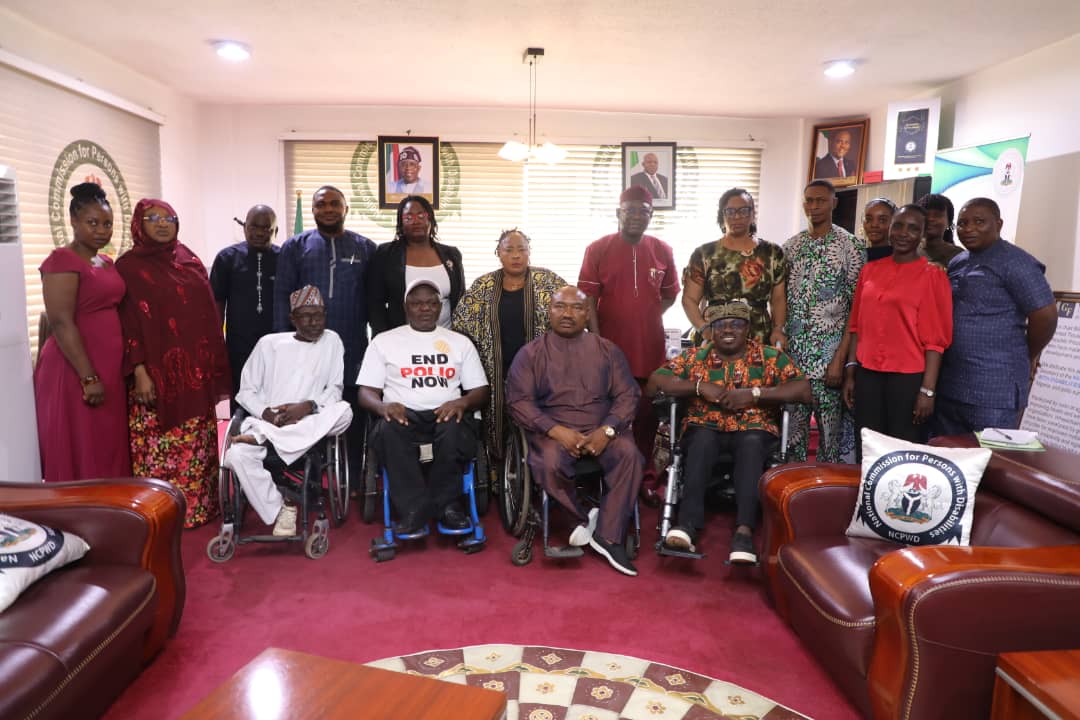
The call was made during a courtesy visit by NAPWPD to the headquarters of the National Commission for Persons with Disabilities (NCPWD) in Abuja, where the Association engaged the Commission on the urgent need to accelerate the implementation of accessibility standards across the country.
The high-level engagement focused on strengthening institutional collaboration and ensuring that existing legal frameworks—particularly the Discrimination Against Persons with Disabilities (Prohibition) Act, 2018—translate into tangible access for persons with disabilities in public and private spaces.
Accessibility Gaps Still Widespread
Speaking during the meeting, Vice President of NAPWPD, Ambassador Mabe Awala Beatrice, raised concerns over persistent inaccessibility in Nigeria’s built environment and service delivery systems, despite clear legal mandates.
She stressed the need for strict enforcement of accessibility standards in public buildings—both old and newly constructed—transportation systems, educational institutions, healthcare facilities, major roads, and other essential public services.
“Accessibility is not a privilege; it is a legal and human rights obligation,” Ambassador Awala stated, noting that many buildings and services across the country remain inaccessible to persons with disabilities.
While commending the NCPWD for its ongoing efforts toward disability inclusion, she sought clarity on the pace of implementation of the Accessibility Regulations, urging the Commission to scale up monitoring, enforcement, and public awareness to drive nationwide compliance.
She further called for stronger collaboration between the Commission and disability organisations, noting that effective enforcement requires coordinated action and community-level engagement.
NCPWD Reaffirms Commitment to Enforcement
Responding on behalf of the Commission, the Director of Compliance and Enforcement, Barrister Nkem Uchebulam, reaffirmed the statutory mandate of NCPWD to protect, promote, and enforce the rights of persons with disabilities in Nigeria.
He assured the delegation that the Commission remains committed to the progressive implementation of accessibility standards, emphasizing that the ultimate objective is full inclusion and equal participation of persons with disabilities in all spheres of society.
“Our responsibility is to ensure that accessibility is no longer optional but mandatory, in line with the law,” Uchebulam said, adding that enforcement measures are being strengthened to address long-standing gaps.
Need for Sustained Dialogue and Collective Advocacy
Also speaking, the Director of Social Integration at NCPWD, Mr. Lawrence Idemudia, described the visit as timely and necessary, stressing that continuous engagement within the disability community remains key to advancing inclusion.
He noted that collective advocacy, open dialogue, and shared accountability are essential in confronting implementation challenges and ensuring disability policies deliver real impact.
“Progress in disability inclusion depends on sustained engagement and unity of purpose,” Idemudia stated.
Commission Highlights Ongoing Initiatives
In his welcome address, the Executive Secretary of NCPWD, Hon. Ayuba Burki Gufwan, outlined several ongoing initiatives, enforcement strategies, and strategic partnerships being deployed by the Commission to promote inclusive infrastructure and equal opportunities for persons with disabilities.
He reaffirmed NCPWD’s readiness to work closely with disability organisations such as NAPWPD to ensure effective enforcement of the Accessibility Regulations across all sectors.
“The Commission recognises that accessibility is the foundation of inclusion. We remain open to collaboration and committed to ensuring that laws protecting persons with disabilities are fully implemented,” Gufwan said.
A Shared Resolve for an Inclusive Nigeria
The meeting concluded with both NCPWD and NAPWPD expressing a renewed commitment to deepen cooperation through sustained dialogue, joint advocacy initiatives, and broader stakeholder engagement.
Both parties agreed that full implementation of accessibility standards is critical to achieving the objectives of the Discrimination Against Persons with Disabilities (Prohibition) Act, 2018, and to building a Nigeria where no one is left behind.
As advocacy groups continue to press for action, the engagement signals a growing determination within the disability community and government institutions to move from policy promises to practical accessibility—one ramp, pathway, classroom, and transport system at a time.
Click the link below to join our WhatsApp channel


