


By Agbo Christian Obiora
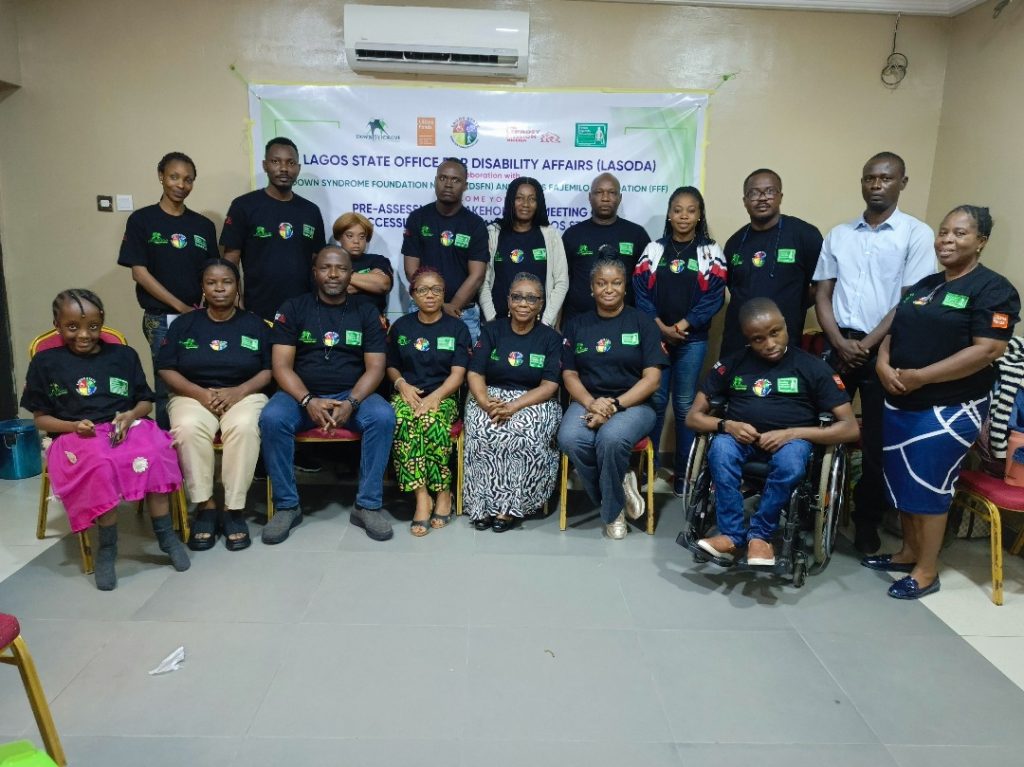
Ikeja, Lagos | June 26, 2025 — A coalition of disability advocates, government stakeholders, and civil society actors gathered at M-Square Hotel in G.R.A., Ikeja, for a powerful call to action: make Lagos State truly accessible for persons with disabilities.
Themed “Advocacy on Compliance by Public Facilities on Disability Accessibility in Lagos State,” the high-powered stakeholders’ meeting was spearheaded by the Down Syndrome Foundation Nigeria (DSFN) and Festus Fajemilo Foundation (FFF), in strategic partnership with the Lagos State Office for Disability Affairs (LASODA). The event was funded by the Liliane Foundation (Netherlands) and The Leprosy Mission Nigeria under the Inclusion First Project.
Accessibility Laws in Place, But Where Is the Implementation?
Despite having the first disability rights law in Nigeria — the Lagos State Special People’s Law of 2011 — and a formidable institutional framework in LASODA, implementation still lags far behind. The law mandates that all public buildings be fitted with ramps, lifts, Braille signage, and accessible restrooms within five years of its passage. Over a decade later, most public facilities remain largely inaccessible.
From faulty elevators to nonexistent ramps, and inaccessible banks to far-flung BRT bus stops, the lived realities of persons with disabilities continue to clash with the lofty aspirations of the law.
A High-Level Dialogue Backed by Action
The meeting was no ordinary talk shop. It marked the beginning of a one-year advocacy campaign focused on improving accessibility in Lagos. Participants — drawn from key government ministries, the private sector, disability rights groups, media, and organized civil society — were not just there to listen. They committed to act.
From an opening prayer to group work sessions, the atmosphere was charged with empathy, urgency, and resolve. “Accessibility is not a privilege,” said Mrs. Nike Denis, National Administrator of DSFN. “It’s a human right. We must make public and private facilities accessible to all, regardless of ability.”
The Executive Director of FFF, Mr. Afolabi Fajemilo, echoed his sentiments: “This is not just about buildings; it’s about dignity, opportunity, and inclusion. Accessibility is the bridge to education, healthcare, and jobs for persons with disabilities.”
Powerful Voices, Bold Commitments
Goodwill messages poured in from government MDAs and partners. LASODA’s General Manager, Mrs. Adenike Oyetunde-Lawal, represented by Dr. Funmilola Adekola, reaffirmed the agency’s commitment to both advocacy and — where necessary — enforcement. “Compliance is ideal,” she said, “but enforcement is our last resort.”
Mr. Pius Ogbu, Programs Lead at The Leprosy Mission Nigeria, emphasized that the meeting was a catalyst for action under the organization’s “Inclusion First” program, supporting 17 disability-focused groups across Nigeria.
Key Highlights from Panel Discussions
- Enforcement Has Been Dormant: LASODA has enforcement powers but has prioritized advocacy. Participants called for symbolic sanctions to trigger broader compliance.
- Lack of Inclusive Designs: Most buildings lack basic accommodations like ramps, signage, and elevators.
- Inaccessible Transport & Banking: BRT systems, banks, and commercial buildings were flagged for failing to meet accessibility standards.
- Digital Inclusion Ignored: Websites and mobile apps of public and private entities often lack accessibility features, excluding users with disabilities.
- Training is Crucial: Both public and private sector staff need training in disability etiquette and customer service.
A Four-Month Accessibility Action Plan Unveiled
The meeting climaxed with the adoption of a time-bound, 4-month action plan, focusing on three pillars: Advocacy, Compliance, and Enforcement.
Advocacy activities include:
- Public campaigns across media platforms and places of worship.
- Creation of an Accessibility Quick Guide.
- Storytelling by disability champions in MDAs.
Compliance strategies feature:
- Accessibility audits of 50 high-traffic buildings.
- Setup of a Disability Support Desk for companies.
- Voluntary “Disability Friendly” certifications for compliant buildings.
Enforcement steps involve:
- Publication of penalties for non-compliance.
- Issuance of compliance notices.
- Launch of a disability accessibility hotline.
- Public sanctioning of at least five major non-compliant facilities.
Looking Ahead: Quick Wins, Not Empty Promises
Participants concluded that real change is possible — not by waiting for full architectural overhauls, but through quick wins like ramps, accessible signage, doorways, parking lots, and disability training for staff.
“The time for excuses is over,” said Barrister Bolarinwa Salami, JONAPWD Lagos Chair. “Lagos has the laws, it has the institutions. What’s missing is consistent enforcement and political will.”
As the meeting ended, one thing was clear: the disability community is no longer begging for inclusion — they are demanding it.
#AccessibilityNow #InclusiveLagos #PWDsRights #DSFN #FFF #LASODA #LilianeFoundation #InclusionFirst #LeprosyMissionNigeria
Follow the The Qualitative Magazine channel on WhatsApp: https://whatsapp.com/channel/0029VanfIB50wajpjGi3JJ1G


