

Lagos, Nigeria – July 14, 2025
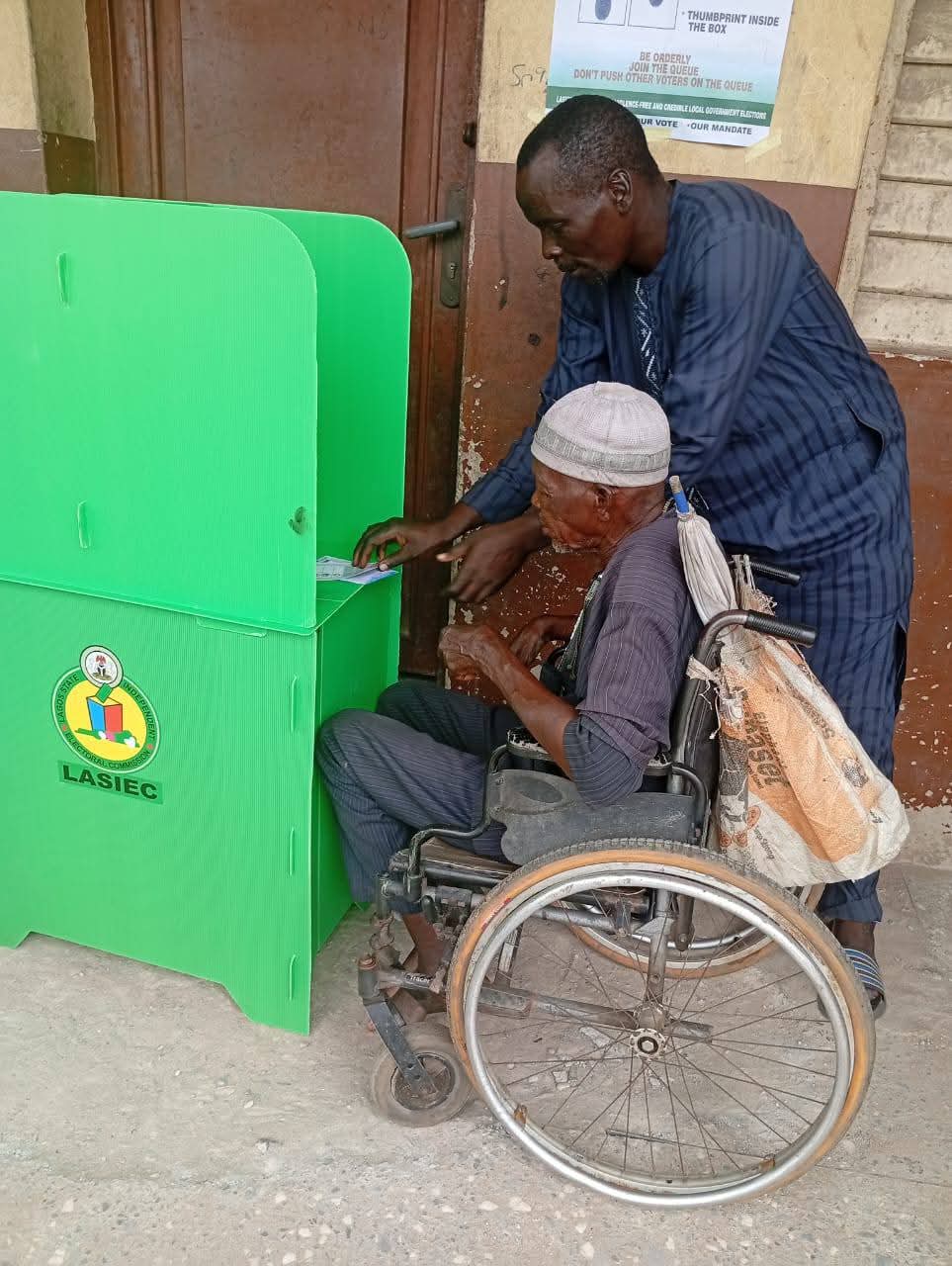
In the wake of the just-concluded Lagos State Local Government Elections, the Campaign for Equal Voting Access for Persons with Disabilities (EVAPWD) has released its preliminary findings — a revealing snapshot of both progress and persistent challenges in the quest for electoral inclusion of persons with disabilities (PWDs) in Nigeria’s most populous state.
The report, based on a statewide survey conducted before and after the elections held on July 12, 2025, highlights a complex mix of commendable gains in accessibility and deep-seated barriers that still hinder equal participation of voters with disabilities.
EVAPWD, an initiative of the Centre for Citizens with Disabilities (CCD), conducted the survey across all 21 Local Government Areas (LGAs) of Lagos State. It captured firsthand experiences from voters with disabilities, aiming to assess the commitment of the Lagos State Independent Electoral Commission (LASIEC) to inclusive democratic practices in compliance with national and state disability laws.
Bright Spots: Priority Voting at Several Polling Units
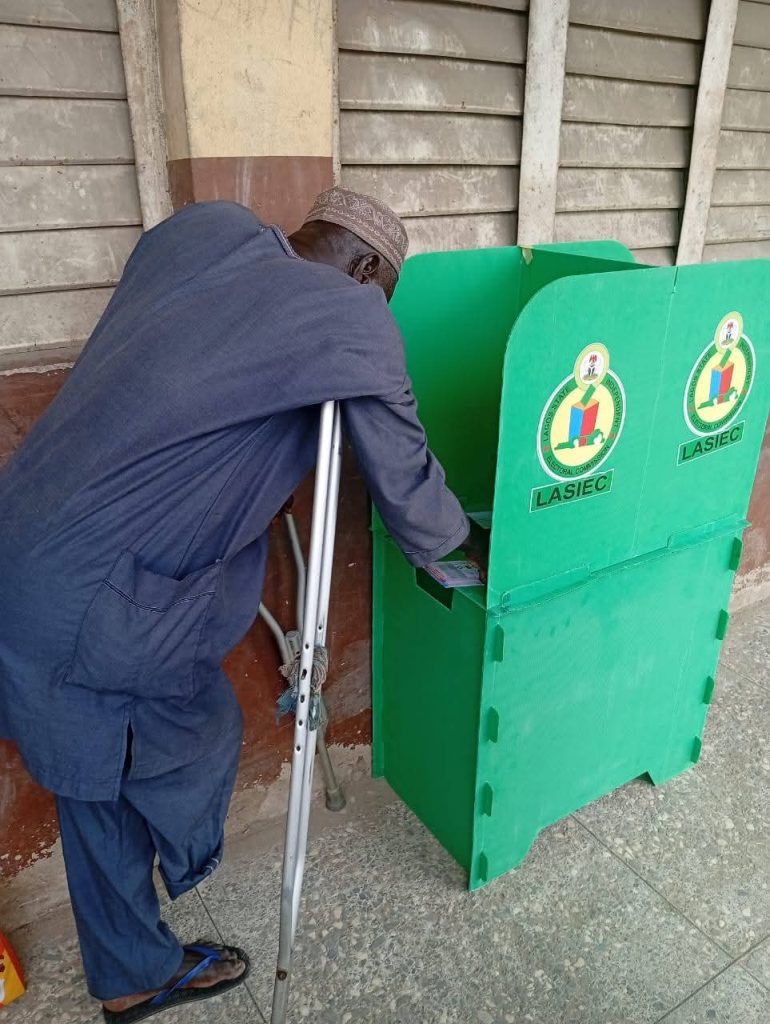
In a major win for the disability community, the report commended LASIEC for its deliberate implementation of priority voting protocols at several polling units. According to EVAPWD, this allowed many voters with disabilities to cast their votes without delays or unnecessary stress.
Some of the well-performing polling units highlighted in the report include:
- Polling Unit 001, Ajeromi-Ifelodun Ward 5
- Polling Unit 020, Mushin Ward
- Polling Unit 001, Apapa Ward 3
- Polling Unit 007, Agege Ward D
- Polling Unit 031, Ikorodu Ward G
- Polling Unit 018, Ojo Ward
“These locations exemplified how thoughtful coordination and training of election officials can create a more inclusive voting environment,” the report stated. “The LASIEC staff stationed there demonstrated commendable awareness and empathy by giving persons with disabilities priority in the voting queue.”
Accessible Locations: A Step in the Right Direction
Beyond priority voting, the EVAPWD report also recognized structural accessibility at some polling units, particularly those situated in flat, step-free environments.

Polling Units such as:
- Unit 053, Ikeja Ward E
- Unit 005, Amuwo-Odofin Ward 7
- Units 003 and 020 in Apapa and Mushin Wards
…were praised for being located in spaces easily navigable by wheelchair users and others with mobility impairments.
“These improvements show that accessible election planning is possible when inclusion is treated as a core value rather than an afterthought,” the report added.
Alarming Gaps: Inaccessibility Still Prevalent
Despite these positive strides, EVAPWD expressed serious concern over numerous polling units that excluded voters with disabilities by design or neglect.

Polling units such as:
- Unit 021, Ifako-Ijaye
- Unit 041, Ikorodu Ward E
- Unit 005, Ikorodu Ward B
- Unit 017, Ikeja Ward A
- Unit 001, Apapa
…were cited as examples of locations that posed significant physical barriers to participation. Several were situated in buildings with staircases, elevated pavements, or narrow entrances without wheelchair ramps or alternative access points.
“These barriers send a silent but dangerous message — that some citizens are less valued than others,” the report stated. “This physical exclusion effectively denies PWDs the right to vote, undermining the credibility of the entire electoral process.”
Absence of Assistive Voting Aids: A Silent Injustice
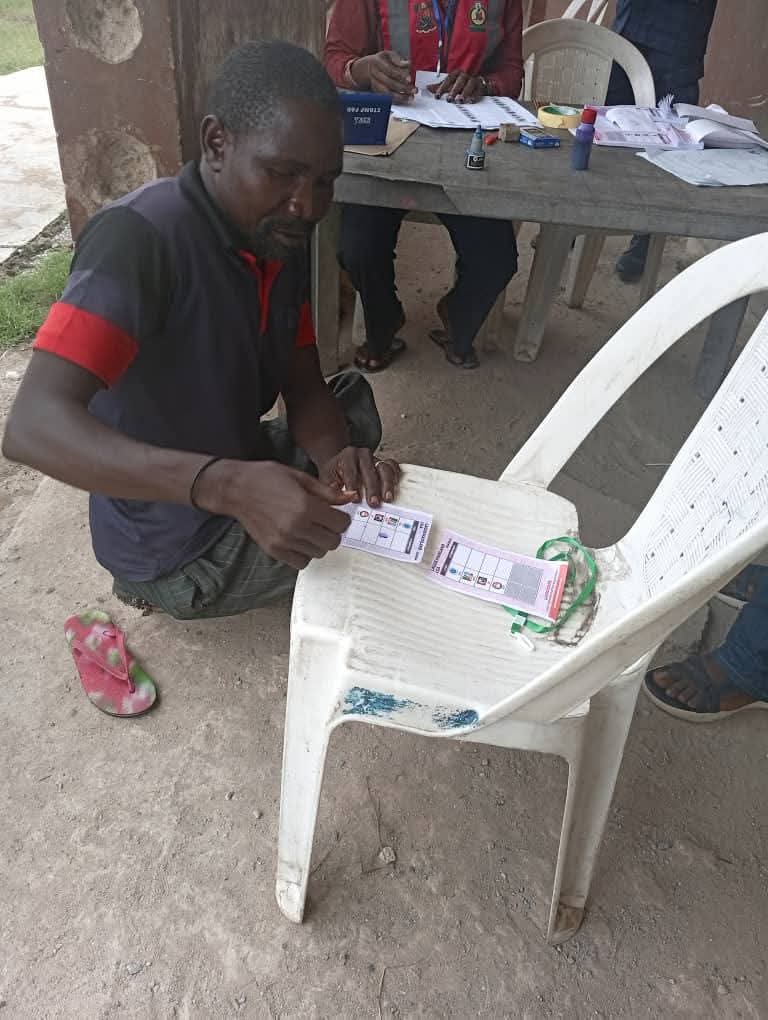
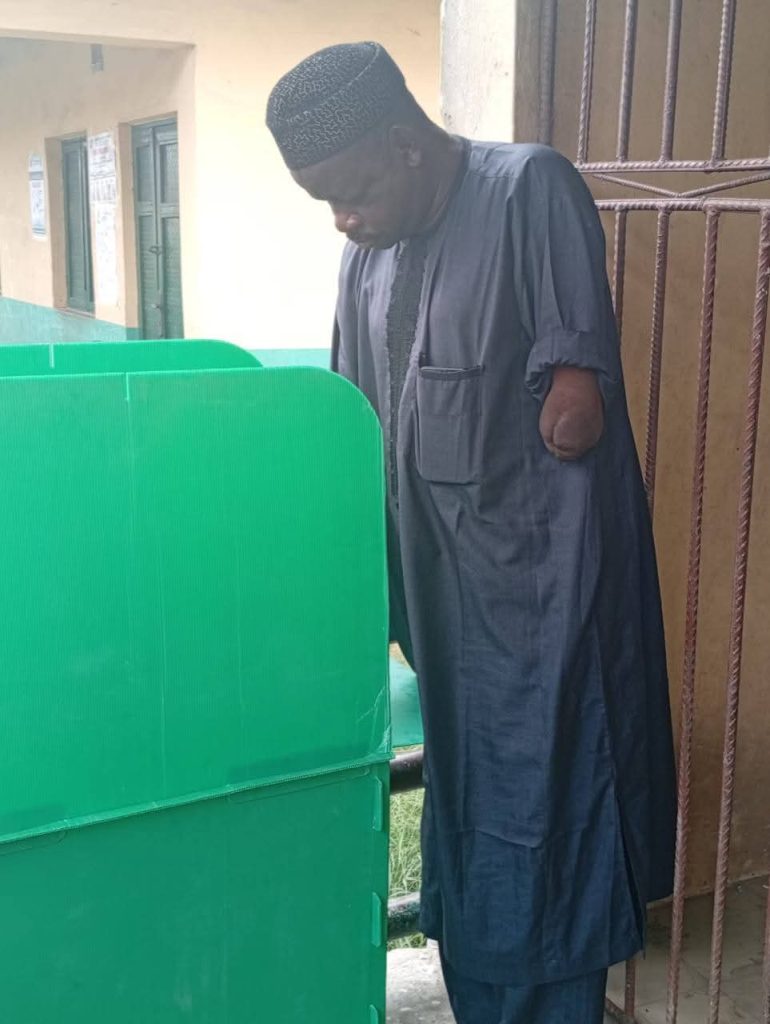
Even more troubling, the survey found that most polling stations lacked assistive materials and support services that are crucial for the participation of blind, deaf, and other sensory-impaired voters.
Essential tools such as:
- Braille ballots
- Magnifying glasses for low-vision voters
- Shaded booths to ensure privacy
- Sign language interpreters for the deaf
- Tactile devices or audio guides
…were either completely absent or grossly inadequate. Instead, most polling units offered only basic signage, which, according to EVAPWD, fell woefully short of meeting the needs of a diverse disability community.
“The absence of these aids means that many PWDs must rely on others to vote, compromising their privacy, independence, and dignity,” the report warned.
Legal Mandates Ignored
The EVAPWD report also raised red flags over LASIEC’s compliance with binding legal frameworks. It cited specific provisions from:
- The Lagos State Special People’s Law
- Section 54 of the Electoral Act, 2022
- The Nigerian Constitution (1999, as amended)
- The INEC Framework on Access and Participation of PWDs
According to the report, many of these statutes require electoral bodies to proactively accommodate persons with disabilities, not just as a moral obligation but as a legal mandate.
“Democracy must mean one person, one vote — and that includes persons with disabilities,” said Godwin Unumeri, Acting Director of CCD. “Any failure to fully include PWDs is not just a technical oversight; it’s a violation of rights.”
A Call to Action: Build on Progress, Bridge the Gaps
While EVAPWD commended LASIEC for taking steps in the right direction, it was clear that significant work remains to be done.
The organization urged LASIEC and all electoral stakeholders — including civil society, political parties, and security agencies — to prioritize disability inclusion in future elections by:
- Designating accessible polling units as a minimum standard
- Providing comprehensive assistive devices for voters with different impairments
- Training electoral officials on disability etiquette and legal rights
- Engaging directly with organizations of persons with disabilities (OPDs) during planning and evaluation.
“This election must serve as a learning curve, not a resting place,” Unumeri emphasized. “Lagos can and must become a model of inclusive democracy in Africa.”
Towards a Truly Representative Democracy
The July 12th elections were a test — not only of democratic machinery but of Nigeria’s commitment to leave no citizen behind. While the EVAPWD preliminary report acknowledges encouraging progress in several locations, the gaps it exposed are a sobering reminder that democracy is incomplete without full and equal participation of persons with disabilities.
As preparations begin for future elections across Nigeria, disability rights advocates are calling for the promises of the law to be matched by the reality on the ground.
After all, in the words of the report: “Equal voting access is not charity — it is citizenship.”


