

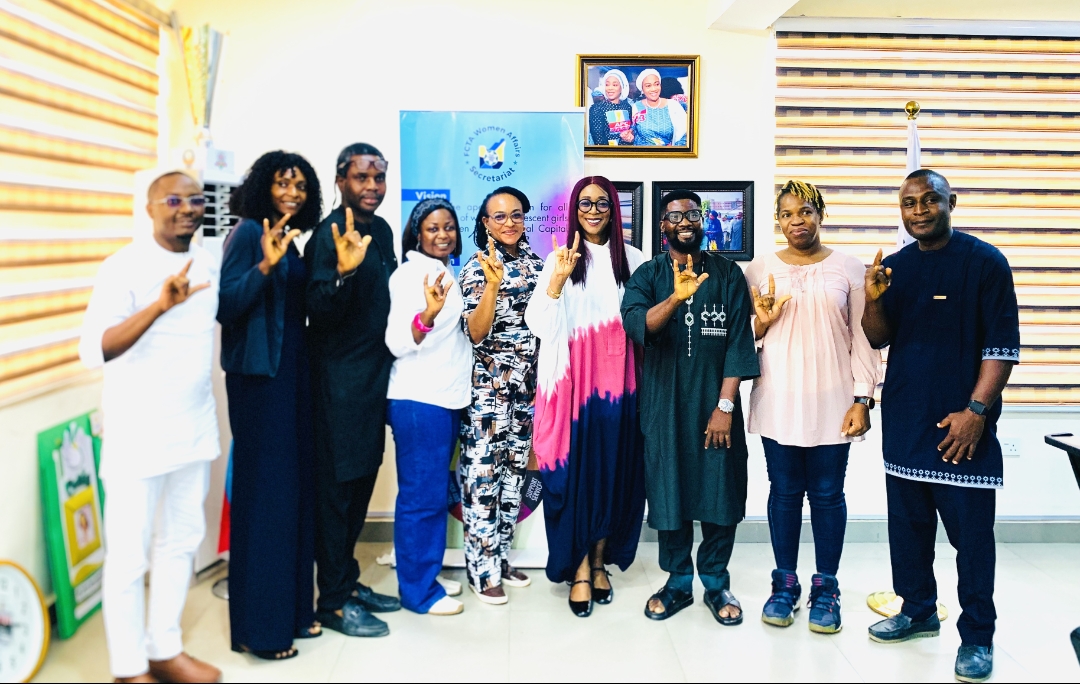
Abuja, Nigeria — In a powerful blend of advocacy, diplomacy, and urgency, the Joint National Association of Persons with Disabilities (JONAPWD), Federal Capital Territory (FCT) Chapter, has called for the immediate establishment of a Disability Agency in the FCT, alongside a series of strategic reforms aimed at improving the lives of Persons with Disabilities (PWDs).
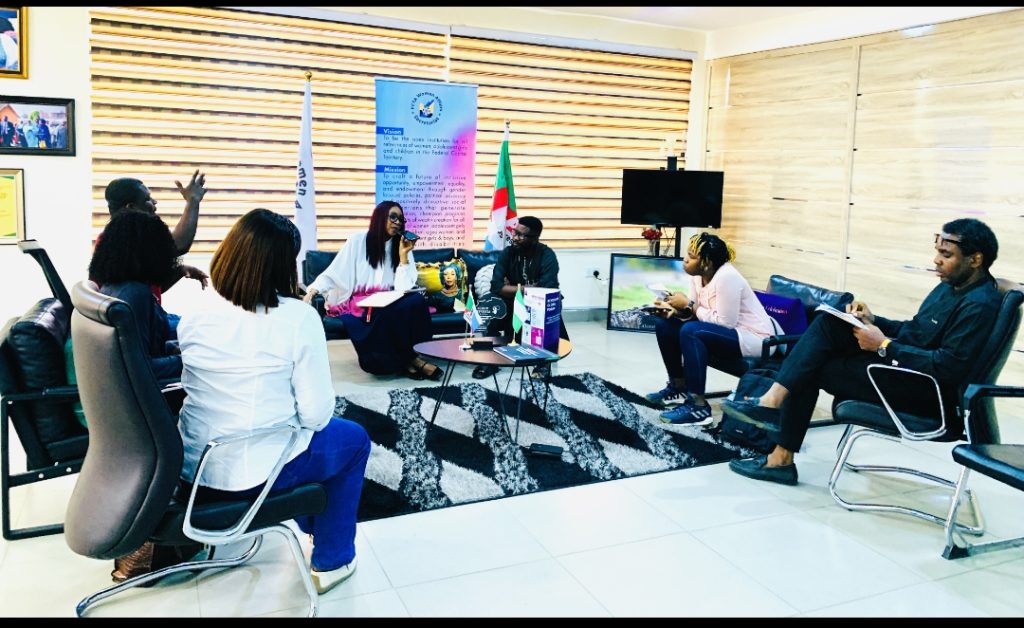
The call was made during a high-level courtesy visit to the Office of the Mandate Secretary, FCT Women and Children Affairs Secretariat, led by the Acting Chairman of JONAPWD FCT Chapter, Ayoade Beyioku-Alase.
Addressing the Mandate Secretary, Dr. Mrs. Dayo Benjamin-Laniyi, alongside directors and senior staff of the Secretariat, Beyioku-Alase delivered a compelling speech that underscored both appreciation for ongoing efforts and a firm demand for accelerated institutional action.
A Warm Commendation, A Strategic Tone
The engagement began on a note of gratitude, as the JONAPWD delegation acknowledged the warm reception and reaffirmed its commitment to working collaboratively with the FCT Administration.
Describing the Mandate Secretary as “Our Mother,” Beyioku-Alase commended her leadership in advancing disability inclusion within the FCT. He particularly highlighted her pivotal role in the development of the FCT Disability Policy Document, describing it as a “monumental step” toward safeguarding the rights and welfare of PWDs.
He also praised the Secretariat for pioneering the establishment of a Disability Desk—an initiative he described as a “gold standard” worthy of replication across other government institutions.
“The strides recorded under your leadership have not gone unnoticed,” he said. “We are proud to identify with you as a worthy ambassador of Persons with Disabilities in the FCT.”
Renewed Hope, Renewed Impact
The JONAPWD leader further extended appreciation to the Renewed Hope Initiative spearheaded by Nigeria’s First Lady, Senator Oluremi Tinubu. He noted that the empowerment of 250 PWDs in the FCT with ₦200,000 each has had an immediate and transformative impact.
According to him, the intervention has restored dignity, provided relief, and reignited hope among beneficiaries and their families.
The Missing Link: A Disability Agency
Despite these commendations, the delegation did not shy away from highlighting a critical gap—the absence of a functional FCT Agency for Persons with Disabilities.
Beyioku-Alase emphasized that while approximately 25 states across Nigeria have domesticated the Discrimination Against Persons with Disabilities (Prohibition) Act, 2018, the FCT remains conspicuously behind within the North Central region.
“The reason is clear,” he stated firmly. “Without a functional agency, policies lack the structure required for effective implementation, monitoring, and enforcement.”
He stressed that establishing the agency would provide the much-needed framework for coordination, accountability, and sustainable inclusion, transforming policies from paper commitments into measurable realities.
Beyond Policy: A Blueprint for Inclusion
The advocacy visit went beyond a single demand, presenting a comprehensive roadmap for disability inclusion in the FCT.
On healthcare access, JONAPWD called for collaboration with the Health Secretariat to ensure free health insurance for PWDs and the deployment of sign language interpreters in key hospitals. Beyioku-Alase noted that financial constraints and communication barriers continue to deny many PWDs access to life-saving care.
In the area of employment, the association urged the enforcement of the statutory 5% employment quota for PWDs across all FCT Secretariats. He described gainful employment as “the most effective pathway out of poverty” and a critical tool for independence and dignity.
The delegation also emphasized the importance of social protection and economic empowerment, calling for inclusive welfare programs and targeted skills acquisition initiatives. According to Beyioku-Alase, empowerment enables PWDs to contribute meaningfully to the economy rather than depend on charity.
Call for Operational Support
Highlighting internal challenges, JONAPWD appealed for an annual subvention and a dedicated office space for its FCT Chapter. The Acting Chairman revealed that the association’s operations are currently sustained through personal contributions—an arrangement he described as unsustainable.
“Stable institutional support will enable us to coordinate effectively, deliver services, and deepen our impact,” he said.
Data, Accessibility, and Accountability
The delegation also drew attention to the need for inclusive infrastructure and data-driven planning. It called on the Secretariat to ensure that all public facilities are accessible through ramps, Braille, and interpretation services, while also integrating disability-specific data into government programs.
“You cannot manage what you do not measure,” Beyioku-Alase emphasized, stressing that accurate data is essential for effective planning and resource allocation.
A Rights-Based Appeal
Framing the advocacy within a legal and moral context, the JONAPWD leader reiterated that their demands are grounded in the Discrimination Against Persons with Disabilities (Prohibition) Act, 2018.
He made it clear that the association is not seeking charity but the full implementation of rights already guaranteed by law.
“Our advocacy is about justice, equality, and sustainable development,” he stated. “When Persons with Disabilities are empowered, the entire society thrives.”
A Partnership for Progress
In closing, Beyioku-Alase reaffirmed JONAPWD’s readiness to serve as a strategic partner to the FCT Administration, bringing community reach, lived experience, and technical expertise to the table.
He expressed optimism that with political will and sustained collaboration, the FCT can become a model of disability inclusion in Nigeria.
The meeting ended on a hopeful note, with a shared vision of building a Federal Capital Territory where no one is left behind and every person—regardless of ability—can live with dignity and achieve their full potential.
Click the link below to join our WhatsApp channel


