

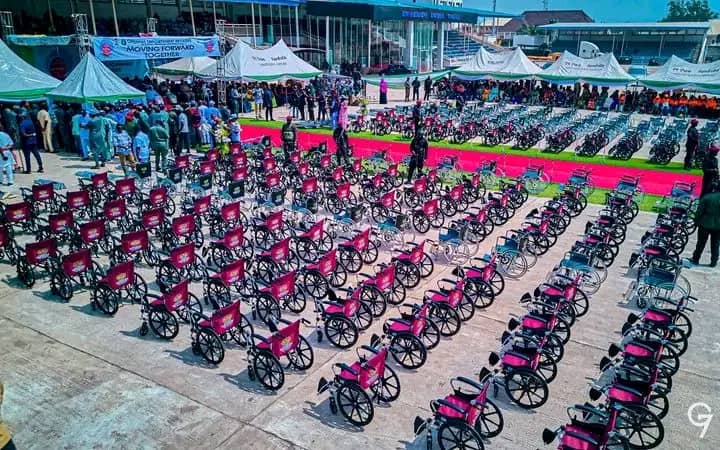
In a powerful show of inclusive leadership, the Chairman of Koko-Besse Local Government Area, Hon. Sirajo Usman Dan Gwaggo, has put smiles on the faces of 75 persons with disabilities through the distribution of wheelchairs and cash grants aimed at strengthening economic independence and social inclusion.
The empowerment programme, held on Monday at the council secretariat, drew beneficiaries from all 12 wards of the local government area, reflecting what many described as a deliberate effort to ensure no community was left behind. The initiative was implemented in partnership with the Jos-based non-governmental organisation, Beautiful Gate Handicapped People Centre, known for its longstanding work in rehabilitation and support for persons with disabilities across Nigeria.
For many of the beneficiaries, the moment was more than just the receipt of mobility aids and financial support—it was a restoration of dignity, independence and hope.
“Government Belongs to Everyone”
Addressing the gathering, Hon. Gwaggo reaffirmed his administration’s commitment to inclusive governance, stressing that development must touch the lives of every citizen, particularly vulnerable groups.
“This support is to ensure you are not left behind,” he declared. “Government belongs to everyone, including persons living with disabilities.”
The chairman explained that the intervention was designed not only to ease mobility challenges but also to promote economic self-reliance. In addition to brand-new wheelchairs, each beneficiary received ₦5,000 to support small-scale businesses and other income-generating activities.
He urged recipients to make judicious use of both the wheelchairs and the financial assistance, noting that empowerment goes beyond distribution—it requires responsibility and commitment from beneficiaries to improve their living conditions.
A Lifeline for Mobility and Livelihood
For persons with disabilities in many parts of Nigeria, access to assistive devices remains a major barrier to participation in education, employment and community life. Wheelchairs are not just mobility tools; they are gateways to opportunity, visibility and freedom.
Stakeholders at the event noted that by combining assistive devices with small cash grants, the initiative addressed both physical and economic barriers—two critical factors that often reinforce cycles of poverty among persons with disabilities.
Many beneficiaries expressed gratitude, describing the intervention as timely and life-changing. Some shared that the support would enable them to revive small trading activities, reduce dependency on family members and regain confidence in social interactions.
NGO Applauds Chairman’s Compassion
In her remarks, the Director of Media of Beautiful Gate Handicapped People Centre, Sandra Yilgwan, commended the council chairman for what she described as a compassionate and impactful intervention.
She emphasized that sustainable change requires collaboration and praised the local government for setting a strong example of partnership between public institutions and civil society organisations.
According to her, the organisation remains open to working with government bodies, philanthropists and other stakeholders to expand similar interventions across communities.
However, she also stressed that the long-term success of the programme will depend largely on how effectively beneficiaries utilise the support provided.
“Empowerment achieves its purpose when it transforms lives permanently,” she noted, urging recipients to see the assistance as a stepping stone to greater economic participation.
Strengthening Inclusion in Kebbi
The initiative signals a growing recognition among local authorities in Kebbi State that disability inclusion must move from rhetoric to action. By reaching beneficiaries across all wards, the council demonstrated a commitment to equity, representation and grassroots impact.
Observers say such collaborations between government and non-governmental organisations are crucial to bridging service gaps, especially in rural communities where persons with disabilities often face multiple layers of exclusion.
As wheelchairs rolled out of the council secretariat and beneficiaries clutched their modest but meaningful cash support, the atmosphere was filled with renewed optimism. Beyond the distribution ceremony, the day represented something deeper—a reminder that inclusive governance is not just a policy ideal but a responsibility.
For the 75 beneficiaries in Koko-Besse, Monday was not just another day at the council secretariat. It was the day hope moved again.
Click the link below to join our WhatsApp channel


