

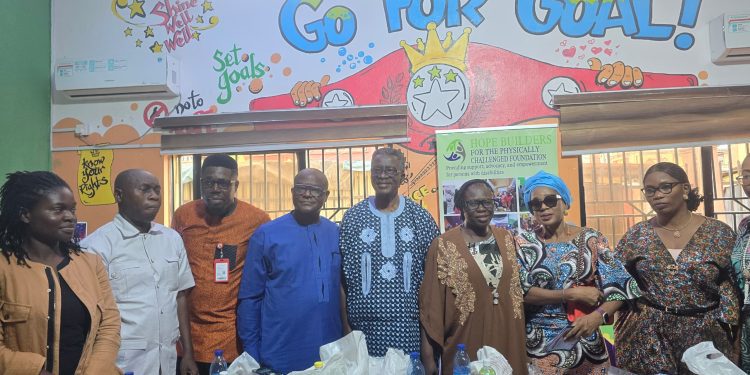
— Mushin, Lagos: A Beacon of Resilience and Enterprise Shines Bright on MSME Day
In a compelling display of resilience, innovation, and inclusion, Hope Builders for the Physically Challenged Foundation on Friday, June 27, 2025, hosted a landmark event in Mushin, Lagos, to commemorate this year’s United Nations Micro, Small, and Medium-sized Enterprises (MSME) Day. The gathering was not only a celebration of entrepreneurship but a powerful advocacy platform amplifying the voices and talents of entrepreneurs with disabilities (PWDs) across Nigeria.
Held under the theme “Empowering Abilities, Building Inclusive Economies,” the event featured an exhibition, lectures, and personal testimonies that left attendees inspired and called the nation to action. At its core, it was a clear message: entrepreneurs with disabilities are not liabilities—they are leaders, innovators, and contributors to Nigeria’s economic growth.
Empowering Strength, Not Celebrating Limitations
In her stirring keynote address, Dr. Christiana Kehinde Akinrinmade, founder of Hope Builders and a visually impaired entrepreneur herself, set the tone for the event.
“We are not here to celebrate limitations but strengths. We want the world to see that there is ability in disability,” she said. “MSME Day gives us a vital opportunity to showcase our skills and our contributions to national development.”
A former banker turned fashion designer and trainer despite her visual impairment, Dr. Akinrinmade exemplifies the entrepreneurial spirit she aims to nurture. She noted that while much of the Foundation’s work is self-funded, meaningful progress demands sustained support from government agencies and corporate organizations.
“We’ve moved from packaging liquid soap in table water bottles to using branded containers. Our production quality is improving, and so is our vision,” she remarked with pride.
Dr. Akinrinmade, who designs and sews clothes herself, urged society to eliminate stigma and embrace inclusivity in economic and development planning.
Stories That Inspire: From Adversity to Innovation
The exhibition showcased several success stories that stood as living proof of what PWDs can achieve when given the opportunity.
Kehinde Adegboye, a blind entrepreneur, presented her homemade potato chips and fresh vegetables. Her voice rang with determination as she described how she learned chip-making from a neighbor and now produces and sells despite lacking modern equipment.
“I spend over N15,000 every time I produce,” she explained. “The cost of oil is high, and without an oven, the process is labor-intensive.”
Despite these constraints, Adegboye continues to push forward and called on the government to organize regular exhibitions for PWDs and fund equipment for micro-enterprises. She also addressed a harmful societal myth that often impedes her business.
“People think patronizing us will make them disabled. That mindset must change. Disability is not contagious—we are clean, capable, and even employ able-bodied people.”
Mobility and logistics, she said, remain one of her greatest challenges. Traveling from Ikorodu to Mushin with her products was a major feat, highlighting the urgent need for transport and market-access support.
From Furniture to Leathercraft: A Story of Reinvention
Perhaps one of the most powerful narratives of the day came from Prince Bayo Oluwole Tiwon, a blind artisan who transitioned from furniture-making to leatherwork after losing his sight in 2016.
“I refused to beg,” he stated firmly. “I learned how to make bags through a training facilitated by the Foundation. Now, I make laptop bags, school bags, and soaps.”
Though Tiwon’s craftsmanship is top-notch, he lamented the lack of patronage and deep-seated discrimination he still faces.
“I sold soap today but not a single bag. People often overlook our work because of our condition. We’re not asking for pity—just equal opportunity,” he said.
He recalled a painful experience on public transport when a passenger disembarked just because he was blind, an incident he said still haunts him. Yet, he draws strength from the solidarity of others and his passion for his work.
Striving for Self-Reliance Amid Barriers
Another exhibitor, Kola Olumide, who operates a small soap and disinfectant factory in Ogun State, shared his story of determination.
“Being blind is not a reason to sit idle. We are trying our best not to depend on others. I sold well today, and I thank God,” he said.
Olumide highlighted two urgent issues: infrastructure and finance. He explained how street traders block walkways, making navigation difficult for visually impaired individuals.
“Discrimination adds to our burden. Accepting our disability is hard enough. We shouldn’t have to battle stigma too,” he added.
He appealed to the government for clear walkways, startup grants, and soft loans, insisting these would significantly boost productivity and independence.
Community Support and the Call for Inclusion
Justice Funmi Asaolu, a key supporter of the Foundation, commended the courage of the entrepreneurs and purchased from every single exhibitor.
The Foundation also covered transportation costs for participants—a move that many hailed as crucial for accessibility.
One of the beneficiaries, Adigun Olawale, expressed heartfelt gratitude.
“She has done so much for us,” he said, referring to Dr. Akinrinmade. “From training to empowerment, she’s been consistent. May God bless her.”
Olawale called on the Foundation to ensure gender inclusion in future training programs. Organizers explained that while training had initially been open to all, limited funding in recent years had focused on women. However, following feedback from participants, the Foundation is now reviewing strategies to accommodate both men and women equitably.
Advocating for National Action
In her rousing remarks, Dr. Motunrayo Meranda, another guest speaker, called for multi-sectoral collaboration to uplift businesses owned by PWDs.
“Small is mighty. MSMEs represent growth, dignity, and independence,” she said. “Let us not romanticize the barriers. People living with disabilities are enterprising; they only need our support to reach their full potential.”
She underscored a powerful truth:
“Development is not charity—it is justice. Inclusion is not a favor—it is a right.”
She encouraged government agencies, private sector players, religious institutions, and NGOs to act now—invest, mentor, promote, and partner with PWD-led businesses.
“Don’t Keep Silent”: A Stirring Challenge to PWDs
Engineer John Paul, another speaker, encouraged persons with disabilities to embrace their strength and challenge the status quo.
“This part of the world does not adequately support PLWDs, but we are getting there,” he said. “In other countries, the support structure is robust—we can do the same.”
He urged entrepreneurs with disabilities to speak out, be visible, and support one another.
“Your strength comes from within. Don’t keep silent. Speak up, stand out, and be each other’s support system.”
Agencies and Stakeholders Join the Movement
The event also featured impactful presentations from representatives of the Small and Medium Enterprises Development Agency of Nigeria (SMEDAN), Nigerian Association of Small Scale Industrialists, and the Living Vine Mental Health Foundation. These organizations applauded the entrepreneurs and pledged stronger support going forward.
A Statement of Strength, Not Sympathy
The 2025 MSME Day celebration hosted by Hope Builders was far more than a ceremonial event—it was a bold declaration of the capabilities and determination of persons with disabilities. It spotlighted their entrepreneurial energy, resilience against all odds, and potential to drive national development if only society would meet them halfway.
With the right infrastructure, funding, training, and—most importantly—a change in societal attitudes, entrepreneurs with disabilities can transform Nigeria’s economic landscape.
Let the celebration of MSMEs not end with applause. Let it spark action, inclusion, and transformation—for everyone.


