

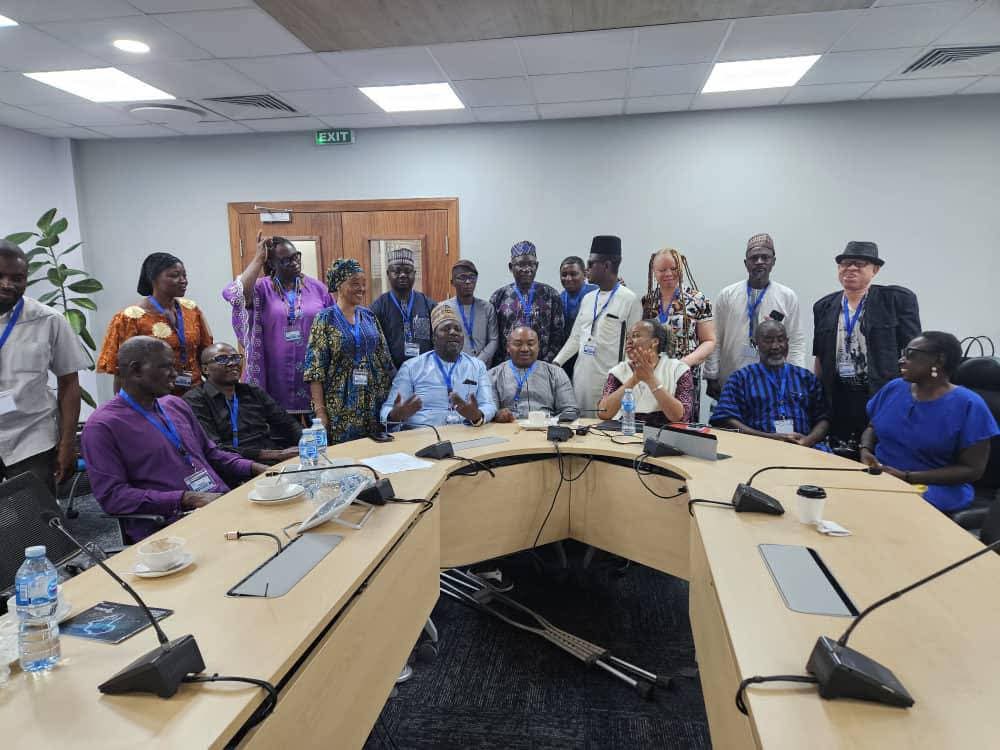
The drive toward a more inclusive Nigeria received a significant boost on Friday, November 21st, 2025, as the Gombe State Commission for Persons with Disabilities (GSCPWD) joined other key stakeholders in a strategic consultative meeting with the leadership of the World Bank. The high-level engagement, held at the World Bank Country Office in Abuja, brought together Task Team Leaders and disability inclusion advocates to review how ongoing World Bank–supported projects are integrating the needs and rights of Persons with Disabilities (PWDs) across the country.
The meeting served as a robust platform to examine the current state of disability inclusion in national development initiatives—particularly those financed by the World Bank—and to chart a more ambitious pathway for ensuring that no person with a disability is excluded from Nigeria’s development priorities.
Representing both the Gombe State Commission and the broader North-East region, the Executive Chairman of GSCPWD, Dr. Adamu Ishaq, delivered a powerful intervention that resonated with the gathering. He commended the World Bank for its continued support to the National Commission for Persons with Disabilities (NCPWD) and the six state-level Commissions—including Gombe State—while acknowledging the meaningful progress already made in mainstreaming disability inclusion across several ongoing World Bank projects.
However, Dr. Ishaq emphasized that mainstreaming alone is not enough. He called for deliberate, disability-specific interventions within World Bank programs—similar to the dedicated initiatives the Bank has successfully created for women’s empowerment. According to him, such targeted efforts are necessary to address the persistent gaps that still hinder PWDs from fully benefiting from development activities.
He highlighted that without intentional investments tailored to disability inclusion, PWDs could remain at the margins of economic, social, and infrastructural development, despite the country’s broader development goals.
Responding to the submissions, the World Bank leadership reaffirmed the institution’s strong policy commitment to disability inclusion. The team encouraged disability leaders to sustain their engagement and ensure that development projects at federal and state levels reflect the lived realities and needs of persons with disabilities. They stressed that the Bank’s operational frameworks continue to prioritize inclusive development and will guide upcoming project designs and implementation strategies across Nigeria.
For many advocates present, the consultative session underscored the growing recognition that disability inclusion is not a charitable gesture but a core development requirement. The dialogue highlighted the urgent need for stronger collaboration between international development partners and Nigeria’s disability institutions to close long-standing inclusion gaps.
The GSCPWD, through its participation, signaled the readiness of Gombe State to lead within the region on disability-inclusive development. The Commission’s proactive push for specialized World Bank interventions is seen as a bold step toward ensuring that programs—from social protection to livelihoods and infrastructure—deliver measurable impact for persons with disabilities.
As Nigeria continues its journey toward a more equitable future, this meeting represents a major milestone. Strengthening the partnership between the World Bank and disability stakeholders not only amplifies the voices of PWDs but also lays the groundwork for a development agenda where inclusion is not an afterthought but a guiding principle.
The Gombe State Commission affirmed its commitment to continue working with both national and international partners to advance the rights, opportunities, and full participation of persons with disabilities. The hope is that this renewed engagement with the World Bank will translate into transformative, disability-responsive projects that uplift communities and drive sustainable change across Nigeria.


