

8 December 2025
In a landmark move aimed at strengthening the rights, welfare, and inclusion of persons with disabilities (PwDs), the Federal Government of Nigeria has introduced a dedicated disability budget line across all ministries, departments, and agencies (MDAs). The step is being celebrated as a major shift from donor-dependent interventions to sustainable, government-funded disability inclusion.
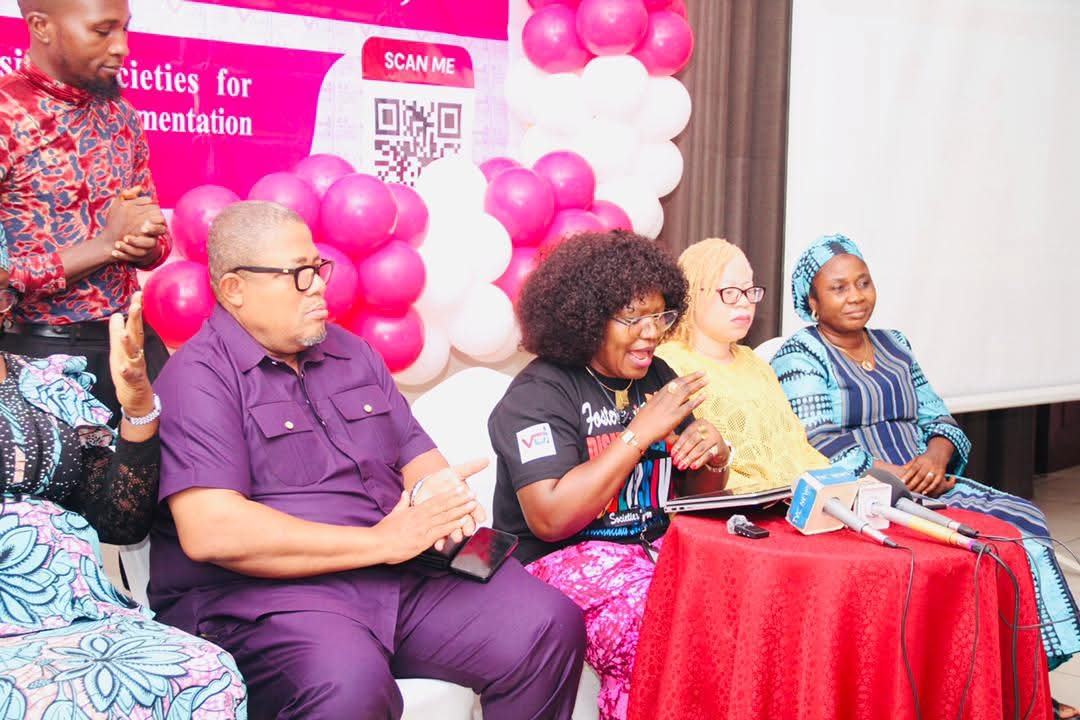
The announcement was made by the Acting Director, Family Health Department, Federal Ministry of Health and Social Welfare, Dr. John Ovuoraye, during an event organised by the Voice of Disability Initiative (VDI) in Abuja to commemorate the 2025 International Day of Persons with Disabilities (IDPD).
A Historic Turning Point
According to Dr. Ovuoraye, the new budget line—approved by the Minister of Health, Prof. Muhammad Ali Pate—will ensure that persons with disabilities are fully integrated into national planning, resource allocation, and service delivery.
He emphasized that Nigeria cannot achieve Universal Health Coverage (UHC) while more than 38 million persons with disabilities continue to face systemic exclusion due to inaccessible public services and inadequate funding.
“This is government funding dedicated strictly to inclusion,” he explained. “It is separate from donor contributions and the Basic Health Care Provision Fund. For the first time, each ministry now has its own disability component within the national budget.”
What the New Budget Line Will Support
Ovuoraye stated that the disability budget line will finance much-needed accessibility upgrades across health facilities and public institutions, including:
- Proper disability-compliant ramps
- Widened doors and accessible toilets
- Colour-coded building navigation for persons with visual impairments
- Trained support personnel for people with hearing and dual sensory disabilities
These measures align with the 2024 federal directive mandating all tertiary and federal health institutions to upgrade accessibility—now backed by predictable, structured funding, rather than piecemeal, ad-hoc modifications.
He noted that the initiative is anchored in the Discrimination Against Persons with Disabilities (Prohibition) Act, 2018, which obligates every ministry to implement sector-specific disability strategies.
“Every ministry has responsibilities under the 2018 Act,” he said. “This budget line allows us to fulfil our mandate without waiting for donors. It is a crucial starting point, even though the population of persons with disabilities requires more resources.”
Civil Society Demands Full Implementation
Executive Director of VDI, Catherine Edeh, commended the government’s step but urged stakeholders to move beyond policy declarations to full-scale implementation.
She stressed that persons with disabilities—especially women and girls—continue to face daily challenges including:
- Higher risks of gender-based violence
- Exclusion from schools
- Employment discrimination
- Barriers in accessing healthcare and justice systems
“These are not abstract statistics,” she remarked. “They are lived experiences. Disability inclusion is not charity; it is a right.”
Edeh called for stronger disability-inclusive justice systems, institutional reforms that embed accessibility across all sectors, and increased collaboration between government, civil society, international partners, and the disability community.
NCPWD Reaffirms Enforcement Commitment
Also speaking at the event, Director, Compliance & Enforcement at the National Commission for Persons with Disabilities (NCPWD), Mr. Nkem Uchegbulam, reiterated that legal protections under the Disability Act are active and enforceable.
“We mark this year’s International Day of Persons with Disabilities differently,” he stated. “The Commission will enforce all laws mandating disability mainstreaming across society.”
He noted that with the new budget line, enforcement will gain stronger institutional support.
The Call for Accountability
Chief Facilitator at Edoka Trauma Care Centre, Ene Ede, emphasized the importance of accountability and ongoing monitoring. She urged civil society organisations and the media to take an active role in holding MDAs accountable for proper implementation of the disability budget provisions.
“Persons with disabilities must be involved in all stages of project design and implementation,” she said.
A New Era for Disability Inclusion in Nigeria
The introduction of a dedicated disability budget line marks one of the most significant federal actions toward disability inclusion in recent decades. With structured funding, clearer mandates, and heightened public advocacy, Nigeria may finally be on the path toward building a society where every citizen—regardless of disability—can thrive with dignity, equity, and equal opportunity.


