

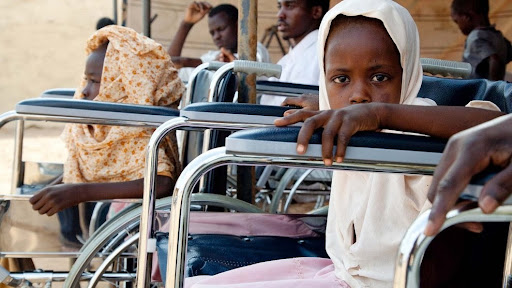
As the world commemorated the 2025 International Day of Persons with Disabilities (IDPD) on Wednesday, the Centre for Citizens with Disabilities (CCD) issued a powerful call to action, urging governments, development partners, private sector actors, and communities across Nigeria to prioritize disability inclusion as a key pathway to achieving sustainable social progress.
With this year’s IDPD theme, “Fostering Disability-Inclusive Societies for Advancing Social Progress,” CCD said the observance offers not just a moment of reflection, but an urgent reminder that Nigeria cannot realise true development if millions of its citizens with disabilities continue to face systemic barriers that keep them excluded from opportunities.
In a statement signed by its Acting Director, Mr. Godwin Unumeri, the organisation lamented that despite the existence of strong global and national frameworks—the UN Convention on the Rights of Persons with Disabilities (CRPD) and Nigeria’s own Discrimination Against Persons with Disabilities (Prohibition) Act 2018—persons with disabilities still encounter overwhelming challenges in virtually every aspect of life.
‘Progress Exists, But Gaps Remain Huge’ — CCD
According to CCD, persons with disabilities continue to face heightened poverty, limited access to decent and safe employment, exclusion from social protection systems, inaccessible environments, and widespread stigma that undermines their dignity and participation.
“These challenges are deepened by their exclusion from governance structures, political processes, leadership positions, and community decision-making platforms,” the organisation noted. “As a result, their voices and lived experiences remain largely absent in the policies meant to address their needs.”
CCD stressed that excluding persons with disabilities from societal development is not only discriminatory but counterproductive to Nigeria’s aspirations for sustainable growth.
A National Call for Urgent Action
Highlighting the centrality of disability inclusion to the Sustainable Development Goals (SDGs), particularly Goals 4, 8, 10, 11, and 17, CCD warned that Nigeria risks falling behind if disability issues continue to be treated as an afterthought.
The organisation emphasized that national development frameworks must intentionally integrate disability perspectives—especially in planning, policy implementation, and resource allocation. Social progress, the group argued, cannot be achieved when millions remain locked out of education, healthcare, employment, infrastructure, and political representation simply because of disability.
CCD’s Major Recommendations to Advance Inclusion
In line with the 2025 IDPD theme, CCD outlined strategic actions that government and key stakeholders must urgently adopt to build a truly inclusive Nigeria:
1. Mainstream Disability Inclusion Into All Policies
CCD insists that both state and non-state actors must embed disability inclusion into all programmes, policies, and public initiatives. Inclusivity, participation, and accountability must be the standard in national development processes.
2. Ensure Access to Inclusive, Quality Education
The organisation called for safe, accessible, and well-equipped schools. It stressed the need for trained teachers, accessible learning materials, and disability-friendly school designs to close the widening education gap.
3. Expand Economic Opportunities and Inclusive Employment
CCD urged employers in public and private sectors to embrace disability-inclusive recruitment, equal pay, accessible workplaces, and vocational training tailored to various disability types. The group also demanded the removal of barriers limiting access to financial services.
4. Promote Political Participation and Disability Leadership
Empowering persons with disabilities to participate fully in political processes and leadership spaces, CCD said, is vital to strengthening Nigeria’s democracy and promoting equality in national agendas.
5. Develop Accessible Public and Private Infrastructure
From transportation to healthcare facilities, urban designs, and communication platforms, the Centre stressed that accessible infrastructure is not a privilege but an absolute necessity for equal participation in society.
6. Include Persons With Disabilities in Sustainable Development Efforts
CCD urged the integration of disability perspectives into climate change adaptation, agriculture, environmental management, and food security programmes, noting that persons with disabilities possess valuable insights that improve community resilience.
A Future Rooted in Equity and Dignity
As the global community marked IDPD 2025, CCD described the observance as a “renewed call to rebuild Nigerian society on the pillars of equality, dignity, accessibility, and shared prosperity.”
“We must act with urgency and commitment to create inclusive communities where every person, regardless of gender, disability, or background, can enjoy equal rights, contribute meaningfully to society, and realise their full potential,” the statement concluded.
The organisation reaffirmed its readiness to continue working with government institutions, civil society, development partners, and the disability community to build a Nigeria where no one is left behind.
With millions of Nigerians living with disabilities, CCD’s message stands as a critical reminder: a nation cannot claim social progress while leaving some of its most resilient citizens behind.
Follow the The Qualitative Magazine channel on WhatsApp: https://whatsapp.com/channel/0029VanfIB50wajpjGi3JJ1G


