

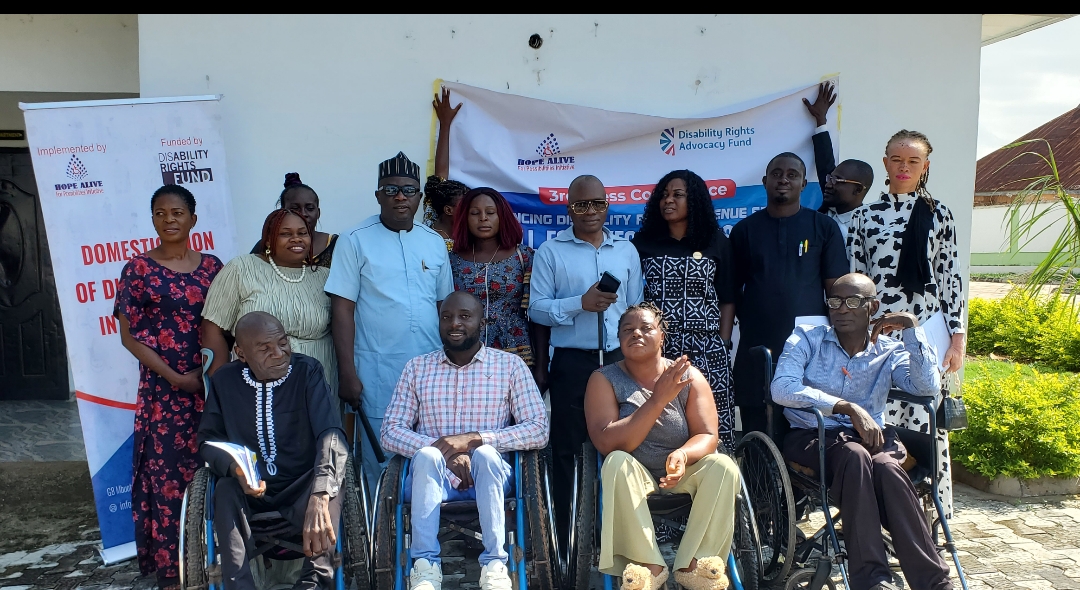
Makurdi, Nigeria — August 5, 2025 — The disability community in Benue State has issued a resounding call to action following a historic development: the passage of the Benue State Disability Rights Bill by the State House of Assembly on August 1, 2025. At a joint press conference held in Makurdi on Monday, representatives of leading disability advocacy groups, Hope Alive for Possibilities Initiative (HAPI) and the Joint National Association of Persons with Disabilities (JONAPWD), Benue State Chapter, urged Governor Hyacinth Alia to give the bill his immediate executive assent, calling it a defining moment for social justice in the state.
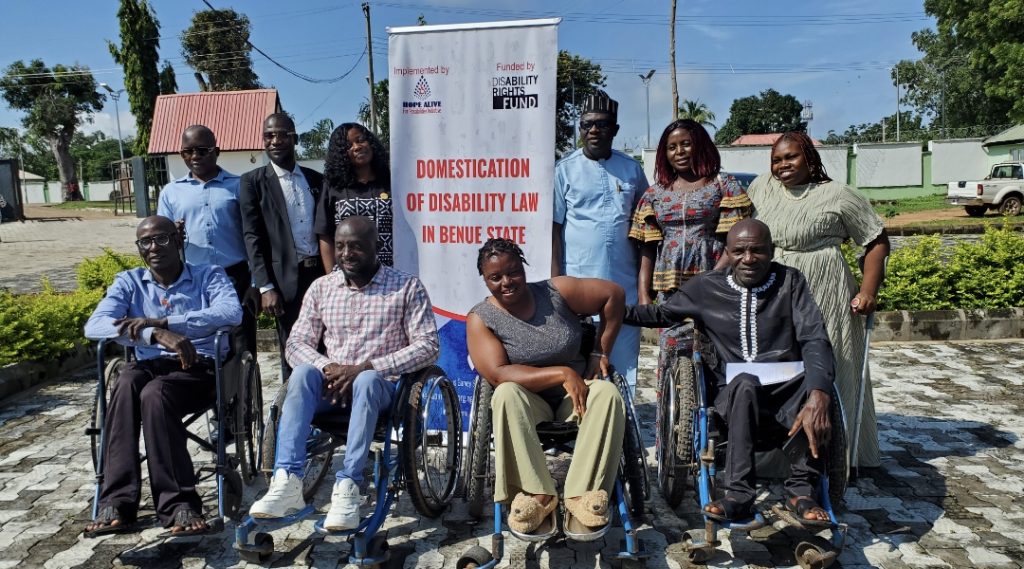
The press briefing, held at the Bureau of International Cooperation and Development (BICD), gathered disability rights advocates, civil society organizations, media practitioners, government stakeholders, and development partners in what many described as a celebration of resilience and advocacy.
A Long Road to Justice and Dignity
Opening the event, Aver Akighir, Executive Director of HAPI, described the bill’s passage as more than a legislative milestone — “it is a validation of years of persistent advocacy, resilience, and hope,” she said. “This is a bold step toward a more inclusive, just, and equitable Benue State, where no one is left behind.”

Akighir emphasized that the community was not just gathered to celebrate, but to demand decisive action. “We respectfully urge His Excellency, Governor Hyacinth Alia, to assent to this bill without delay. Political will must now meet public interest.”
The Bill, which was initially submitted by the Governor as an executive bill in December 2024, establishes a framework for the legal protection and social inclusion of persons with disabilities in Benue State — a population that makes up more than 15% of the state’s citizens, according to the Joint National Association of Persons with Disabilities (JONAPWD).
Why Executive Assent Cannot Wait
The organizations warned that despite the existence of the 2018 national disability law, the absence of an enforceable state framework has left thousands of Benue residents exposed to daily discrimination, limited access to services, and systemic neglect.
“With this bill now passed, the only thing standing between exclusion and protection is the Governor’s signature,” read a joint statement by HAPI and JONAPWD. “Executive assent will transform this bill into a tool for justice—empowering access to education, healthcare, employment, political participation, and access to justice for persons with disabilities across the state.”
They noted that signing the bill into law would not only demonstrate leadership and compassion but also align Benue with international and national disability rights obligations.
A Collective Achievement
The statement praised the Benue State House of Assembly for listening to the voices of marginalized communities and demonstrating that inclusive governance is possible. They also paid tribute to development partners, traditional rulers, government ministries, the media, and most especially persons with disabilities—women and girls in particular—for their bravery and tireless advocacy.
Special recognition was extended to the former Attorney General and Commissioner for Justice, the Secretary to the State Government, and the Bureau of International Cooperation and Development (BICD) for their technical input and facilitation of key engagements with the executive branch. Ministries such as Women Affairs, Education, and other MDAs were also commended for their collaboration.
“We salute every member of the disability community who lent their voices, lived experiences, and strength to this advocacy. You are the heartbeat of this achievement,” said Akighir.
The Real Work Begins Now
While the bill’s passage marks a victory, the organizations cautioned that the real challenge lies in implementation. Among their immediate demands post-assent are:
- Establishment of a Disability Commission with adequate funding and operational independence.
- Dedicated budget lines for assistive technologies, inclusive education, and disability-sensitive healthcare.
- Enforcement of the 5% employment quota for persons with disabilities in civil service recruitment.
- Political appointments of qualified individuals with disabilities into key decision-making roles.
- Public awareness campaigns to combat stigma and misinformation.
- Accessibility audits of government buildings, hospitals, schools, and public transportation systems.
- Official recognition of JONAPWD as the umbrella body for persons with disabilities in the state.
“We must ensure this law is not just on paper. It must be felt in classrooms, clinics, job centres, polling stations, and every public space. Implementation is where dignity becomes reality,” Akighir asserted.
A Direct Appeal to Governor Hyacinth Alia
In their concluding message, the groups issued a heartfelt plea to the Governor:
“Your Excellency, Rev. Fr. Hyacinth Alia, this is a historic opportunity to be remembered as the Governor who institutionalized dignity for thousands of your citizens who have been invisible for too long. We appeal to your conscience and commitment — sign the Benue State Disability Rights Bill into law.”
The Path to a Truly Inclusive Benue
Hope Alive for Possibilities Initiative (HAPI) and the Joint National Association of Persons with Disabilities (JONAPWD), Benue State Chapter, pledged their continued collaboration with government agencies, civil society, and international partners to ensure the full enforcement of the law once signed.
“We envision a Benue State that truly leaves no one behind — a state where disability is not a barrier to participation, progress, or protection,” the joint statement declared.
Media’s Role in the Journey Ahead
The Executive Director also used the platform to thank the media for their crucial role in amplifying disability issues. “We ask that you continue to shine your light on these issues with the same urgency and depth that you’ve shown today,” she said.
As anticipation builds for the Governor’s assent, one message rang loud and clear from the halls of the BICD in Makurdi: inclusion delayed is dignity denied.


