

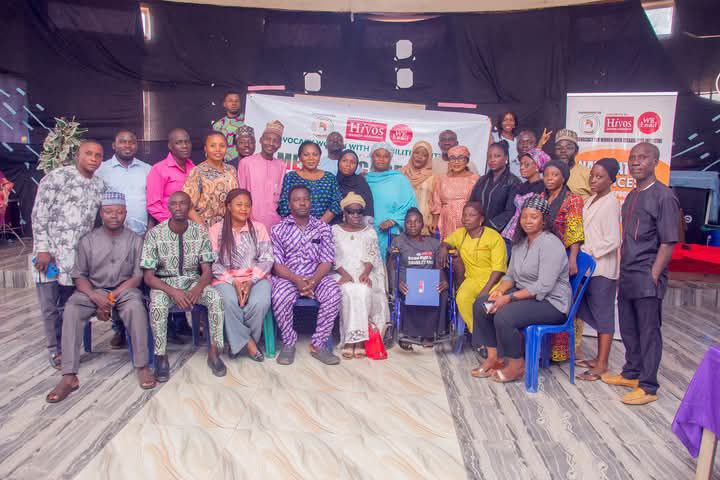
In a landmark effort to improve the portrayal of persons with disabilities (PWDs) in the media, the Advocacy for Women With Disabilities Initiative (AWWDI) has trained over 20 journalists in Nasarawa State on disability-inclusive reporting.
The training, held in Lafia, aimed to equip media practitioners with the tools and knowledge to transform how disability-related stories are framed. It sought to challenge outdated stereotypes and present PWDs as capable individuals who contribute meaningfully to society.
Transforming the Narrative
Speaking during the event, Mr. Kola Jayeoba, the Program Manager of AWWDI, emphasized that the media’s role in shaping public perception of disability is critical. He explained that the training focused on promoting more accurate, dignified, and inclusive reporting.
“Our goal is to move away from narratives that portray persons with disabilities as mere victims or vulnerable groups,” Jayeoba said. “Instead, we want to highlight their achievements, talents, and contributions to society.”
The training covered key aspects of inclusive journalism, including the appropriate use of disability-related language, framing stories that uplift rather than marginalize, and conducting interviews with individuals with disabilities respectfully.
“By empowering journalists with these skills, we hope to dismantle stereotypes and promote inclusivity,” Jayeoba added.
A Call for Accessibility
The program manager also stressed the need for systemic changes to ensure that PWDs are fully included in public life. He urged journalists to amplify the importance of incorporating sign language interpreters in all public events, religious gatherings, and educational institutions.
“The government and stakeholders must understand that inclusion is not optional. It is a right. Language interpreters are essential to carry everyone along, whether in schools, churches, mosques, or other public spaces,” Jayeoba noted.
Legislative Challenges
Mr. Jayeoba further pointed out the limitations in the operations of the Nasarawa State Disability Rights Commission, highlighting that its budget currently falls under the Ministry of Women Affairs. According to him, this dependency hinders the commission’s effectiveness.
“To ensure better service delivery, the commission must operate independently. The Nasarawa State House of Assembly should urgently amend the law to allow for direct budget allocation and establish a standing committee for the commission,” he said.
Addressing Reproductive Health and Sexual Rights
In a groundbreaking move, the training also addressed the often-overlooked issue of sexual and reproductive rights for PWDs. Jayeoba called on journalists to raise awareness about these rights, stressing that PWDs have the same sexual and reproductive health needs as anyone else.
“The media should educate the public about the sexual and reproductive rights of PWDs. They must have access to family planning services and contraceptive methods without discrimination,” he said.
Government Accountability
Speaking at the event, Mrs. Asaba Aversion, AWWDI’s Nasarawa State Coordinator, called on the government to do more to enforce the state’s Disability Protection Law.
“We need to ensure that no member of our community is forced into street begging. This can only be achieved if the government enforces the law and prioritizes the empowerment of PWDs,” Aversion said.
She urged the state government to ensure that public buildings are made accessible to PWDs, adding that providing employment opportunities, scholarships, and appointments for PWDs would give them a much-needed sense of belonging.
Participants Reflect
The training drew participants from print, electronic, and online media platforms. For many of them, the session was an eye-opener.
“This training has challenged me to rethink how I report on disability issues,” said one participant. “It’s about more than telling stories—it’s about telling them responsibly and inclusively.”
A Step Toward Inclusion
The AWWDI training represents a significant step in fostering disability-inclusive reporting in Nasarawa State. It also underscores the broader mission of creating a society where PWDs are not only seen but heard, valued, and included.
As the media practitioners return to their respective platforms, it is hoped that their work will inspire a shift in public attitudes, encouraging greater respect for the rights and dignity of persons with disabilities. The initiative stands as a powerful reminder that the media has a critical role to play in building a more inclusive future for all.


