

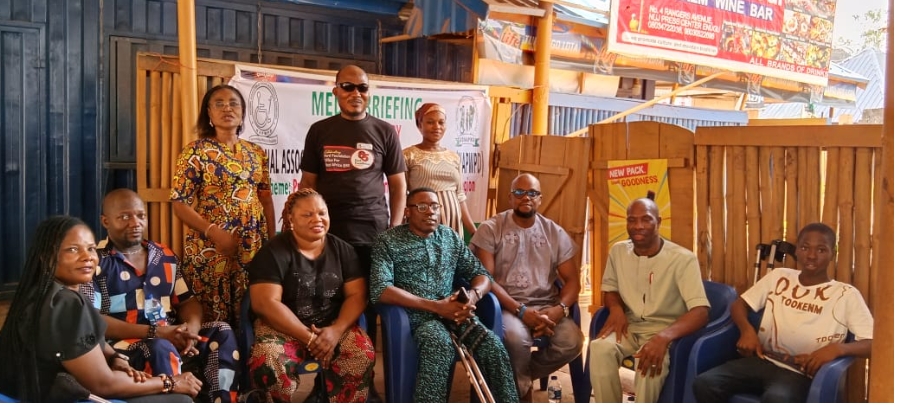
In a strong and uncompromising call for change, the National Association of Persons with Physical Disabilities (NAPWPD) has raised the alarm over the continued exclusion of persons with disabilities across Nigeria’s South-East, urging governments to move beyond promises and take decisive action.
At a media briefing held in Enugu, the association painted a troubling picture of neglect, systemic barriers, and weak enforcement of laws meant to protect one of the country’s most vulnerable populations.
Speaking on behalf of the group, Comrade Ugochukwu Okeke, Team Lead of the NAPWPD South-East Advocacy Group, delivered a message that was both urgent and resolute: existing laws mean little without implementation.
Laws Without Impact
Nigeria’s landmark Discrimination Against Persons with Disabilities (Prohibition) Act was enacted to safeguard the rights of persons with disabilities and ensure their full participation in society. However, according to NAPWPD, the reality on the ground tells a different story.
Despite the legal framework, millions of persons with disabilities remain shut out of public life, governance, and economic opportunities.
“Implementation remains weak,” the association stated, stressing that the gap between policy and practice continues to widen, especially in the South-East.
Barriers Everywhere
From inaccessible government buildings to non-inclusive transportation systems, the challenges confronting persons with disabilities are both visible and systemic.
The association highlighted several persistent issues:
- Public infrastructure that ignores accessibility standards
- Limited access to quality and inclusive education
- Widespread discrimination in employment
- Transportation systems that exclude rather than include
These barriers, NAPWPD noted, are not just inconveniences—they are violations of fundamental human rights.
“Inclusion Is Not Charity
In one of the most powerful moments of the briefing, the association emphasized a message that cuts to the heart of the issue:
“Inclusion is not charity—it is a fundamental human right.”
The group rejected the notion of sympathy-based interventions, instead demanding structural reforms that guarantee equal opportunities and dignity.
“We are not asking for special treatment; we are demanding equal opportunities and full participation in society.”
Call to Action for State Governments
NAPWPD did not mince words in outlining what must be done.
The association called on South-East state governments to:
- Domesticate and fully implement disability laws
- Establish functional disability commissions in states where they do not exist
- Ensure all public infrastructure complies with accessibility standards
According to the group, anything short of these actions will continue to entrench exclusion and inequality.
Political Inclusion: A Missing Link
Beyond infrastructure and services, the association stressed the urgent need for political representation.
NAPWPD urged policymakers to reserve political positions and legislative seats for persons with disabilities, arguing that inclusion in decision-making spaces is key to addressing the unique challenges faced by the community.
“Nothing about us without us” remains a guiding principle, the group implied—one that Nigeria must begin to take seriously.
The Role of Media and Stakeholders
Recognizing the power of storytelling and public perception, the association also called on the media to step up.
By amplifying disability issues and portraying persons with disabilities in a dignified and empowering light, the media can help dismantle stigma and reshape societal attitudes.
NAPWPD further urged civil society organizations, development partners, and other stakeholders to collaborate in driving inclusive policies and programs that promote both economic empowerment and social integration.
A Renewed Commitment to Advocacy
As the briefing drew to a close, the association reaffirmed its determination to keep pushing for change.
NAPWPD pledged to intensify advocacy efforts, engage with government institutions, and mobilize its members toward a shared vision—a society where disability is not a barrier to opportunity, participation, or dignity.
The Bigger Picture
For millions of Nigerians living with disabilities, the issues raised are not abstract—they are daily realities.
The message from Enugu is clear:
the time for rhetoric is over—what is needed now is action.
And until inclusion becomes the norm rather than the exception, advocacy groups like NAPWPD are making it clear—they will not be silent.
Click the link below to join our WhatsApp channel


