

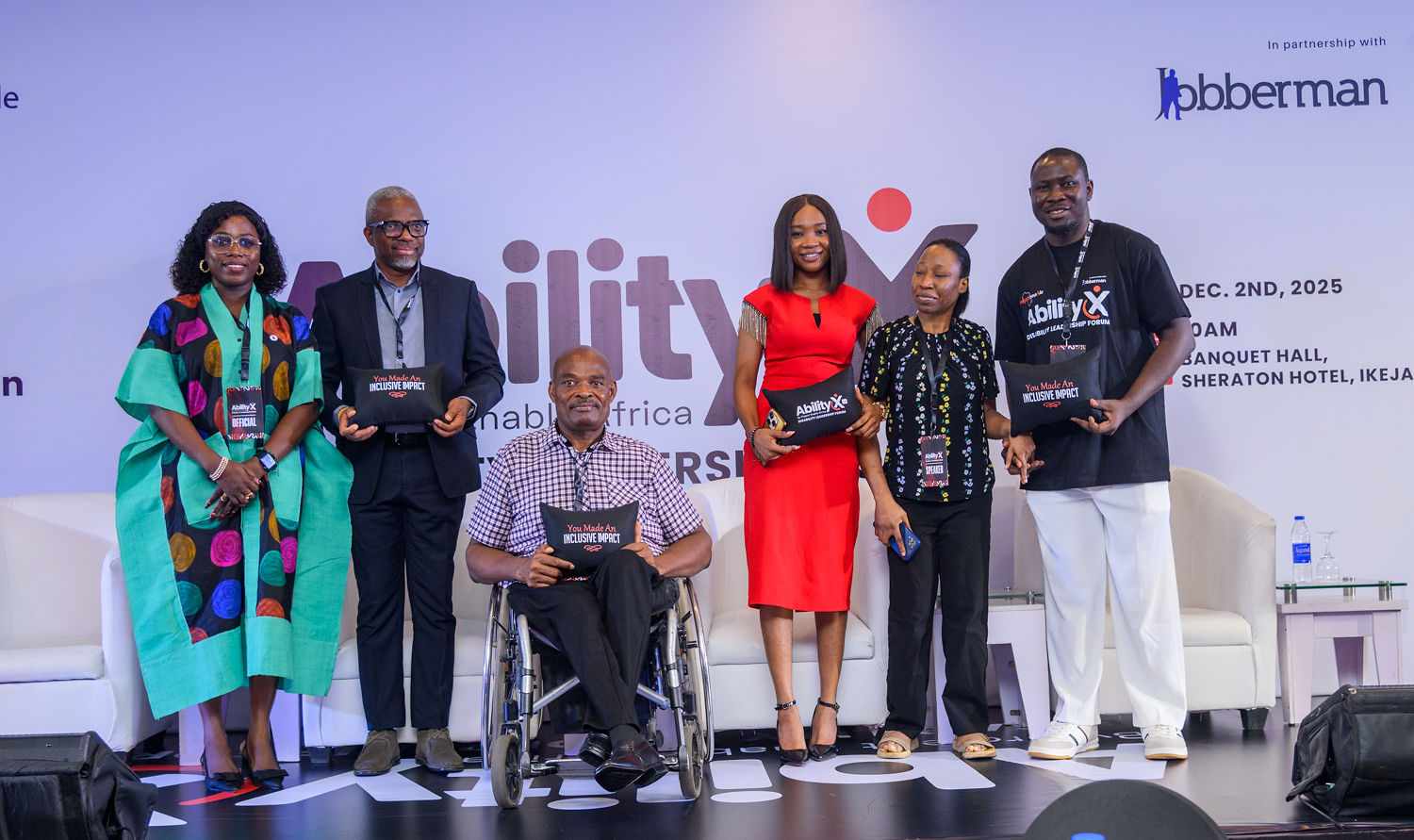
Stakeholders across government, the private sector, civil society, and the disability community have called for a more intentional use of technology, data, policy, and innovation to drive sustainable inclusion for Persons with Disabilities (PWDs) in Nigeria.
This call was made at the AbilityX 2025 Conference, organised by Project Enable Africa in partnership with Jobberman Nigeria and other strategic partners. The high-impact conference, held in Lagos, convened under the theme “The Future of Disability Inclusion in Nigeria.”
The event attracted over 300 participants, including policymakers, business leaders, innovators, development practitioners, and disability advocates, creating a vibrant platform for cross-sector dialogue and action-oriented solutions.
Participants critically examined Nigeria’s disability inclusion landscape, highlighting persistent gaps in policy implementation, employment opportunities, healthcare access, infrastructure, and representation. Beyond identifying challenges, stakeholders showcased practical and scalable solutions capable of accelerating inclusion across multiple sectors.
In his opening remarks, Dr. Kola Olugbodi, Board Co-Chairman of Project Enable Africa, underscored the enormous but underutilised potential within Nigeria’s disability community. He noted that the country’s estimated 30 million persons with disabilities represent a significant talent pool that remains largely untapped due to systemic barriers. Dr. Olugbodi called for deliberate policy reforms, empowerment strategies, and meaningful representation to unlock this potential and drive national development.
The conference featured a rich mix of plenary sessions, breakout discussions, and fireside chats, addressing critical areas such as inclusive data and budgeting, healthcare, finance, media representation, hospitality, employability, and workplace inclusion.
Jobberman Nigeria played a leading role, hosting two impactful sessions on inclusive employment and service excellence. Speaking during the employment session, Esther Obele stressed that inclusive workplaces are a fundamental right, not a favour, urging employers and policymakers to embed accessibility, equity, and fairness into recruitment processes and organisational culture.
In the Customer Service session, Oluwajuwonlo Esho highlighted the role of customer experience in driving loyalty and long-term business sustainability. He positioned excellent, inclusive service delivery as a powerful tool for retention, growth, and competitive advantage, especially in a diverse society.
Delivering the keynote address, Temi Dalley, Group Executive at Sterling Financial Holdings, challenged prevailing narratives around disability. She emphasised that inclusion is not optional or charitable, but a strategic advantage that strengthens institutions and economies. Dalley urged stakeholders to move beyond awareness campaigns and commit to measurable actions that produce tangible impact.
One of the major highlights of AbilityX 2025 was the AbilityX Impact Awards, which celebrated organisations and individuals making outstanding contributions to disability inclusion. Award recipients included Access Tech Innovation and Research Centre, MTN, and Adejobi Adewoye, whose efforts continue to set benchmarks for inclusive practice.
In his closing remarks, Olalekan Owonikoko, Executive Director of Project Enable Africa, reaffirmed the organisation’s commitment to translating conference conversations into sustained, real-world action. He noted that true inclusion goes beyond dialogue, requiring implementation, accountability, and strong collaboration among stakeholders.
AbilityX 2025 concluded with a renewed sense of urgency and collective responsibility, reinforcing the message that Nigeria’s inclusive future is achievable—if action matches intent.
Click the link below to join our WhatsApp channel


