

By Agbo Christian Obiora
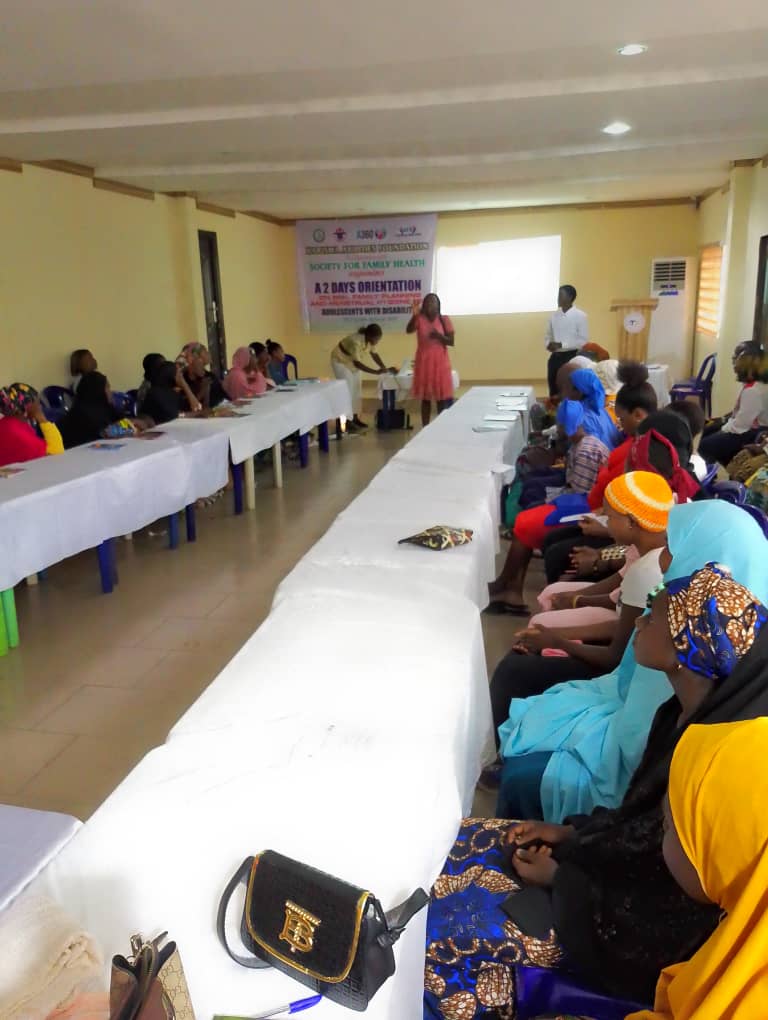
LAFIA, Nasarawa State — In a groundbreaking move to promote inclusive access to health education, the Society for Family Health (SFH), through its Adolescent 360 (A360) Initiative, in collaboration with KARISMA Abilities Foundation, organized a two-day orientation programme designed to empower adolescent girls and young women with disabilities with vital knowledge on menstrual hygiene, reproductive health, and family planning.
Held from October 23rd to 24th, 2025, at Tazu Luxury Hotel, Lafia, the training brought together an inspiring group of young women — including those with hearing, visual, and physical impairments — as well as a few without disabilities. The initiative aimed to equip them with essential information, build their confidence, and encourage informed decision-making about their bodies, health, and future.
Transforming Lives Through Knowledge and Inclusion
From the moment the programme began, there was an air of excitement and purpose. The opening session featured the National Anthem, followed by a warm welcome address from Mrs. Jessica Ayuba, Executive Director of KARISMA Abilities Foundation, who set the tone for what would become two days of learning, inspiration, and empowerment.
In her remarks, Mrs. Ayuba encouraged participants to actively engage and learn, emphasizing that the facilitators were experts committed to sharing accurate and practical knowledge.
A touching goodwill video message from Mrs. Veronica Uwajeh, Founder of KARISMA Abilities Foundation, was played during the opening. She commended the courage of the participants and reaffirmed the foundation’s mission to empower girls with disabilities through health education, self-awareness, and life skills. She also appreciated A360 for its collaboration, describing the training as “a step toward inclusive and equitable access to reproductive health information for all.”
Representatives from the Nasarawa State Disability Commission, including Mrs. Esther Andrew (Coordinator for Persons with Visual Impairments) and Mrs. Bridget Christopher (Coordinator for Persons with Hearing Impairments), lauded the initiative. They encouraged the participants to take advantage of the rare opportunity to learn and share, calling the training “a beacon of hope for girls who are often left out of such crucial conversations.”
Day One: Breaking Barriers and Building Confidence
The technical sessions began with Mrs. Faith Ochono, Quality Focal Person for A360, who introduced the Society for Family Health as one of Nigeria’s foremost organizations championing universal health coverage, social justice, and gender equality.
She explained that A360’s core mission is to empower adolescent girls and young women to make informed decisions about their sexual and reproductive health, particularly those from vulnerable and marginalized backgrounds.
Following her presentation, Mrs. Igomu Grace Enehi, Quality Focal Person II (A360), led a highly interactive session on “Sexual and Reproductive Health, Family Health, and Menstrual Hygiene: Learning to Stay Clean and Confident.” She broke down sensitive topics with simplicity and clarity, helping participants understand body changes, hygiene practices, and how to manage menstruation with confidence and dignity.
The session emphasized that menstruation is a natural and healthy part of life, not a source of shame or stigma. Participants were taught how to track their menstrual cycles, recognize reproductive health warning signs, and maintain good personal hygiene.
Mrs. Mildred Morgan, Adolescent Health Desk Officer, complemented the discussion by debunking common myths surrounding menstruation and puberty. She provided real-life examples and practical answers to questions raised by participants.
Day One ended on a cheerful note, as over 80 participants shared a meal together and reflected on what they had learned, expressing excitement about returning for the second day.
Day Two: Deepening Understanding and Strengthening Voices
The second day began with an energizing recap session led by Mrs. Faith Ochono, during which participants enthusiastically shared key takeaways from Day One. Representatives from each disability group — hearing, visual, and physical — took turns highlighting lessons learned, showcasing strong engagement and understanding.
Mrs. Ochono then facilitated a lively discussion on ovulation and fertility, explaining in simple terms how ovulation works and its importance in family planning and reproductive health.
The day’s main session, titled “Understanding Sexual and Reproductive Health: Your Body, Your Rights, Your Choice,” was delivered by Mrs. Igomu Grace Enehi. She discussed critical issues such as body autonomy, consent, and personal boundaries. In her words:
“Your body belongs to you. Consent means you agree by choice — no one has the right to make decisions about your body without your permission.”
Following this, Mrs. Ochono returned to lead a session on Family Planning, focusing on the benefits of informed choices, spacing of children, and the importance of being emotionally and physically ready for parenthood.
Mrs. Jessica Ayuba also led a session on “The Role of Aides and Support Staff,” emphasizing the importance of inclusive healthcare practices and respectful assistance to persons with disabilities. She encouraged healthcare providers and caregivers to prioritize communication, empathy, and accessibility in their approach.
Empowerment Through Awareness
By the conclusion of the two-day training, the atmosphere was filled with hope and empowerment. Participants expressed gratitude for the opportunity to learn about topics that are often considered taboo in many communities.
Many left with stronger self-esteem, improved knowledge of menstrual hygiene management, and a better understanding of their sexual and reproductive rights. Key messages echoed throughout the hall:
“Your body is beautiful and belongs to you.”
“You have the right to make your own choices.”
“Stay safe, stay clean.”
“Family planning helps you plan your future.”
These affirmations reinforced the core goal of the programme — to help young women with disabilities recognize their worth and take control of their health and future.
Documentation and Lasting Impact
The sessions were well-documented through photographs, videos, and interviews with facilitators and participants. Many of the girls shared how the training had dispelled long-held myths and fears, giving them confidence to discuss their health openly and seek help when necessary.
One participant who is visually impaired expressed joy at being included in such an important conversation:
“I used to think I couldn’t talk about things like menstruation or family planning because people might laugh at me. Now I know it’s my right to learn and to ask questions.”
Conclusion: A Model for Inclusive Health Education
The collaboration between Society for Family Health (A360) and KARISMA Abilities Foundation has set a new standard for inclusive sexual and reproductive health education in Nigeria.
This initiative not only bridged the information gap for girls with disabilities but also reaffirmed that inclusion is not a privilege — it is a right.
Through knowledge, empathy, and empowerment, these young women now possess the tools to live healthier, more confident, and more dignified lives.
As the curtain closed on the training, one thing was certain — the seeds of awareness, confidence, and inclusion planted in Lafia will continue to grow, transforming lives and communities across Nasarawa State and beyond.
Follow the The Qualitative Magazine channel on WhatsApp: https://whatsapp.com/channel/0029VanfIB50wajpjGi3JJ1G


