

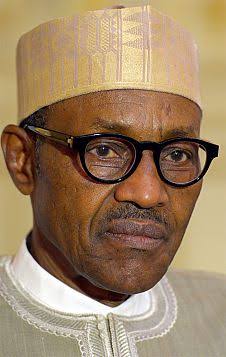
Abuja, Nigeria – July 14, 2025
As Nigeria and the world come to terms with the passing of former President Muhammadu Buhari, GCFR, tributes are flowing in from all quarters. But perhaps none are more heartfelt than the one from the Centre for Citizens with Disabilities (CCD), which has described the late leader as “a transformative figure, a champion of inclusion, and a true friend to Persons with Disabilities (PWDs).”
In a powerful statement released on Monday, CCD Acting Director, Godwin Unumeri, praised President Buhari for his unprecedented strides toward disability inclusion—both in policy and in practice—during his tenure as Nigeria’s civilian president.
“In the unfolding story of Nigeria’s democracy,” the statement read, “few leaders have left as enduring a mark on the lives of the marginalized as President Muhammadu Buhari. Though he has now taken his final rest, his legacy stands tall—etched not just in the laws he signed, but in the lives he uplifted.”
A Legacy Cemented in Law and Justice
According to CCD, one of President Buhari’s most defining moments was his signing of the Discrimination Against Persons with Disabilities (Prohibition) Act in January 2019. This landmark legislation, which had languished in legislative limbo for nearly two decades, was finally brought to life under Buhari’s leadership.
The law prohibits discrimination against PWDs in education, employment, health services, transportation, and access to public spaces, while also mandating inclusive policies and equal opportunities.
“This was not just another bill signed into law—it was a lifeline,” the Centre emphasized. “It gave over 30 million Nigerians with disabilities the legal recognition and protection they had long been denied.”
The Act has since become a cornerstone of Nigeria’s disability rights framework, offering a firm legal basis to challenge systemic inequality and foster equal participation in all spheres of life.
Beyond the Law: Building Institutions of Inclusion
Recognizing that laws are only as impactful as the institutions that implement them, President Buhari took a bold step further in establishing the National Commission for Persons with Disabilities (NCPWD) in 2020.
For the first time in Nigeria’s history, an independent agency was tasked with enforcing the rights of PWDs, monitoring compliance, and championing accessibility and inclusion at the national level.
“With the establishment of the NCPWD, President Buhari institutionalized inclusion,” said CCD. “He created a mechanism through which promises could become reality. It was one of the greatest victories for the disability community in Nigeria.”
The Commission has since become a hub of advocacy, research, policy implementation, and stakeholder engagement, thanks to the foundational support of Buhari’s administration.
Representation at the Highest Level
In yet another groundbreaking move, President Buhari became the first Nigerian president to appoint a Special Adviser on Disability Matters. This appointment was more than symbolic—it was historic.
“By appointing a person with disability as a Special Adviser,” the CCD statement continued, “President Buhari demonstrated that leadership knows no physical limitations. He made it clear that persons with disabilities belong in decision-making spaces.”
The inclusion of disability matters at the Presidency opened up a new chapter in national planning, ensuring that the voices of PWDs were not only heard but integrated into government policy and action.
Driving Inclusion Across Sectors
Under Buhari’s leadership, Nigeria witnessed the rollout of targeted programs to improve the lives of persons with disabilities. These included:
- Vocational training initiatives to promote self-reliance.
- Inclusive education policies aimed at ensuring children with disabilities could access mainstream education.
- Healthcare reforms to make services more accessible to persons with physical, sensory, and intellectual disabilities.
- Social investment programs that incorporated provisions for PWDs.
CCD noted that these interventions, while not exhaustive, represented a major shift in how government approached disability—a shift from charity-based models to rights-based, people-centered strategies.
A Continental Voice for Inclusion
President Buhari’s vision for disability inclusion did not stop at Nigeria’s borders.
He was a vocal proponent of the United Nations Convention on the Rights of Persons with Disabilities (UNCRPD), aligning national policies with global human rights standards. He also pushed for the adoption and domestication of the African Disability Protocol, a regional framework aimed at promoting the rights and participation of persons with disabilities across the continent.
Under his leadership, Nigeria played a key role in international platforms such as the Global Disability Summit, where it reaffirmed its commitment to inclusive development and accessibility.
“President Buhari placed Nigeria on the global disability map,” CCD said. “He spoke not just for Nigerians with disabilities, but for Africans and people across the globe seeking dignity, access, and opportunity.”
A Legacy That Lives Beyond the Grave
The Centre for Citizens with Disabilities concluded its tribute on an emotional note, celebrating President Buhari not only as a politician or soldier, but as a visionary leader whose compassion broke barriers.
“In a world still struggling to realize full inclusion, President Buhari’s legacy is profound. He recognized that disability rights are human rights—that inclusion is not a favour, but a duty of every just society.”
“His presidency may have ended, and now his life too, but his impact will continue to echo—in every wheelchair that rolls through a once-inaccessible building, in every child with a disability who dreams with fewer limits, and in every policy that bears the imprint of his compassion and conviction.”
A Final Farewell
In closing, the CCD extended its condolences to the Buhari family, the Government of Nigeria, and all citizens mourning the loss of a transformative leader.
“Rest in peace, President Muhammadu Buhari,” the statement read. “Your legacy lives on in the laws you enacted, the institutions you built, and the lives you helped empower. You were, indeed, a President for all—and a true friend to those the world too often forgets.”
About the Centre for Citizens with Disabilities (CCD)
The CCD is one of Nigeria’s leading non-governmental organizations committed to the protection, promotion, and realization of the rights of persons with disabilities. Through advocacy, research, and policy engagement, CCD works to ensure that no Nigerian is left behind, regardless of ability.


