

By The Qualitative Magazine
The National Commission for Persons with Disabilities (NCPWD) has intensified efforts to address the longstanding challenge of inadequate disability data in Nigeria through the development of a National Disability Management Information System (NDMIS).
The Executive Secretary of the Commission, Hon. Ayuba Burki Gufwan, said credible, accurate and reliable data on Persons with Disabilities (PWDs) is essential for effective planning, inclusive policy formulation, improved service delivery and accountability.
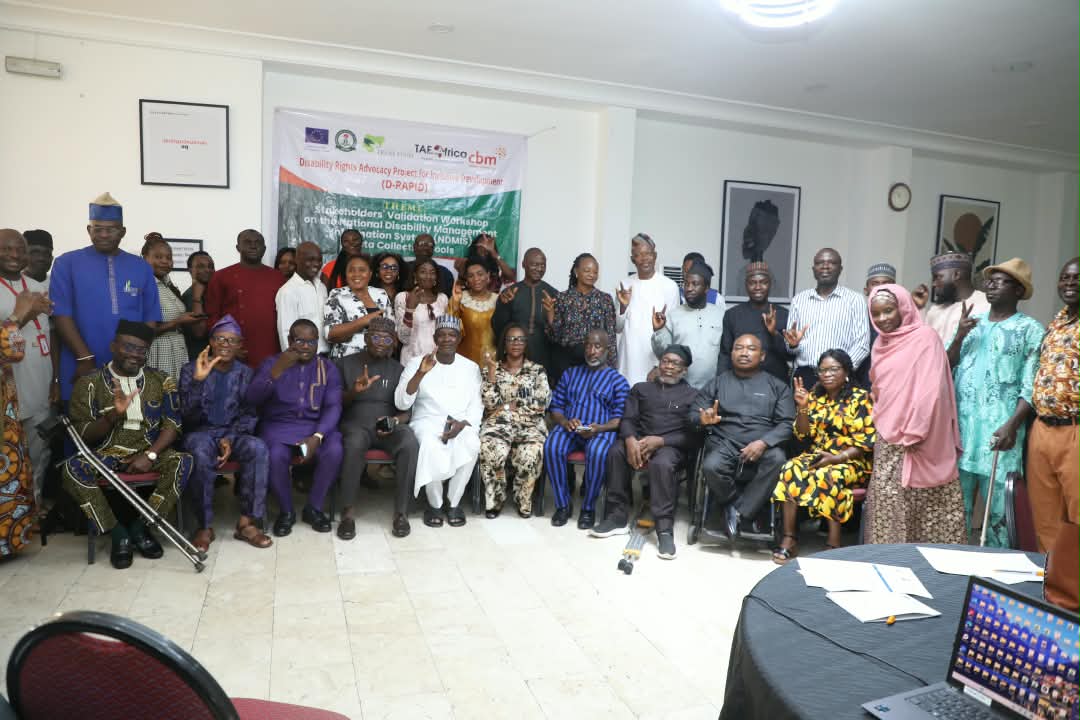
Gufwan made this known at the Stakeholders’ Validation Workshop on the Revised Key Performance Indicators (KPIs) and the National Disability Management Information System (NDMIS) Data Collection Tools held in Abuja.
Represented by the Director of Planning, Research and Statistics, Mr. Aliyu Agwai, the Executive Secretary stressed that the absence of reliable disability data has continued to undermine efforts to understand the needs of persons with disabilities, identify service delivery gaps and measure the impact of government interventions.
“Without accurate information, we cannot properly plan for persons with disabilities, understand their needs, identify gaps in services, or measure the impact of our interventions. This is why the Commission is developing the National Disability Management Information System (NDMIS), a central platform that will harmonise disability-related data across the sector,” he stated.
He explained that establishing the information management system alone would not address the challenge, emphasising the need to ensure that data collected is relevant, accurate and useful for informed decision-making.
Gufwan also challenged participants to critically review the revised departmental KPIs to ensure they reflect actual responsibilities, measure tangible results and provide a reliable framework for accountability and performance assessment.
He urged stakeholders to approach the validation exercise with commitment and constructive contributions, noting that the documents should serve as practical tools for improving institutional performance rather than mere administrative requirements.
The Executive Secretary further appreciated the Ministries, Departments and Agencies (MDAs), development partners and other stakeholders for their continued collaboration, expressing confidence in the successful implementation of NDMIS.
Development Partners, Government Agencies Pledge Support
In his opening remarks, the Country Director of Christian Blind Mission (CBM), Mr. Samuel Omoi, expressed delight at the commitment and resilience demonstrated by participants.
He observed that the persistent shortage of accurate disability data has hindered effective development planning over the years. However, he expressed optimism that sustained collaboration among stakeholders would help address the challenge.
Omoi urged participants to demonstrate passion and commitment to the exercise, describing it as a significant milestone in Nigeria’s disability inclusion journey. He also called on stakeholders to support public awareness and sensitisation on the NDMIS initiative.
Similarly, the representative of the Clinton Health Access Initiative (CHAI), Mr. Gboyega Alesinloye, reaffirmed the organisation’s commitment to providing interventions that would strengthen the process. He expressed hope that the outcome of the exercise would translate into meaningful contributions to national development.
The representative of the National Identity Management Commission (NIMC), Mr. Olushola Omorawaiye, described the initiative as a major milestone towards achieving credible disability data in Nigeria.
He highlighted NIMC’s readiness to support the process through personnel training on data collection and sustained collaboration with NCPWD to ensure that the information generated is accurate, reliable and widely acceptable.
Other stakeholders, including representatives of the Federal Ministries of Health and Social Welfare, Women Affairs, and Education, the National Bureau of Statistics (NBS), National Population Commission (NPC), HISP Nigeria and GIZ, also reaffirmed their commitment to working together towards achieving the objectives of the initiative.
Stakeholders Adopt NDMIS
A major highlight of the workshop was the presentation of an overview of the National Disability Management Information System and the objectives of the validation exercise by Dr. Adebukola Adebayo.
The workshop concluded with the adoption of NDMIS by participating stakeholders, marking an important step towards establishing a coordinated framework for disability-related data management in Nigeria.
In his closing remarks, the Director of Planning, Research and Statistics, Mr. Aliyu Agwai, appreciated the participating MDAs, development partners, particularly CBM, and other critical stakeholders for their valuable contributions.
He also commended NCPWD staff for their dedication and commitment to advancing the Commission’s mandate.
Why This Matters for Disability Inclusion in Nigeria
The development of NDMIS represents an important opportunity to address one of the critical barriers to disability-inclusive governance in Nigeria: the lack of comprehensive, reliable and disaggregated disability data.
For years, the absence of credible information has made it difficult to determine the actual needs of persons with disabilities, plan inclusive interventions, allocate resources appropriately and monitor progress in implementing disability-related policies and programmes.
If effectively implemented, NDMIS could provide government institutions and development partners with the evidence needed to strengthen disability inclusion across critical sectors, including education, healthcare, employment, social protection and infrastructure.
Beyond collecting figures, the real test will be whether the system translates credible data into inclusive policies, adequate budgetary provisions, improved services and measurable outcomes for millions of Nigerians with disabilities.
For Nigeria’s disability community, credible data must ultimately lead to better decisions, stronger accountability and tangible improvements in the quality of life of persons with disabilities.


