

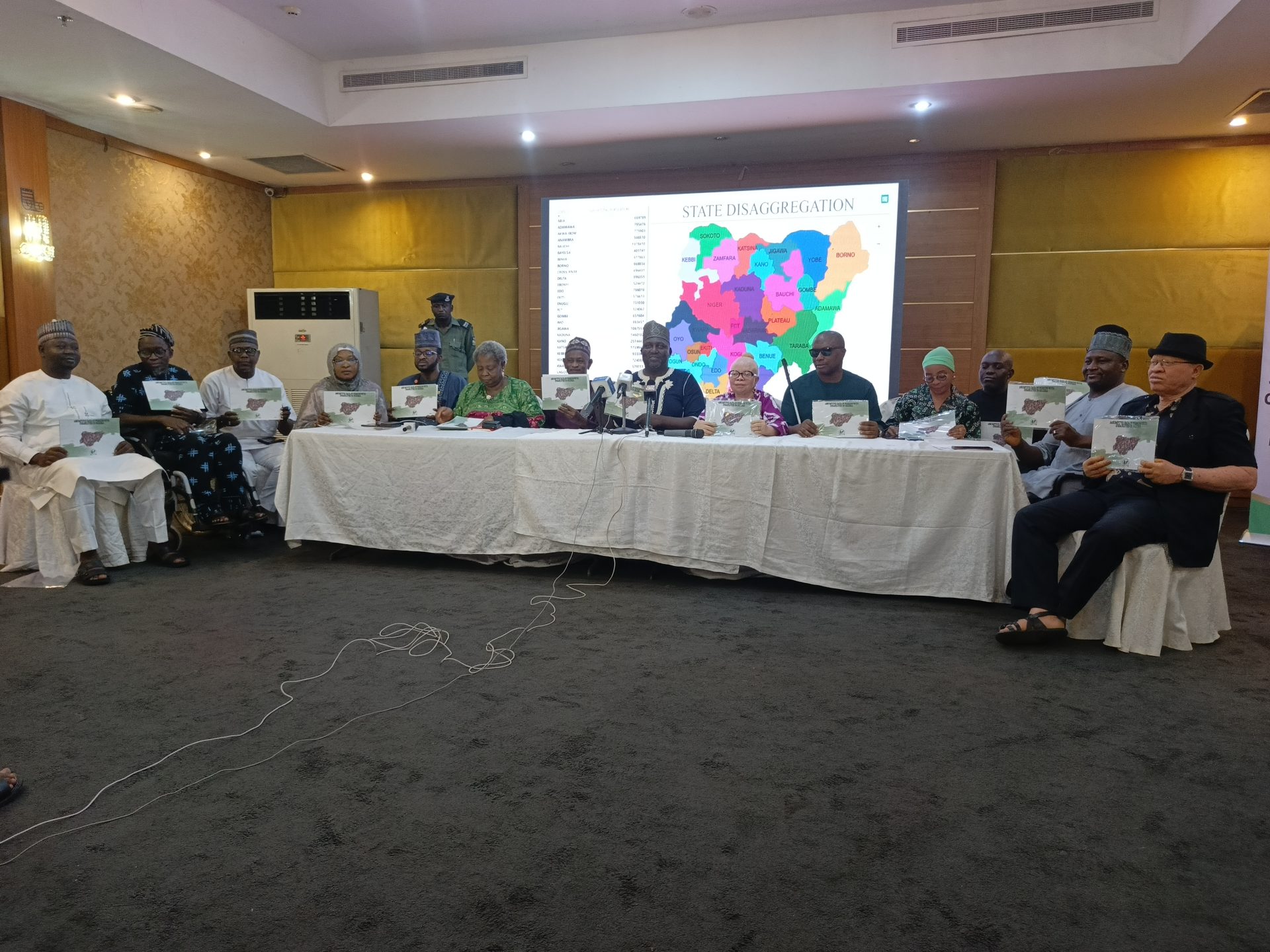
A landmark disability dataset released by the Joint National Association of Persons with Disabilities (JONAPWD) has revealed striking findings about the scale and distribution of disability in Nigeria, with Kano State emerging as the state with the highest estimated population of persons with disabilities in the country.
The newly launched report titled “Assumptive Disaggregated Data for Persons with Disabilities in Nigeria” estimates that about 35 million Nigerians with disabilities, offering one of the most detailed demographic pictures of the disability community ever compiled in the country.
The findings show that Kano State alone accounts for approximately 2.5 million persons with disabilities, placing it at the top of the national chart. It is followed by Lagos State, which has an estimated 2.1 million persons with disabilities.
The figures highlight the magnitude of disability in Nigeria and underscore the urgent need for targeted policies and inclusive development planning across the federation.
Key Findings from the Disability Dataset
The report presents several significant insights into Nigeria’s disability landscape.
First, it estimates that persons with disabilities make up roughly 15 percent of Nigeria’s population, aligning with global benchmarks recognized by the World Health Organization and the United Nations.
Using population projections from the National Population Commission, the dataset places Nigeria’s disability population at around 35 million people, spread across all 36 states and the Federal Capital Territory.
One of the most notable discoveries in the report is the geographical concentration of persons with disabilities, with Kano State recording the highest estimated number at 2.5 million, making it a critical focal point for disability inclusion efforts.
The findings also provide detailed disaggregation across disability types and gender.
Disability Clusters
According to the report:
- Physical disabilities represent the largest cluster with about 8.2 million persons.
- The Deaf community accounts for approximately 7.7 million persons nationwide.
These figures provide policymakers and development actors with clearer insight into the different disability groups that require targeted services and interventions.
Gender Distribution
The dataset also highlights a relatively balanced gender distribution within the disability population.
- Male persons with disabilities: more than 17.6 million
- Female persons with disabilities: approximately 17.2 million
This gender breakdown emphasizes the importance of designing inclusive policies that respond to the needs of both men and women with disabilities.
Government Endorsement of the Data
Representing President Bola Ahmed Tinubu at the unveiling, the Senior Special Assistant to the President on Special Needs and Equal Opportunities, Mohammed Abba Isa, described the dataset as a critical tool for governance and national planning.
He noted that reliable data is essential for effective policy formulation, development planning, and implementation of inclusive programs.
According to him, the dataset will support the Federal Government’s efforts under the Renewed Hope Agenda to strengthen inclusive development.
Why the Findings Matter
The findings are expected to significantly influence disability policy, development planning, and advocacy efforts across Nigeria.
For years, stakeholders have struggled with the absence of credible national disability data, often relying on fragmented estimates.
The newly released dataset now provides a clearer understanding of:
- The scale of disability in Nigeria
- The states with the highest populations of persons with disabilities
- The distribution across disability clusters
- The gender composition of the disability community
Experts say this information will guide budget allocation, social programs, accessibility initiatives, and inclusive governance frameworks.
Stakeholders Welcome the Data
The Executive Secretary of the National Commission for Persons with Disabilities (NCPWD), Ayuba Burki Gufwan, through his representative Hajiah Fatima Doki, praised JONAPWD for initiating the data project.
She noted that development partners often request credible statistics before committing resources to disability programs.
Similarly, representatives of the National Population Commission emphasized that the data will be useful for planning, research, and development interventions.
A Turning Point for Disability Inclusion
Observers say the most powerful message emerging from the report is the scale of the disability community itself.
With 35 million Nigerians with disabilities, the community represents one of the largest social groups in the country.
The revelation that Kano State alone has about 2.5 million persons with disabilities highlights the urgency of strengthening inclusive policies and services at the state level.
Stakeholders believe the dataset will serve as a foundation for more accurate national statistics and better disability-focused interventions.
For advocates, the message is clear: with credible data now available, the conversation on disability inclusion in Nigeria must move from estimates to action.
Click the link below to join our WhatsApp channel


