

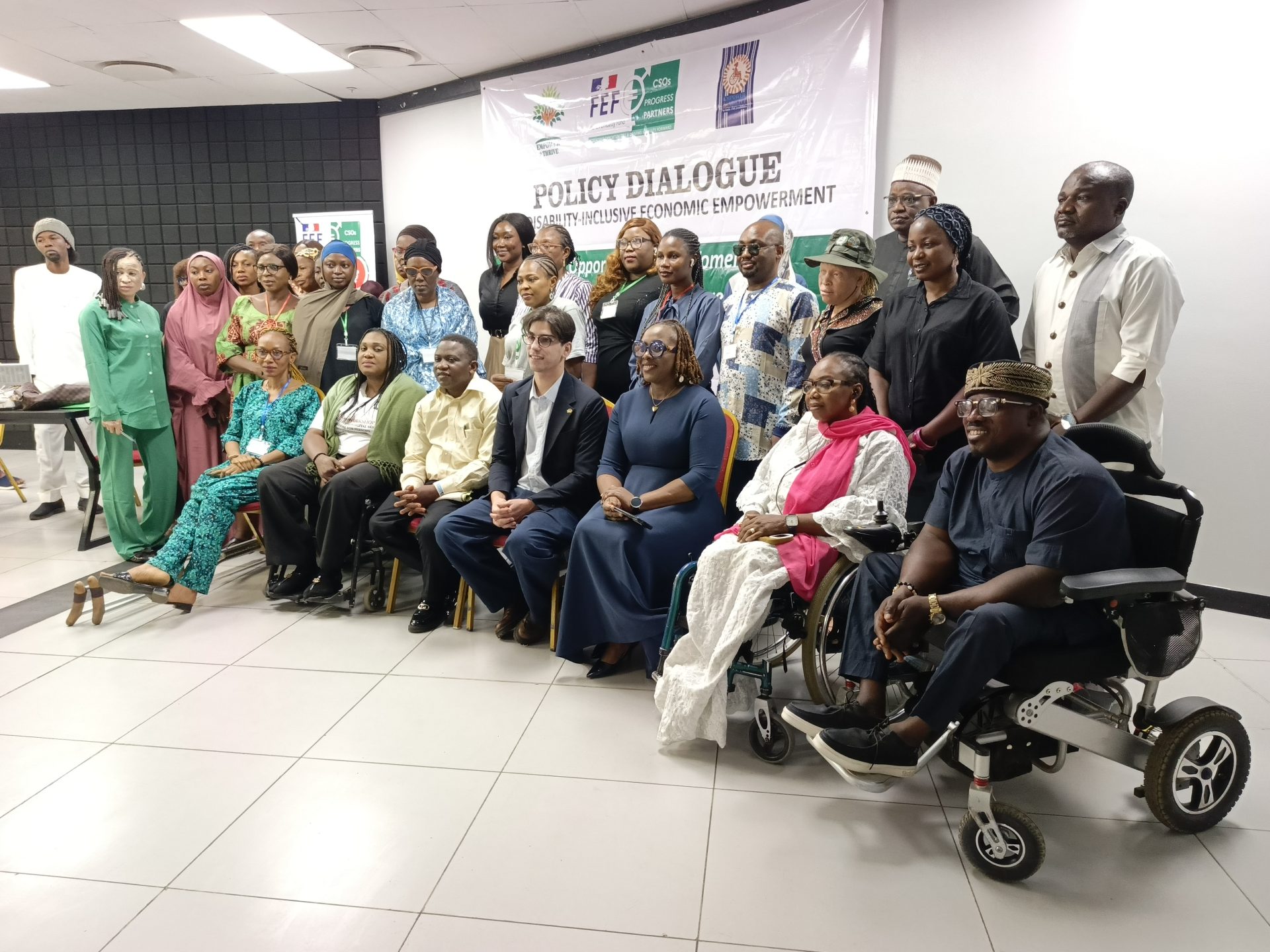
Abuja, Nigeria — In a powerful convergence of policymakers, development partners, disability advocates and women entrepreneurs, Empower To Thrive Development Initiative (ETTDI) galvanized fresh momentum on Thursday, 26 February 2026, with a landmark Policy Dialogue on Disability-Inclusive Economic Empowerment. Held in Nigeria’s capital under the compelling theme “Unlocking Opportunities for Women with Disabilities in Business and Entrepreneurship,” the event spotlighted the urgent need to translate policy commitments into tangible economic gains for one of Nigeria’s most marginalised demographics.
This critical gathering — the second in a series of dialogues organised under ETTDI’s Empower Her Ability Project — drew voices from across civil society, government institutions, financial sectors and international partners. It set the tone for an intensified national push to dismantle structural barriers impeding women with disabilities from flourishing as entrepreneurs and business leaders.
From Commitment to Concrete Action
Opening the dialogue, Olusola Adeoye, Programme Manager of Empower To Thrive Development Initiative, reaffirmed the organisation’s bold vision to ensure that women with disabilities are not just included but equipped, supported and fully integrated into the economic mainstream.
“Our mission goes beyond rhetoric — we are here to unlock doors, build bridges and demand pathways that genuinely enable women with disabilities to compete, lead businesses and sustain enterprises,” Adeoye declared. She underscored that while the National Disability Act enshrines equal rights, policy alone isn’t enough unless backed by accountability and deliberate inclusion mechanisms.
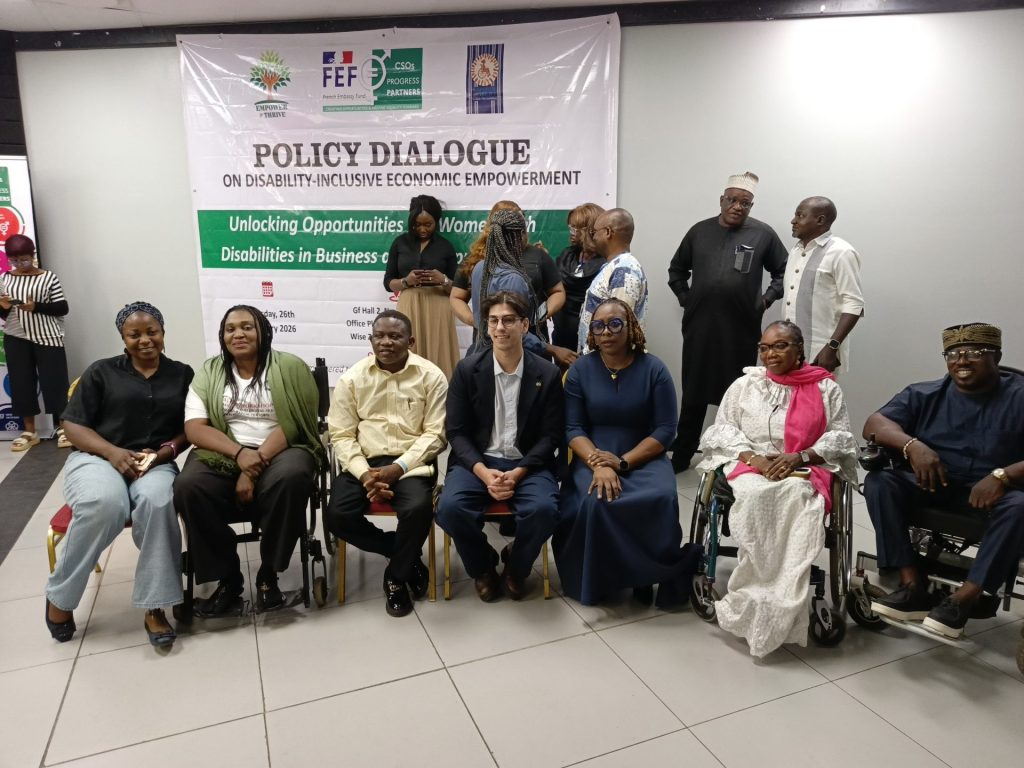
Government Voices: A Call for Measurable Impact
One of the event’s distinguished speakers, Dr. Ayuba Gufwan, Executive Secretary of the National Commission for Persons with Disabilities (NCPWD), ably represented by Patience Dickson, Head of Gender, NCPWD, reiterated the Commission’s commitment to accelerating economic empowerment for persons with disabilities — especially women whose potential is too often overlooked.
“We must move from policy pronouncements to measurable outcomes,” Dr. Gufwan stressed, reinforcing Nigeria’s broader national development agenda that seeks to mainstream persons with disabilities across economic sectors. His remarks echoed recent civil society calls for stronger implementation strategies and accountability mechanisms to advance disability-inclusive economic empowerment in Nigeria.
Bridging Policy and Practice: The Presidency Weighs In
Delivering a keynote address, Mohammed Abba-Isa, Senior Special Assistant to the President on Special Needs and Equal Opportunities, urged stakeholders to transcend tokenism and build systems that meaningfully uplift women with disabilities. He emphasized that inclusive economic growth strengthens national prosperity, and must leave no group behind.
“Nigeria’s prosperity will be stronger, deeper, and more sustainable when women with disabilities are fully included in our economic journey,” Abba-Isa said, calling for the removal of discrimination, physical and systemic barriers, and enhanced access to finance.
Catalysing Partnerships: Development Allies Reaffirm Support
The French Embassy to Nigeria — a key partner in the Empower Her Ability Project — was represented by Pierre-Louis Bonnel, who reiterated his country’s unwavering support for inclusive economic empowerment initiatives. Bonnel highlighted that sustained partnerships and targeted development interventions are critical to addressing longstanding challenges faced by women with disabilities. His remarks resonated with international best practices that stress collaboration across sectors to drive entrepreneurship, access to capital and business growth.
Data that Demands Change
Providing deep context, Dr. Ima Chima, Chairman of the ETTDI Board, delivered sobering insights into the scale of exclusion. Citing research and project data, she revealed that only about two per cent of entrepreneurs with disabilities have access to formal financial services. With up to 90 per cent of women with disabilities living below the international poverty line, Chima asserted that these numbers represent not just statistics — but millions of untapped talents and unrealised business potentials.
“Capacity building matters, yes — but building capacity in systems that remain exclusionary will not yield sustainable prosperity,” she said, urging action on inclusive finance, mentorship, market access and business ecosystem reform.
From Dialogue to Delivery: Next Steps
Discussions throughout the day centred on achieving tangible pathways for access to credit, mainstreaming disability inclusion into national employment and entrepreneurial frameworks, and designing banking products tailored for women entrepreneurs with disabilities — recommendations first echoed at ETTDI’s initial dialogue in 2025.
Participants mapped out actionable strategies, including:
Establishing dedicated desks in banks and financial institutions to support women with disabilities — a proposal carried over from prior engagements.
Creating targeted mentorship and business incubation programmes.
Strengthening public-private partnerships to expand market access.
Integrating disability-inclusive targets into broader national initiatives like the Federal Government’s renewed focus on employment and empowerment under programmes such as LEEP.
A Shared Vision for Inclusive Growth
As the dialogue drew to a close, stakeholders unanimously affirmed that economic inclusion is an imperative, not discretionary. With Nigeria moving to mainstream women, youth and persons with disabilities into public procurement and broader economic opportunities, the impetus for change has never been stronger.
The Policy Dialogue on Disability-Inclusive Economic Empowerment thus stands as both a milestone and a rallying cry — amplifying the voices of women with disabilities and charting a bold course toward a future where ability, ambition and opportunity intersect without barriers.
Click the link below to join our WhatsApp channel


