

Seven years after the signing of Nigeria’s landmark Disability Act, over 35 million Nigerians with disabilities have renewed their call for the full domestication and effective implementation of the Act across all levels of governance, warning that the promise of inclusion remains largely unfulfilled.
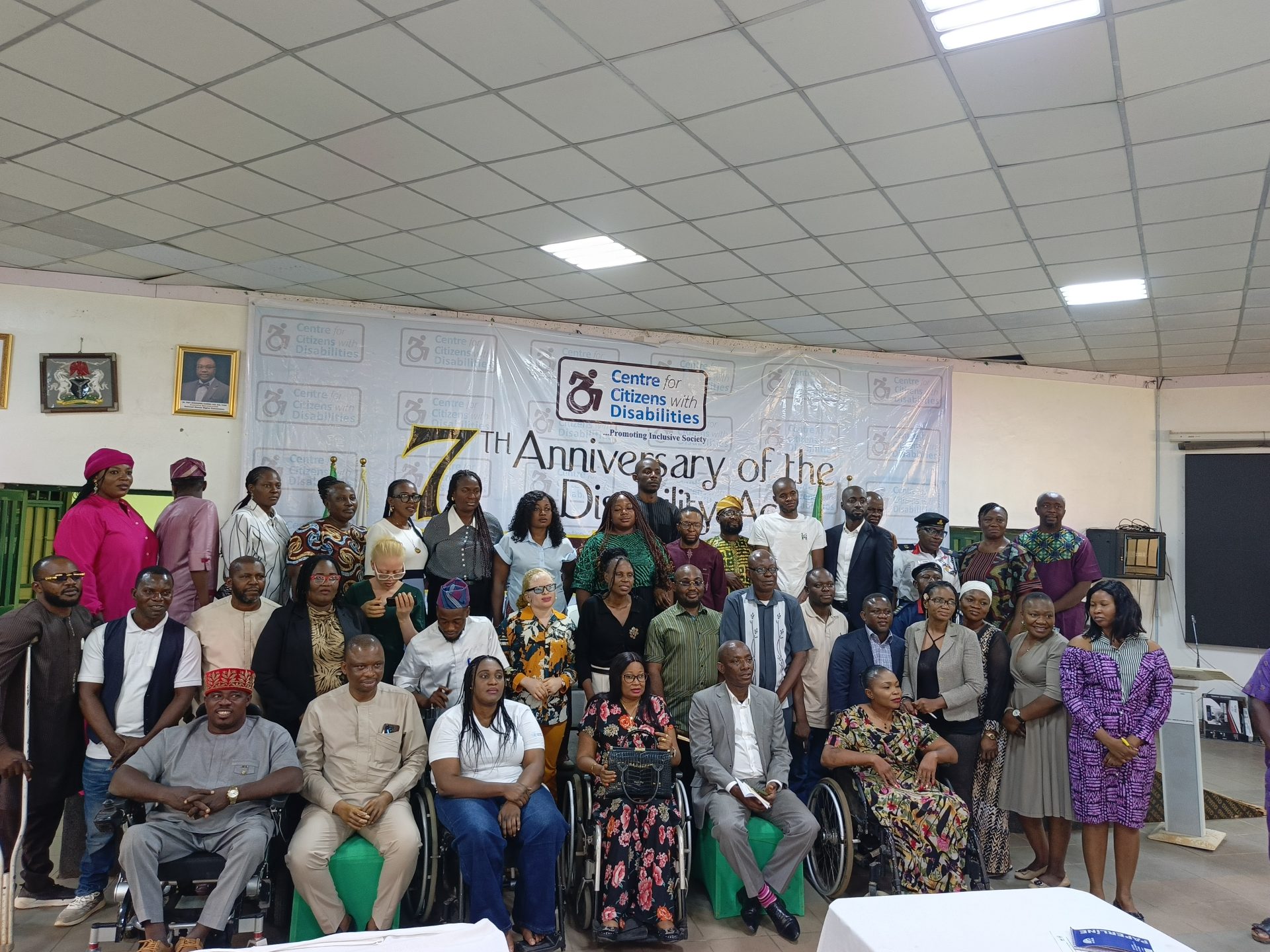
This call was made during the 7th Anniversary of the Disability Act, held in Abuja, where disability rights advocates, policymakers, and stakeholders gathered to reflect on progress made so far and confront the gaps hindering meaningful change.
Speaking on behalf of the disability community, the Acting Executive Director of the Centre for Citizens with Disabilities (CCD), Mr. Godwin Unumeri, described the Act as a progressive and historic legislation whose impact has been weakened by poor implementation, especially at the state and local government levels.
The Disability Act, enacted seven years ago, was designed to guarantee the rights of Persons With Disabilities (PWDs) and promote their full participation in social, economic, and political life. However, according to Mr. Unumeri, the lack of domestication by many states and the absence of functional enforcement mechanisms have prevented the law from delivering its expected outcomes.
He stressed that legislation alone is not enough, calling for the establishment of strong institutional frameworks, sustained political will, and greater unity within the disability community to rebuild the momentum needed to drive the Act forward.
“Without domestication and functional institutions to enforce this law, the Disability Act remains a paper victory. What we need now is commitment, collaboration, and coordinated action,” Unumeri said.
Highlighting government efforts so far, a representative of the Senior Special Adviser to the President on Special Needs and Equal Opportunities, Mr. Lanre Oloyede, acknowledged notable progress, particularly the establishment of the National Commission for Persons with Disabilities (NCPWD). However, he expressed serious concern over the slow pace of implementation at the sub-national level.
“Many states are yet to establish functional implementation and enforcement agencies, rendering domestication largely symbolic rather than impactful,” Oloyede noted.
He emphasized that the absence of these structures continues to deny millions of Nigerians with disabilities access to their rights and protections as guaranteed by law.
Also speaking at the event, the Founder of the Centre for Citizens with Disabilities and Convener of the anniversary event, Mr. David Anyaele, charged Persons With Disabilities to intensify their advocacy for representation and inclusion in governance. According to him, meaningful change can only happen when PWDs are actively involved in decision-making processes that affect their lives.
The keynote address was delivered by renowned public policy expert, Dr. Sam Amadi, who spoke on the theme: “Nigeria’s Disability Act: Raising the Momentum for Effective Implementation.” Dr. Amadi urged Persons With Disabilities not to lose hope, stressing that sustained advocacy and strategic engagement with institutions remain crucial.
He underscored the need for continuous pressure on government at all levels, noting that rights are rarely granted without struggle, persistence, and collective action.
The event also featured an interactive panel discussion, with representatives from various relevant organizations offering insights and strategies on how to champion disability inclusion more effectively across sectors.
As Nigeria marks seven years of the Disability Act, the gathering served as both a moment of reflection and a renewed call to action. For millions of Nigerians with disabilities, the message was clear: the law exists, but justice, inclusion, and equality can only be achieved when it is fully implemented, enforced, and owned by all tiers of government.


