

By Agbo Christian Obiora — Abuja
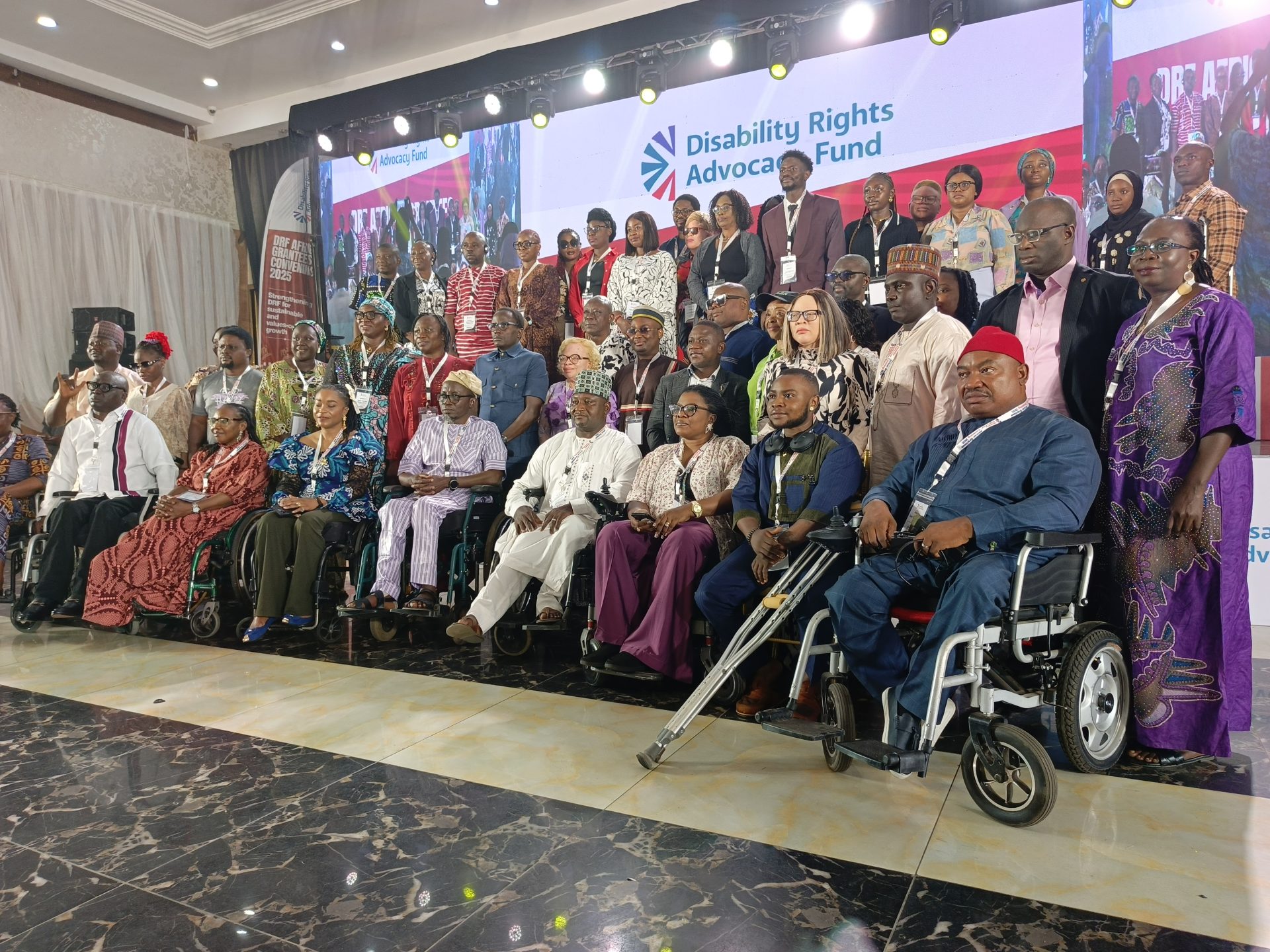
The atmosphere was charged with energy, optimism, and a renewed sense of unity as the Disability Rights Fund (DRF) African Grantees Convening 2025 kicked off in Abuja, Nigeria’s capital.
Hosted by the Joint National Association of Persons with Disabilities (JONAPWD), the four-day convening themed “Peer and Collective Learning for Africa” brought together over 20 leading Organizations of Persons with Disabilities (OPDs) from across Africa, including delegates from Togo, Malawi, Uganda, Rwanda, Kenya, Mozambique, Canada, and Nigeria.
The gathering served as a platform for OPD leaders, disability advocates, and development partners to reignite their collective mission—to strengthen cross-border collaboration and accelerate disability inclusion through DRF-supported interventions.
Collaboration as the Powerhouse of Advocacy
Addressing the press, Barrister Theophilus Odaudu, DRF’s West Africa Programme Manager, set the tone for the convening with a compelling message:
“When OPDs collaborate, advocacy becomes more coherent, more efficient, and far more powerful.”
He explained that the convening, which initially focused on Nigerian OPDs, has evolved into a continental learning platform.
“This expansion is not merely about numbers,” Odaudu emphasized. “It reflects a qualitative shift in how we approach disability rights advocacy—recognizing that unity amplifies our voices and strengthens our collective impact.”
According to him, the objectives of this year’s convening include strengthening coordination among OPDs, developing a shared agenda for disability rights implementation, and exploring how DRF can enhance programmatic support across Africa.
“Our Disability Act has not yet reflected in many policies. We need to create more awareness and ensure that Ministries, Departments, and Agencies (MDAs) understand their roles in implementing the Act,” Odaudu said. “The government must move beyond rhetoric and start implementing disability laws, policies, and the Global Disability Summit (GDS) commitments. Nigeria made some of the highest, time-bound commitments, but much remains to be done.”
He further noted that OPDs’ capacities must be strengthened to effectively engage policymakers and influence inclusion at all levels.
“At the end of this event, I expect to see more strategic advocacy, regional collaboration among OPDs, and stronger alignment with human rights standards for persons with disabilities across Africa,” he concluded.
JONAPWD Commends DRF’s Support to OPDs
In his remarks, Stanley Onyebuchi, National President of the National Association of the Blind (NAB), who represented JONAPWD National President, Aliyu Abdullahi Adamu, commended DRF for its unwavering support to OPDs.
“We are excited that DRF has continued to support OPDs in creating awareness on disability rights even at the grassroots,” Onyebuchi said. “The coming together of OPDs across Africa will further help in sharing ideas that enhance awareness and advocacy. However, funding remains one of our greatest challenges. Without adequate resources, OPDs cannot take the message of inclusion to the grassroots where it’s most needed.”
Amplifying African Voices and Accountability
The Africa Regional Manager of DRF, Washington Opiyo Sati, told the press that participants from 11 African countries attended this year’s convening. He described it as a unique opportunity for networking, peer learning, and strategic planning.
“OPDs must understand global and African human rights frameworks, laws, and policies,” he said. “They should know their rights in education, health, and social protection. Governments, in turn, have a responsibility to implement disability laws, especially through inclusive budgeting. How much is being allocated for inclusive education or health? That’s where accountability begins.”
Sati emphasized that OPDs, with support from DRF and other partners, must continue to engage governments to ensure that commitments translate into action.
Voices from Across Africa
From Togo, Yendoube Lamboni, an OPD leader, said she attended the event to learn from others and share her country’s experiences.
“In Togo, we have a disability law, but implementation has been slow,” she explained. “We came here to learn strategic ways to engage our government for improvement. I represent women and girls with disabilities whose challenges are even greater. Strategic advocacy will help change our situation.”
GDS 2025 Commitments in Focus
One of the most engaging sessions of the convening focused on reflections and strategies around the Global Disability Summit (GDS) 2025 commitments. Moderated by Washington Opiyo Sati, the session encouraged participants to link national advocacy with global goals.
“Making commitments is easy. Governments like to look good,” Sati told participants. “But do we have the skills and expertise to really advance the rights of persons with disabilities? Pick two or three commitments your government has made, harmonize them, and align your work with them. Use evidence, data, and lived experience. Partnership is powerful—a unified agenda works best.”
Delegates from various countries shared reflections:
Nigeria: “From GDS 2018, Nigeria committed to sign the Disability Act—and it did. But in 2022, due to COVID-19, there was no proper follow-up commitment.”
Mali: “We are working with the national education policy to make public spaces inclusive for people with physical disabilities. That’s how we link GDS commitments to poverty reduction.”
Mozambique: “Our advocacy is changing attitudes. People who dropped out of school are returning. The community’s mindset is shifting.”
Mozambique (Deaf Women): “Our association won a GBV case in court and now doctors are being trained in sign language.”
Nigeria (HAPI): “Storytelling is powerful. When you tell your story, duty bearers understand what it’s like to live with a disability.”
Albinism Cluster: “Many Nigerians, even within disability circles, don’t know about the Global Disability Summit.”
LGBTQ+ OPD: “We use social media and sponsored posts to make sure people with disabilities are visible and heard.”
Civil society representatives also added:
“CSOs don’t collaborate enough. We keep duplicating efforts instead of joining forces.”
Barr. Odaudu reminded participants:
“DRF doesn’t only give its own grants; we also channel funds and technical support from other organizations. Many of your activities already align with GDS goals—make that clear in your proposals.”
Panel: Experiences from the Global Disability Summit 2025
The “Advocacy Without Borders” panel featured reflections from participants who attended the GDS 2025 in Berlin.
Bisi Bamishe (Nigeria): “DRF sponsored my trip to Berlin. The Civil Society Forum for Women and Girls with Disabilities was the most exciting part. We secured new commitments from governments to prioritize women and girls with disabilities.”
Marie Lamboni (Togo): “I came to understand the importance of an inclusive and intersectional approach in defending disability rights.”
Hilda Macheso (Malawi): “In many African cases, we are spoken for, but in Berlin, we spoke for ourselves—nothing for us without us.”
Rokiatou Maiga (Mali): “Political instability often disrupts continuity, but we must keep engaging regardless of regime changes.”
Joyce Nakijoba (Uganda): “Persons with disabilities must be involved in all stages of programme implementation.”
Leta Timbane (Mozambique): “The health of women with disabilities needs more focus. Advocacy and information-sharing are key.”
Participants agreed that “disability commissions must have permanent teams that do not change with political shifts.”
Strengthening Engagement Beyond Borders
During another DRF session, facilitators emphasized the need to engage more robustly with international mechanisms.
“After Mozambique ratified the UNCRPD, we waited years without review. OPDs organized one themselves, and the process moved forward,” said Felix.
“In Nigeria, OPDs have not engaged duty bearers as actively as in other regions. We must use global mechanisms, contribute to reports, and prepare shadow submissions,” added Barr. Odaudu.
Representation and the Road Ahead
The convening brought together major OPDs, including: Inclusive Friends Association, TAF Africa, Hope Inspired Foundation for Women and Youth with Disabilities, Women’s Health and Equal Rights Initiative, Deaf Women Aloud Initiative, Hope Alive for Possibilities Initiative, Association of Lawyers with Disabilities in Nigeria, and many others.
As the event progresses, delegates expressed optimism that the outcomes would shape a stronger, more unified disability rights movement across Africa.
“Together, we are stronger,” Odaudu said in closing. “Our collective advocacy will continue to push the boundaries of inclusion and equality. The work does not end here—it begins anew.”
Powerful Voices for Inclusion at DRF African Grantees Convening 2025!
The event brought together influential disability rights advocates which includes,
- Hon. Mohammed Abba Isa, Senior Special Assistant to the President on Special Needs and Equal Opportunities.
- Ekatte Judith Umoh, the first-ever female National President of JONAPWD and immediate past UN Disability Inclusion Advisor.
Together, they emphasized the importance of grassroots empowerment, funding, and stronger collaboration to advance disability inclusion in Africa.
Follow the The Qualitative Magazine channel on WhatsApp: https://whatsapp.com/channel/0029VanfIB50wajpjGi3JJ1G


