

By Agbo Christian Obiora | Abuja
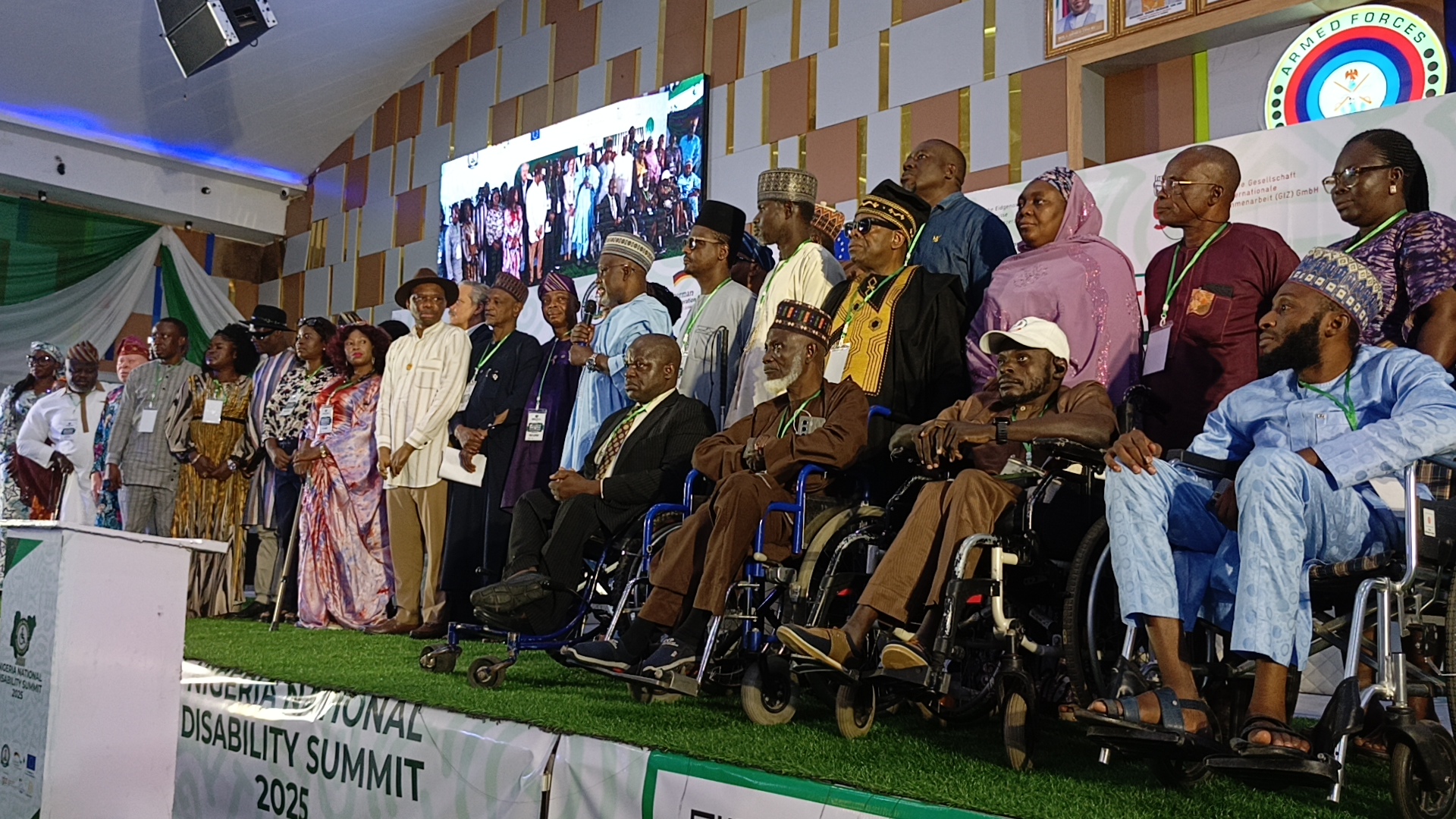
In a bold move to turn global commitments into real, measurable change for Persons with Disabilities (PWDs), the National Commission for Persons with Disabilities (NCPWD) has convened a two-day National Disability Summit in Abuja.
The summit, which ran from Wednesday to Thursday, brought together key national and international stakeholders under the powerful theme:
“From Commitments to Action: Advancing Disability-Inclusive Development and Governance in Nigeria.”
Coming on the heels of the 2025 Global Disability Summit (GDS) held in Berlin, Germany, the Abuja summit served as Nigeria’s response platform to assess its progress, renew commitments, and design actionable strategies for implementing disability-inclusive development across all sectors of governance.
“From Promises to Progress” — Executive Secretary Ayuba Burki Guywan
Declaring the event open, the Executive Secretary of NCPWD, Hon. Barr. Ayuba Burki Guywan, set a firm tone for the two-day engagement. He emphasized that the era of mere promises was over, calling for genuine accountability and tangible results.
“We are here to assess progress, confront challenges, and strengthen our collective accountability,” Guywan stated. “Nigeria’s commitments at the global level must translate into visible, measurable improvements in the lives of persons with disabilities back home.”
Guywan noted that Nigeria has been an active participant in every Global Disability Summit since 2018, consistently reaffirming its commitment to the United Nations Convention on the Rights of Persons with Disabilities (UNCRPD) and the Discrimination Against Persons with Disabilities (Prohibition) Act, 2018.
He revealed that several frameworks have already been developed — including those for accessibility, inclusive education, employment equity, and access to work. However, he stressed that the real success of these frameworks depends on collaboration among all stakeholders — government ministries, departments and agencies (MDAs), civil society organizations, the private sector, the media, and PWDs themselves.
“True inclusion requires the active participation of every stakeholder,” he said. “This summit is about moving from dialogue to delivery.”
“Inclusion Is About Justice” — GIZ Country Director, Dr. Markus Wagner
Representing Germany’s development cooperation agency, Dr. Markus Wagner, the Country Director for GIZ Nigeria & ECOWAS, reiterated that inclusion is not a favour but a right.
“Inclusion is not an act of charity but a matter of justice, respect, and dignity,” Wagner declared.
He noted that Germany’s hosting of the 2025 Global Disability Summit culminated in the Amman-Berlin Declaration, which commits nations to ensuring that at least 15% of all development interventions directly advance disability inclusion by 2028.
Dr. Wagner further disclosed that GIZ Nigeria has already reached over 2,800 persons with disabilities through interventions in vocational training, digital inclusion, and livelihoods support.
“Accessibility is not just about ramps; it’s about creating opportunities and ensuring full participation,” he added, emphasizing that sustainable development is impossible without inclusion.
Lawmakers Join the Call for Stronger Legislative Support
Adding her voice, Senator Ireti Kingibe, the distinguished senator representing the FCT, praised the momentum gained on disability inclusion in recent years but stressed the need for sustained political will.
“This is no longer the era of leaving no one behind just in words — we must act,” she stated. “It is time for the National Assembly to establish a standing committee to address disability issues, just as we have for women and youth.”
She also made a passionate case for women with disabilities, highlighting their unique challenges and the urgent need for increased opportunities in employment, education, and political participation.
“Women with disabilities must be empowered to thrive. Their voices matter, and their contributions can shape a more inclusive society,” she added.
Collaborative Efforts and Forward-Thinking Discussions
The summit brought together a diverse array of stakeholders — including Organizations of Persons with Disabilities (OPDs), Civil Society Organizations (CSOs), government agencies, and private sector representatives — all united by a shared goal: advancing disability-inclusive development.
Engaging panel sessions explored critical topics such as state-level implementation of disability laws, monitoring and evaluation frameworks, accessibility innovations, and financing mechanisms for inclusion. Participants shared success stories, challenges, and opportunities for synergy between national and subnational disability commissions.
Highpoint: Inauguration of the National Forum of Disability Commissions and Agencies
The climax of the two-day summit was the inauguration of the National Forum of Disability Commissions and Agencies, a groundbreaking platform designed to foster coordination, peer learning, and unified advocacy across Nigeria’s 36 states and the FCT.
The forum was inaugurated by Hon. Dr. Yusuf Tanko Sununu, Minister of State for Humanitarian Affairs and Poverty Reduction, who represented President Bola Ahmed Tinubu at the event.
Dr. Sununu commended the NCPWD for its leadership and reiterated the federal government’s commitment to mainstreaming disability inclusion in all its poverty reduction and human capital development initiatives.
“This forum marks a new era of collaboration and coherence,” he said. “President Tinubu’s administration recognizes that disability inclusion is not a side issue—it is central to achieving national development.”
A Roadmap for the Future
As the summit concluded, stakeholders reached a consensus to develop and adopt a National Disability Action and Accountability Plan (2025–2030) — a comprehensive framework to guide inclusive policies, monitor progress, and hold all actors accountable.
With renewed energy, strong partnerships, and a clear roadmap, the National Disability Summit 2025 stands as a milestone in Nigeria’s journey toward full inclusion — from commitments to concrete action, from policy to practice, and from promises to progress.
Follow the The Qualitative Magazine channel on WhatsApp: https://whatsapp.com/channel/0029VanfIB50wajpjGi3JJ1G


